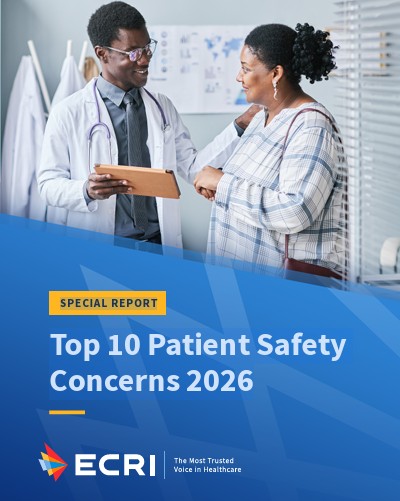
According to the report, medical errors and other preventable adverse events cost U.S. hospitals approximately $17.1 billion every year. Another $4.6 billion annually is linked to physician burnout. When the broader consequences of unsafe care are considered, including additional treatment required after medical errors, as much as 12.6% of total healthcare spending in high-income countries may be devoted to managing the aftermath of unsafe care.
From the perspective of our New York medical malpractice attorneys, these numbers highlight a persistent systemic problem. Preventable medical errors are not rare anomalies. They often arise from failures in hospital systems, staffing, communication, and oversight.
The 10 Most Serious Patient Safety Risks Identified for 2026
The ECRI report identifies the following emerging and persistent safety threats:
1. Navigating the AI diagnostic dilemma, including the risk of overreliance on artificial intelligence tools.
2. Reduced access to rural healthcare, increasing health risks and disparities.
3. Rising rates of preventable acute diseases, partly linked to declining vaccination rates.
4. Effects of federal healthcare funding cuts on hospital operations and patient safety.
5. Failure to recognize and report patient harm events, limiting opportunities to improve systems.
6. Structural barriers to equitable pain management for women, raising concerns about gender bias in care.
7. Persistent healthcare workforce shortages, increasing clinician workload and error risk.
8. Cultures of blame that discourage learning from mistakes.
9. Emergency department boarding, where patients wait hours or days for inpatient beds.
10. Medication errors linked to confusing drug packaging and labeling.
Taken together, these risks illustrate how technology, staffing shortages, hospital culture, and public health trends intersect to increase the likelihood of preventable medical errors.
Systemic Problems Require Systemic Solutions
The report emphasizes that improving patient safety requires leadership investment and organizational change. Hospitals must strengthen reporting systems, improve staffing levels, and ensure that new technologies—such as AI diagnostic tools—are used carefully and responsibly.
However, when healthcare systems fail to implement appropriate safeguards, patients may suffer devastating consequences including delayed diagnoses, medication errors, surgical complications, and preventable deaths.
The Legal Perspective on Preventable Harm
Medical malpractice litigation often reveals the same systemic weaknesses described in this national patient safety report. In many cases, injuries occur not because of a single mistake but because multiple safeguards failed simultaneously.
Hospitals have a duty to maintain safe systems of care. When they fail to do so and patients are injured as a result, hose harmed may have the right to pursue compensation through a medical malpractice claim.
Experienced New York Medical Malpractice Attorneys
The attorneys at Gair, Gair, Conason, Rubinowitz, Bloom, Hershenhorn, Steigman & Mackauf have represented victims of catastrophic medical negligence in New York for decades. The firm’s trial lawyers have secured some of the highest verdicts and settlements in the state, including numerous multimillion-dollar recoveries for patients injured by preventable medical errors.
If you or a loved one suffered serious harm due to a medical mistake, it is critical to speak with an experienced attorney promptly. Call 212-943-1090 for a free consultation.