 New York Personal Injury Attorneys Blog
Electrical Accidents on New York Construction Sites: Hazards, Injuries and Workers’ Legal Right


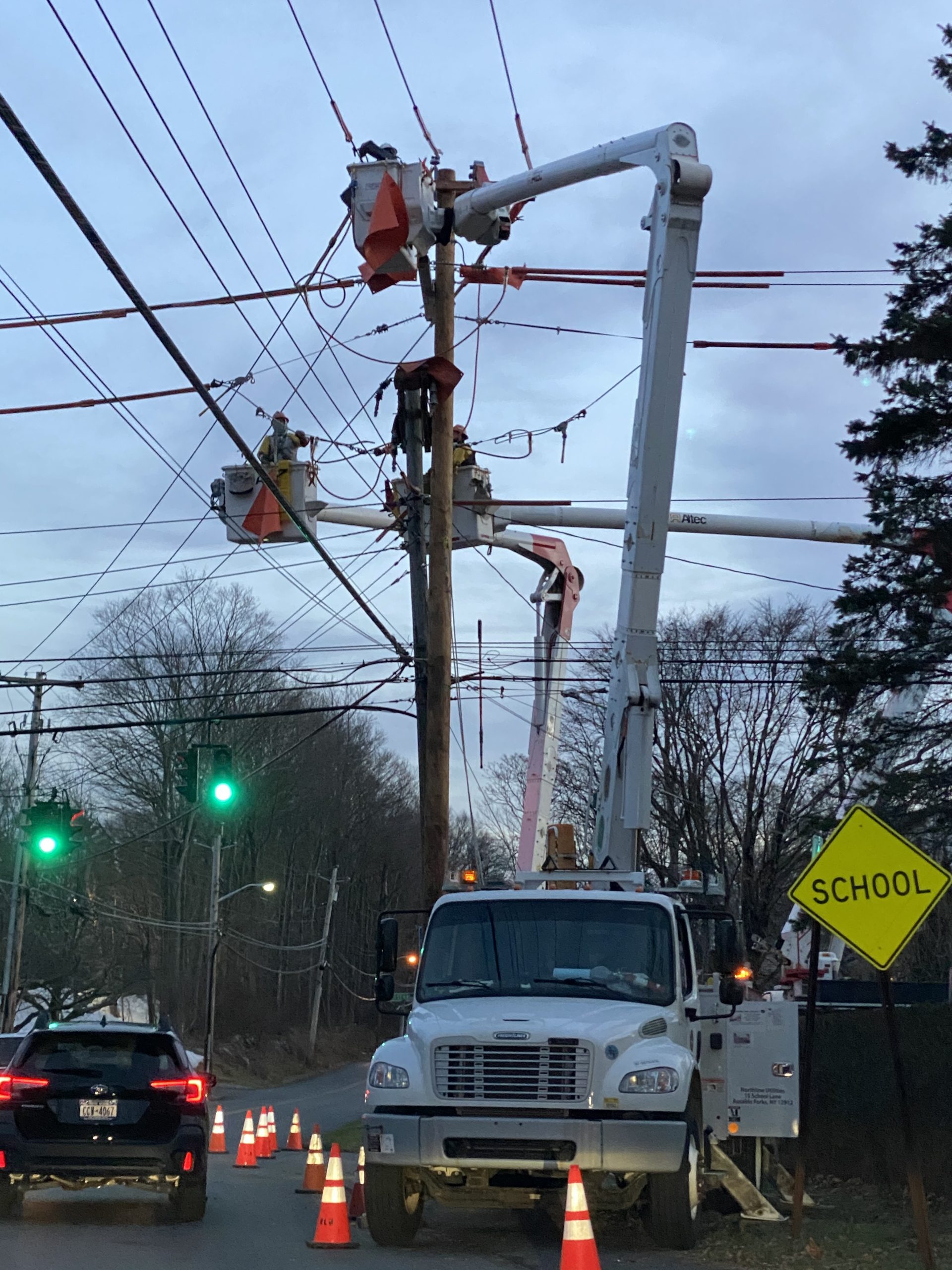 Electrical hazards remain one of the most serious dangers on construction sites. And the risk is not limited to electricians. Laborers, carpenters, ironworkers, painters, roofers, equipment operators and other construction workers can suffer catastrophic injuries when they come into contact with energized wiring, power lines, defective tools or improperly maintained electrical systems.
The continuing concern surrounding these accidents will be the subject of a webinar presented by CPWR – The Center for Construction Research and Training on Wednesday, August 19, 2026, at 2:00 p.m. ET. Titled “Preventing Exposure to Electrical Hazards in Construction,” the program will address common electrical hazards and exposures, prevention and control methods, pre-task planning and the McElhattan Foundation’s Zero Electrocution Challenge.
The subject is particularly important because electrical accidents are often preventable. When a construction worker is seriously injured because electrical hazards were not identified, equipment was defective, appropriate safeguards were not provided or proper safety procedures were not followed, the circumstances of the accident should be carefully investigated.
For injured construction workers in New York, that investigation may also reveal important legal rights beyond workers’ compensation.
Electrocution Is One of OSHA’s “Focus Four” Construction Hazards
The Occupational Safety and Health Administration (OSHA) identifies electrocution as one of its four major construction hazards, along with falls, struck-by accidents and caught-in or caught-between accidents.
OSHA’s electrical standards for construction are intended to protect workers from hazards including electrical shock, electrocution, fires and explosions. OSHA also specifically addresses accidental direct or indirect contact with energized lines located above, below or near a construction site.
Electrical safety therefore should not be treated simply as the responsibility of the electrician performing electrical work. Contractors and employers must consider whether workers throughout a job site could be exposed to electrical hazards.
What Causes Electrical Accidents on Construction Sites?
Electrical accidents can occur in many different ways. Some involve electricians working directly on electrical systems. Others involve construction workers who unexpectedly encounter an energized wire, piece of equipment or power line while performing an entirely different job.
Common electrical hazards on construction sites include:
- Contact with overhead or underground power lines
- Exposed or improperly protected wiring
- Damaged electrical cords and extension cords
- Defective power tools
- Improper grounding
- Missing or inadequate ground-fault protection
- Temporary electrical systems that are improperly installed or maintained
- Electrical equipment used in wet or damp conditions
- Failure to properly de-energize electrical equipment
- Inadequate lockout/tagout procedures
- Electrical equipment being used improperly
- Failure to identify electrical hazards before work begins
OSHA identifies several frequent causes of electrical injuries, including contact with power lines, lack of ground-fault protection, an interrupted or missing path to ground, improper equipment use and misuse of extension or flexible cords.
The emphasis of the upcoming CPWR webinar on pre-task planning is particularly important. Construction sites change constantly. New equipment arrives, temporary wiring is installed, subcontractors work alongside one another and workers may be assigned to areas containing hazards that did not exist earlier in the project.
Identifying electrical hazards before a worker begins a task can be critical to preventing a devastating accident.
Electrical Injuries Can Be Catastrophic Even When the Worker Survives
The term “electrocution” technically refers to death caused by electrical shock, but fatal electrocution is only one possible outcome of an electrical accident.
OSHA training materials identify four principal types of electrical injuries: electrocution, electrical shock, burns and falls.
A worker who survives an electrical accident can still suffer devastating injuries, including:
- Severe electrical and thermal burns
- Cardiac injuries
- Nerve damage
- Neurological injuries
- Muscle and tissue damage
- Traumatic brain injuries
- Spinal cord injuries
- Fractures
- Amputations
- Permanent scarring and disfigurement
Some consequences of an electrical injury may not be immediately obvious, which makes prompt medical evaluation particularly important following a significant electrical exposure.
An Electrical Shock Can Cause a Construction Worker to Fall
One aspect of electrical construction accidents that is sometimes overlooked is the connection between electrical hazards and falls.
Consider a worker performing work from a ladder, scaffold, roof or elevated platform. If the worker unexpectedly touches an energized wire, even a brief electrical shock can cause an involuntary physical reaction. The worker may jerk backward, lose his or her balance and fall.
OSHA specifically recognizes falls from elevations as one of the hazards associated with electrical incidents involving power lines.
In these cases, the worker may suffer catastrophic injuries from the fall even when the electrical contact itself does not produce the most serious injury.
This distinction can become particularly important when investigating a New York construction accident because the manner in which the worker fell, the equipment provided and the elevation-related protections available may affect the worker’s rights under New York law.
Who May Be Responsible for an Electrical Construction Accident in New York?
Determining responsibility for a construction electrical accident requires a detailed investigation.
Depending on the circumstances, potentially responsible parties could include:
- A property owner
- A general contractor
- A construction manager
- An electrical subcontractor
- Another subcontractor that created the hazardous condition
- A company responsible for maintaining equipment
- A manufacturer of defective electrical equipment or tools
- Another third party responsible for conditions at the job site
Construction projects frequently involve multiple contractors and subcontractors working simultaneously. The company that employs the injured worker may not necessarily be the only entity with responsibility for workplace safety or the dangerous condition that caused the accident.
That is one reason an electrical construction accident should not automatically be treated as nothing more than a workers’ compensation matter.
New York Labor Law May Provide Additional Protection to Injured Construction Workers
New York provides important statutory protections for construction workers.
Depending on how an electrical accident occurred and the type of work the injured worker was performing, claims may potentially arise under New York Labor Law §§ 200, 240(1) and 241(6).
Labor Law § 200
Labor Law § 200 generally codifies the common-law duty to provide workers with a reasonably safe place to work.
In an electrical accident case, questions may include whether a dangerous condition existed at the construction site, who created that condition, whether the responsible parties knew or should have known about it, and who controlled the work that led to the accident.
Labor Law § 240(1)
Labor Law § 240(1), commonly referred to as the Scaffold Law, provides protections to certain workers exposed to elevation-related risks during covered construction activities.
An electrical accident does not automatically create a Labor Law § 240(1) claim. However, the statute can become particularly important when electrical contact causes a worker to fall from a ladder, scaffold or other elevated work area and the safety devices provided were inadequate under the circumstances.
The precise facts of the accident are critical.
Labor Law § 241(6)
Labor Law § 241(6) imposes safety obligations in connection with construction, excavation and demolition work. Claims under this section generally depend upon the violation of a sufficiently specific provision of New York’s Industrial Code that applies to the circumstances of the accident.
Determining which Labor Law provisions apply to an electrical accident requires an analysis of the worker’s activity, the construction project, the electrical hazard, the parties involved and the exact manner in which the accident occurred.
Workers’ Compensation May Not Be the Only Source of Compensation
A construction worker injured on the job will generally be entitled to pursue workers’ compensation benefits regardless of who caused the accident.
Workers’ compensation can provide important benefits, including coverage for medical treatment and a portion of lost wages. But it does not necessarily represent the full extent of an injured construction worker’s legal rights.
Depending on the circumstances, an injured worker may also be able to pursue a claim against a property owner, general contractor, subcontractor, equipment manufacturer or another responsible third party.
A third-party personal injury action may permit recovery for damages that workers’ compensation does not provide, including compensation for pain and suffering.
The existence of a third-party claim depends on the individual circumstances of the accident, which is why determining exactly how and why the electrical incident occurred is so important.
Evidence Can Disappear Quickly After an Electrical Construction Accident
Prompt investigation is especially important following an electrical accident.
Construction sites change rapidly. A dangerous wire can be repaired. A circuit can be de-energized. Temporary wiring can be removed. A defective tool can disappear. An extension cord can be discarded. Contractors can complete their portion of the project and leave the site.
Once those conditions change, reconstructing exactly what happened can become significantly more difficult.
Important evidence may include:
- Photographs and video of the accident location
- Surveillance or construction-site camera footage
- The electrical tool or equipment involved
- Extension cords and temporary wiring
- Circuit breakers and electrical panels
- Inspection and maintenance records
- Construction drawings
- Daily construction logs
- Incident and accident reports
- OSHA records
- Pre-task plans
- Job hazard analyses
- Toolbox-talk and safety-meeting records
- Training records
- Communications between contractors and subcontractors
- Witness statements
In a serious construction accident case, attorneys may also work with electrical engineers, construction safety specialists and other experts to determine what went wrong and whether the accident could have been prevented.
Why Pre-Task Planning Matters
One of the subjects being highlighted during CPWR’s August 19 webinar is the importance of pre-task planning.
From a safety standpoint, pre-task planning allows contractors and workers to identify potential hazards before work begins and determine what measures are necessary to perform the work safely.
After a serious accident, these same questions can become central to an investigation:
- Was the electrical hazard identified before the worker started the job?
- Did the contractor know energized wiring or power lines were present?
- Were workers warned?
- Was the power supposed to have been shut off?
- Were appropriate safety devices and protective equipment provided?
- Was there a plan for performing the work safely?
- Were the contractors coordinating their activities?
When a preventable electrical accident occurs, the answers to these questions may help establish how the accident happened and who was responsible.
Serious Construction Accident Cases Require a Thorough Investigation
At Gair, Gair, Conason, Rubinowitz, Bloom, Hershenhorn, Steigman & Mackauf, our New York construction accident attorneys represent workers and families in cases involving catastrophic injuries and wrongful death throughout New York City and New York State.
Founded in 1919, our firm has more than a century of experience representing seriously injured New Yorkers. Our attorneys prepare complex construction accident cases with the resources necessary to investigate the job site, identify responsible parties, preserve critical evidence, retain appropriate experts and, when necessary, take the case to trial.
That trial experience has produced some of the most significant construction accident recoveries in New York, including a $272.5 million settlement arising from the 2023 Tribeca crane collapse — the largest crane accident settlement in New York State history.
Our approach to a serious construction accident begins with understanding precisely what went wrong. In an electrical injury case, that may require examining electrical systems and equipment, contractor responsibilities, safety plans, construction records, witness testimony and applicable provisions of the New York Labor Law and Industrial Code.
Injured in an Electrical Accident on a New York Construction Site?
Electrical construction accidents can occur in seconds, but determining why they happened can require a detailed investigation.
Workers who suffer electrical shocks, burns, falls or other serious injuries should seek immediate medical care and, when possible, make sure the accident is reported and documented. In cases involving catastrophic injury, preserving evidence from the construction site as quickly as possible can be critical.
If you or a family member has been seriously injured in an electrical accident on a construction site in New York, the electrocution accident attorneys at Gair, Gair, Conason, Rubinowitz, Bloom, Hershenhorn, Steigman & Mackauf can evaluate the circumstances of the accident and determine what legal remedies may be available.
For a free consultation, call 212-943-1090.
