 New York Personal Injury Attorneys Blog
Who Is Responsible When a Falling Tree Causes a Fatal Highway Crash in New York?


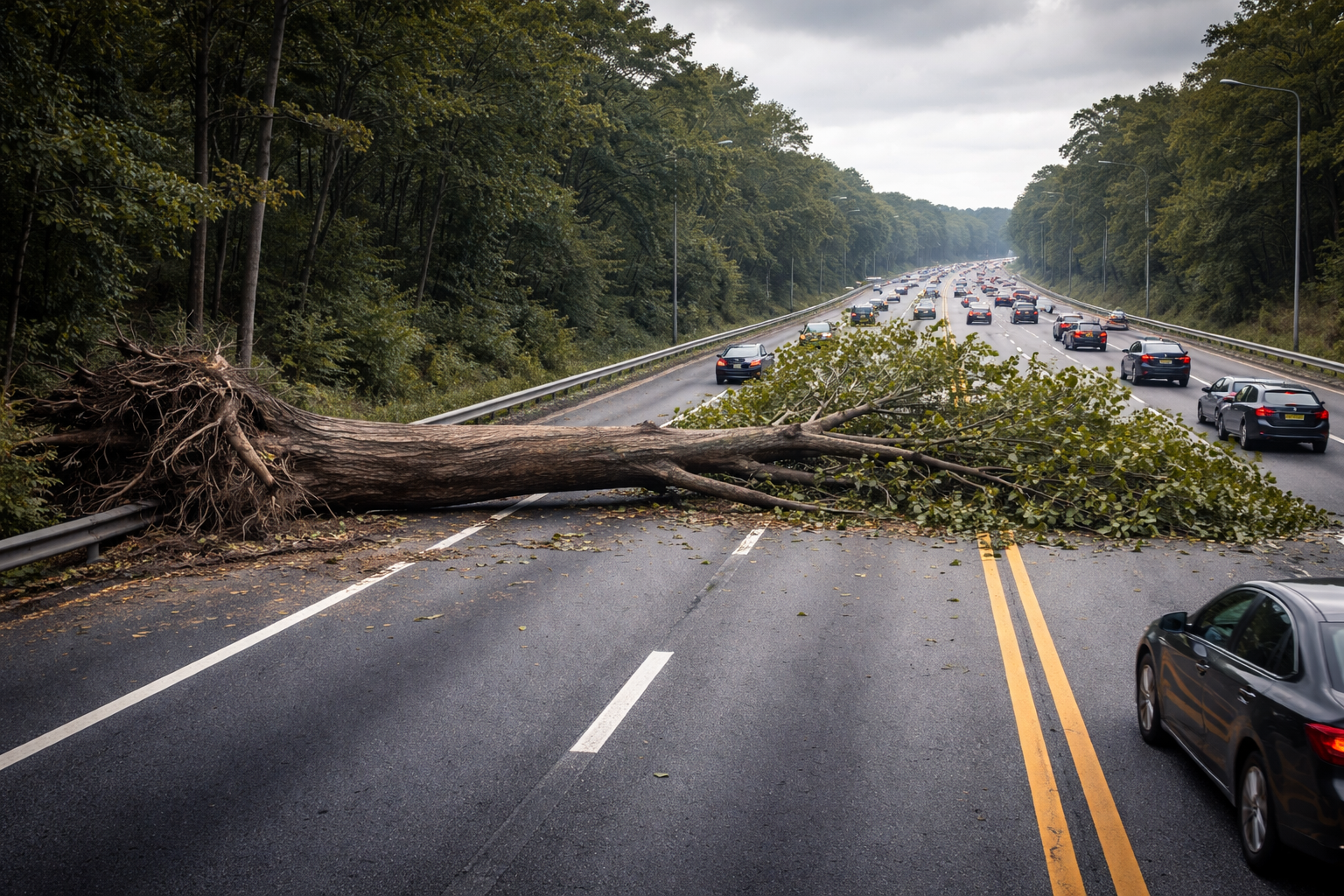 A tragic crash on a busy Westchester County highway during Monday morning’s rush hour has left a family grieving the loss of a young father of two and raises urgent legal questions about responsibility and roadway safety.According to reports, a tree fell onto the highway, creating a sudden hazard in active traffic. As vehicles attempted to react, one driver swerved to avoid the falling tree, resulting in a fatal crash.
In cases like this, the central question is not only what happened—but whether it could have been prevented.
When Is a Falling Tree Considered Negligence?
Not every falling tree leads to liability. However, under New York law, responsibility may arise if the tree was in a dangerous condition that should have been identified and addressed.
Key legal questions include:
- Was the tree dead, decaying, or structurally compromised?
- Had there been prior complaints or reports about it?
- Did the responsible entity conduct proper inspections?
- Was there sufficient time to remove or secure the hazard?
If the answer to any of these is yes, the incident may not be an unavoidable accident—but a preventable failure of maintenance.
Who May Be Liable for a Tree Falling on a Highway?
On a highway in Westchester County, liability may fall on one or more parties:
- State or local agencies responsible for roadway maintenance
- County or municipal departments tasked with tree inspection and removal
- Private property owners if the tree originated from adjacent land
- Contractors hired to maintain roadside conditions
Each of these parties has a duty to ensure that known hazards are addressed before they put motorists at risk.
Does It Matter That the Driver Swerved?
No and legally, that detail is critical.
Drivers confronted with a sudden emergency are expected to react instinctively. Swerving to avoid a falling tree is a foreseeable response to a dangerous condition.
Even if the tree did not directly strike the vehicle, liability may still exist if the hazardous tree created the emergency that led to the crash.
“Act of God” or Preventable Hazard?
Defendants in these cases often argue that the incident was caused by an “act of God,” such as sudden weather conditions.
However, that defense does not apply if:
- The tree was already weakened or compromised
- The condition existed long enough to be discovered
- Proper inspections would have identified the risk
The legal distinction is clear: natural events do not excuse failure to address known dangers.
What Claims Can the Family Bring?
The victim’s family may have the right to pursue a wrongful death claim, including compensation for:
- Loss of income and financial support
- Funeral and burial expenses
- Loss of parental guidance for surviving children
If the victim experienced any awareness before passing, a separate claim for conscious pain and suffering may also be pursued.
Why Immediate Legal Action Is Critical
When a public entity may be involved, time is extremely limited.
In New York, a Notice of Claim must typically be filed within 90 days. At the same time, critical evidence—such as the condition of the tree and maintenance records—must be secured immediately.
Delays can mean lost evidence and lost rights.
Contact a New York Car Accident Lawyer
Fatal highway accidents caused by hazardous conditions require immediate investigation and experienced trial counsel.
The attorneys at Gair, Gair, Conason, Rubinowitz, Bloom, Hershenhorn, Steigman & Mackauf have more than 100 years of experience handling complex motor vehicle accident litigation and have recovered over $5 billion for injured victims and their families.
If your family is facing a similar tragedy, call 212-943-1090 or contact us online for a free consultation.
