Gair, Gair, Conason, Rubinowitz, Bloom, Hershenhorn, Steigman & Mackauf is a New York Plaintiff's personal injury law firm specializing in automobile accidents, construction accidents, medical malpractice, products liability, police misconduct and all types of New York personal injury litigation.

Articles Posted in Medical Malpractice

Published on:

5538157207_c3c4a8c733_m.jpg
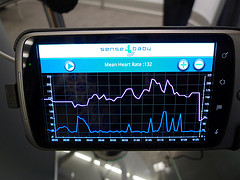
Fetal monitoring system display

Los Angeles County officials are expected to approve a $2.8 million settlement of a medical malpractice suit filed against medical staff at County Harbor-UCLA Medical Center over their failure to perform an emergency cesarean section after signs of distress. The 18-year-old woman, Guadalupe Fernandez, gave birth to a son who was later diagnosed with neurological injuries from fetal distress, according to court records.

Even after a completely normal prenatal course, a fetus may not tolerate the stresses of labor well. The main way that doctors and nurses have of following fetal well-being during labor is the electronic fetal heart monitor. If the fetal heart monitor shows evidence of fetal oxygen deprivation (fetal distress), the first step is try to make the problem go away by changing the mother’s position, giving the mother some oxygen to breathe, and increasing her IV fluids but decreasing or discontinuing any Pitocin that may be running. If these measures are not successful, then a fetus that is showing evidence of distress must be delivered via an emergency Cesarean section as soon as possible in order to prevent permanent brain damage.

Many medical malpractice cases revolve around the claim that the evidence of fetal distress on the monitor tracing was not properly assessed and that the baby sustained permanent brain damage (often cerebral palsy) because of the prolonged oxygen deprivation that resulted from the failure to perform an emergency Cesarean section.

Los Angeles County will also pay a $16,208 Medi-Cal lien issued against the family and waive Fernandez’s bill of $19,455 in addition to covering nearly $52,000 in legal costs, including attorney fees, in the case.

As a result of any settlement, the hospital is required to devise a plan of correction, much of which has already been implemented. Part of the plan involved a comprehensive survey to assess the hospital system’s protocols, along with training and credentialing procedures. According to the county, a further review of the hospital’s treatment history showed complication rates are at or below national benchmarks.

Published on:

The New York Appellate Division, Second Department, has, once again, ruled that the scope of a Frye hearing regarding a plaintiff’s theory of causation in a medical malpractice action is limited only to whether or not the expert’s opinion is based on generally accepted scientific principles, as opposed to the expert’s own unsupported beliefs. Specifically, plaintiff is not required to produce medical literature that demonstrates causation under parallel circumstances, but rather, an expert’s testimony must be allowed where a synthesis of various studies or cases permits the expert to reach such a conclusion.

In Lugo v. New York City Health & Hospitals Corp.,decided on September 13, 2011, the infant plaintiff indisputably suffered spastic diplegia type cerebral palsy, resulting in developmental delays and confirmed by abnormal findings on an MRI of his brain. He had been born with excellent Apgar scores, but experienced tremors when he was 40 minutes old. He was ultimately diagnosed in the NICU with a blood glucose level of 3 mg/dl (40 mg/dl being normal). After being given an infusion of glucose, his glucose level rose to a normal amount approximately one hour and twenty minutes after his birth.

The theory of plaintiff’s case was that the hospital’s failure to timely diagnose and treat the infant’s hypoglycemia caused his brain injury. The hospital’s attorneys successfully moved the Motion Court for a Frye hearing, supported by affidavits from its experts stating their opinion that a transient episode could not cause the type of brain injury seen on the infant’s MRIs. Following the hearing, the Motion Court precluded plaintiff’s experts from testifying with regard to their theory of causation, and dismissed the case, finding that plaintiff failed to provide “authoritative” medical literature that supported the theory that a “short episode” of hypoglycemia could have caused the infant’s brain injury.

Published on:

In a rather unusual case, the New York Appellate Division, Second Department held that there are limits to how far a defendant can go in examining a medical malpractice plaintiff during an Independent Medical Examination in New York. In the case D’Adamo v Saint Dominic’s Home decided on September 13, 2011, the Second Department was confronted with a defendant whose examining doctor wanted to perform a host of invasive examinations upon a non-communicative plaintiff who suffered from both mental and physical disabilities. The 19-year old plaintiff was a resident of the defendant’s group home as he suffered from mental retardation, cerebral palsy and autism. Through his guardian, the plaintiff alleged that the defendant’s malpractice caused him to sustain severe damage to his colon resulting in loss of a length of his colon and a permanent colostomy bag.

It is well-settled law in New York that a defendant is entitled to a medical examination of a plaintiff who places his physical condition in issue. It is also well-settled that the medical examination cannot be invasive in nature. In this case, the examining doctor chosen by the defendant initially sought to perform a rectal exam on the plaintiff with a rigid sigmoidoscope. Counsel for the plaintiff rightfully objected on the basis that the examination sought was clearly invasive and posed risks beyond that of a simple medical examination given the physical and mental condition of the plaintiff. The defendant and the examining doctor suggested alternative examinations involving a digital rectal examination, a pediatric sigmoidoscope and possible sedation. The plaintiff’s counsel again objected on the same basis. The Appellate Division, Second Department agreed that these examinations were too invasive and denied the defendant’s request.

Published on:

In The Courts

  • San Francisco’s Muni target of lawsuit by slain woman’s family (San Francisco Examiner, CA)
  • New York Hospital sues creator of website that discusses the 2003 death of his wife (Albany Times-Union, NY)
  • The family of a Georgia man who stabbed his mother to death in a psychotic rage will be permitted to file a medical malpractice lawsuit against his psychiatrist. (CBS News, GA)
Published on:

In The Courts

  • The Pennsylvania Superior Court has upheld a $5.2 million medical malpractice suit award for the widow of a Pennsylvania pharmacist after a jury found a former Wyomissing doctor negligent in his death.
  • A Olean man was awarded $24 million for misdiagnosis for a brain aneurysm in 1998 that led to a stroke, which left him paralyzed.
  • $500,000 was awarded in wrongful death lawsuit of an elderly man who froze to death in his Michigan home
Published on:

Our Partner, Jeffrey Bloom, recently settled a medical malpractice case in New York Supreme Court, Nassau County for $3,375,000 for the wrongful death of a 46 year old husband and father of two young children in which the patient died on the operating table during the performance of back surgery.

This complex case involved surgical error by the vascular and orthopedic surgeons and anesthesia malpractice. It was alleged that major blood vessels were lacerated during the surgery resulting in acute blood loss, a fact confirmed by the Medical Examiner, that no timely repair was performed by the surgeons and that the anesthesiologist failed to recognize the emergency, perform resuscitation and treat the patient’s acute hemorrhage by administering adequate blood and blood replacement products.

The defendants asserted that the patient, who was unemployed and on disability, had serious cardiac conditions which significantly decreased his life expectancy.

Published on:

  • Severe bedsores suffered in Staten Island hospital lead to a debilitating hip infection and $5.4M medical malpractice award (Staten Island Live)
  • New York Juror in medical malpractice lawsuit charged with soliciting bribes (The Clinical Advisor)
  • Injured baby’s parents sue Des Moines hospital (Des Moines Register)
Published on:

The family was awarded a record $58 million for medical malpractice
Daniel D'Attilo

A Connecticut family received a record medical malpractice award in a lawsuit, after a jury determined that Daniel D’Attilo’s medical problems were preventable. Daniel needs constant care and cannot speak, eat or walk due to these injuries. Last week, he and his family were awarded $58 million in a medical malpractice case against the obstetrician who delivered him.

According to lawyers, Daniel’s mother’s amniotic fluid dropped by half before going into labour, but her physician, Dr. Richard Viscarello, waited days to perform a Caesarian section. After a month-long trial the Jury decided that the D’Attilos should be paid $58 million compensation for ‘pain and suffering’ and for the Daniel’s past and continuing medical care.

The attorneys at Gair, Gair, Conason, Rubinowitz, Bloom, Hershenhorn, Steigman & Mackauf have more than 90 years of experience representing patients who have been injured or have died as the result of medical malpractice involving birth injuries.

Published on:

Our Partner Stephen Mackauf will Chair the Seminar Hospital Liability presented by The New York State Trial Lawyers Association on June 21 &22, 2011 to be held at 132 Nassau Street, New York, N.Y.

“This program will cover virtually every aspect of medical malpractice cases against hospitals. We begin with a a judge’s overview of recent developments in hospital liability law in New York with a special emphasis on vicarious liability. We will discuss how a plaintiff’s lawyer can use the concept of the “differential diagnosis.” We then cover hospital records and how to obtain the “records behind the records,” together with a discussion of the metadata hidden in computerized hospital records that tell you who really wrote what note, when, and what changes were made to it.” For more information and to register click here.