
Gair, Gair, Conason, Rubinowitz, Bloom, Hershenhorn, Steigman & Mackauf is a New York Plaintiff's personal injury law firm specializing in automobile accidents, construction accidents, medical malpractice, products liability, police misconduct and all types of New York personal injury litigation.

Articles Tagged with product liability lawyer

Published on:

Orla Baxendale lost her life due to anaphylactic shock resulting from a severe allergic reaction to a cookie manufactured by Cookies UnitedWhen a family loses a daughter to a preventable tragedy, accountability is not optional. It is essential. At Gair, Gair, Conason, Rubinowitz, Bloom, Hershenhorn, Steigman & Mackauf, our attorneys are representing the family of Órla Baxendale, a 25-year-old dancer whose life was cut short by a mislabeled cookie that was packaged and sold by Stew Leonard’s. The substitute complaint we filed on October 16, 2025, details systemic failures in the grocery chain’s allergen disclosure and product labelingprocedures — procedures that the complaint describes as “broken, unreliable, inherently dangerous, undependable, untrustworthy, erratic, and deplorable.”

Órla had severe allergies to peanuts. On January 11, 2024, she ate a Vanilla Florentine cookie that was purchased from a Stew Leonard’s store in Connecticut.  The cookies’ label did not list peanuts as one of its ingredients. Specifically, the cookies’ “contains” statement did not list peanuts. But the cookies contained peanuts — and Órla suffered a fatal anaphylactic reaction as a result of eating one.

Our substitute complaint outlines how this mislabeling was not an isolated mistake. Instead, it reflects systemic shortfalls in the grocer’s allergen-control and labeling systems.
Published on:

Hospitals across the country have been warned to immediately stop using certain Draeger mechanical ventilation filters after the U.S. Food and Drug Administration (FDA) issued a high-risk recall notice. The affected devices — SafeStar and TwinStar filters — are used during anesthesia and mechanical ventilation to prevent bacterial and viral contamination.

According to the FDA, the filters can cause misleading carbon dioxide readings during procedures. Carbon dioxide monitoring (capnography) is critical in surgery, particularly under anesthesia, as it helps ensure that a patient is ventilating properly. When readings are inaccurate, medical teams may administer unnecessary or harmful interventions — or fail to provide urgently needed care.

Scope of the Recall

Published on:

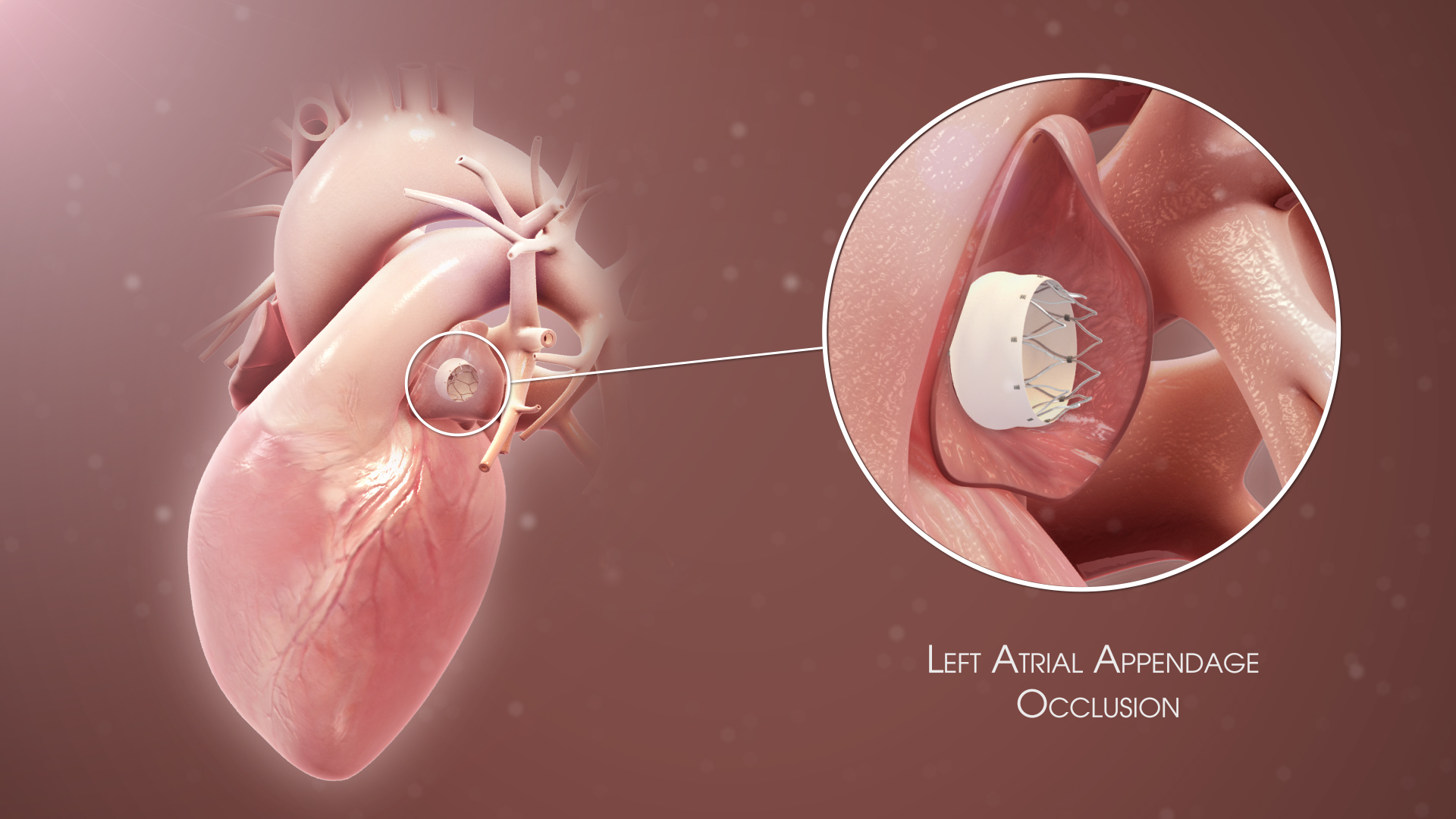
3D_Medical_Animation_of_Left_Atrial_Appendage_OcclusionBoston Scientific has issued updated instructions for products used in the implantation of its Watchman left atrial appendage closure device after the Food and Drug Administration (FDA) linked the procedure to 120 serious injuries and 17 patient deaths.

FDA Safety Alert Highlights Increased Risk Under Sedation

According to an FDA safety communication released on August 8, 2025, the updated instructions apply to the FXD Curve, Truseal, and Trusteer access systems—all of which are used to implant the Watchman device. The FDA warned that patients sedated but not placed on mechanical ventilation during the procedure face a heightened risk of air embolism, a dangerous condition caused when an air bubble enters the bloodstream.

Published on:

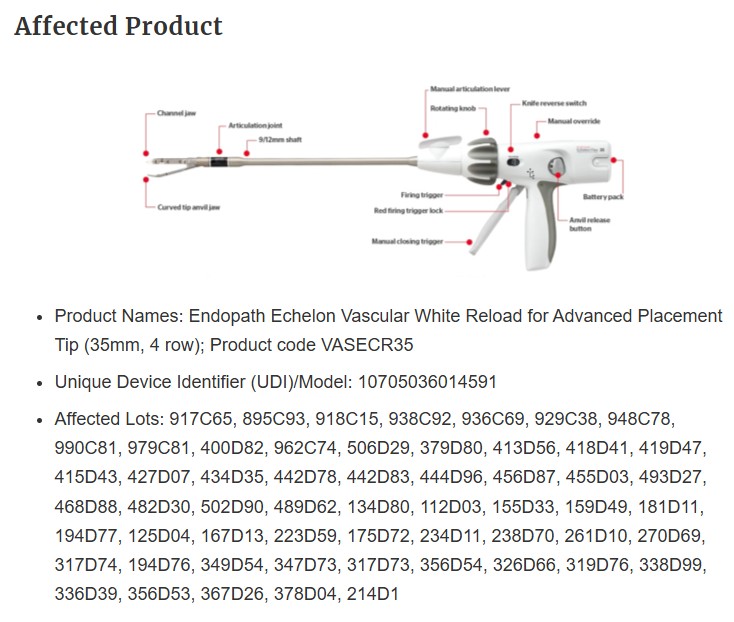
Stapler recalled by J&JFrom the Medical Malpractice and Product Liability Attorneys at Gair, Gair, Conason, Rubinowitz, Bloom, Hershenhorn, Steigman & Mackauf

Johnson & Johnson’s Ethicon division has issued a correction and Class 1 recall of its Echelon surgical stapler reload cartridges, following reports of a serious defect linked to at least one death and multiple injuries. The U.S. Food and Drug Administration (FDA) has confirmed that 678,526 units are affected by the recall, which involves staplers used to cut and staple tissue during surgery.

The FDA warned that the stapler may lock during use, failing to properly cut or seal tissue. This malfunction can result in the device becoming trapped in the patient, causing surgical delays, excessive bleeding, hemorrhagic shock, emergency conversion to open surgery, and even death.