Gair, Gair, Conason, Rubinowitz, Bloom, Hershenhorn, Steigman & Mackauf is a New York Plaintiff's personal injury law firm specializing in automobile accidents, construction accidents, medical malpractice, products liability, police misconduct and all types of New York personal injury litigation.

Articles Posted in Trial Advocacy

Published on:

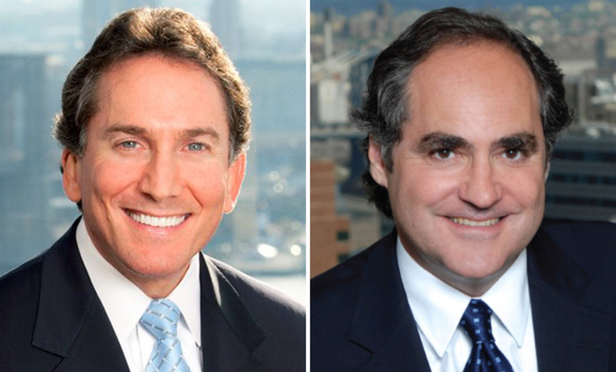
Ben%20Rubinowitz%20and%20Evan%20Torgan.jpgIn their Trial Advocacy column, New York Personal Injury Attorneys Ben Rubinowitz and Evan Torgan write that obtaining a just and proper award from a jury for pain and suffering in a wrongful death case can be challenging. An effective trial attorney must thoroughly prepare for all stages of the trial, including a voir dire that explores the feelings and beliefs of the potential jurors, and a strong summation that relates those feelings and beliefs to the evidence.

Read the complete article in the New York Law Journal
or Download it here.

Published on:

ben%20small.jpgIn their Trial Advocacy column in the New York Law Journal, New York Personal Injury Attorneys Ben Rubinowitz and Evan Torgan write: Our first article on the topic of secretly taping so-called “independent medical examinations” was met with wide criticism by certain members of the defense bar. However, if we are to achieve fairness in the adversarial process, and if trials are to remain reliable means of discovering the truth, then both sides must be permitted to use covert video surveillance where appropriate.
Read more in the New York Law Journal

Published on:

ben%20small.jpgOur managing partner Ben Rubinowitz will be lecturing on Trial Advocacy at the NYC flagship program of the New York State Trial Lawyers Association “Decisions 2014: Recent Developments in Tort Law” on September 13th 2014 at the Hotel Pennsylvania, 401 7th Ave, NY,NY.

Ben will speak about recent developments in the law and provide concrete examples of methods that can be used to deal with these new issues.

Decisions 2014 is a must for personal injury lawyers practicing in New York. The program will cover the following topics: Damages, Discovery, Ethic and professionalism, Evidence, Insurance, Jurisdiction, Labor Law, Legislation, Mass Torts, Medical Malpractice, Medicare & ERISA, Motor Vehicle Liability & Developments in No-fault, Municipal Liability, Pleading & Filing, Premises Liability, Product Liability, Trial Practice, Workers’ Compensation.

Published on:

rubinowitz_ben.jpgGGCSMB&R is proud to announce that our Managing Partner New York Personal Injury Attorney Ben Rubinowitz was the 2013 recipient of the Robert Keeton Award for Outstanding Service as a National Institute for Trial Advocay (NITA) Faculty Member. This award recognizes Ben’s exceptional work as a NITA faculty member. Here is what NITA has to say about Ben: “In considering his nomination, it was recognized that “Ben is a ‘best’ teacher and deserves the best teacher award.” He began teaching early in his career, and has contributed to new and evolving methods, such as “drills” and the drill room. He lectures in the same persona that he presents to a jury-a consummate role model.”

The National Institute for Trial Advocacy (NITA) is the nation’s leading provider of legal advocacy skills training. It is a deidcated team of professors, judges and practicing lawyers who believe that skilled and ethical advocacy is a critical component of legal professionalism and all systems of dispute resolution that seek justice

Below is a video demonstrating Ben’s skills as a NITA teacher

Published on:

Ben%20Rubinowitz%20and%20Evan%20Torgan.jpgIn their latest Trial Advocacy Column, New York Personal Injury Lawyers Ben Rubinowitz from Gair Gair Conason Steigman Mackauf Bloom and Rubinowitz and Evan Torgan from Torgan & Cooper write: Weaknesses in the opposition’s case are often not readily apparent in the facts contained in their own record. Nevertheless, powerful and persuasive weaknesses might well be found in what those very records do not say, but, indeed, should say.

Read more in the New York Law Journal

Published on:

ben%20small.jpgIn their Trial Advocacy column, New York Personal Injury Attorneys Ben Rubinowitz from Gair Gair Conason Steigman Mackauf Bloom and Rubinowitz and Evan Torgan from Torgan & Cooper write: Conducting an effective direct examination of an economist presents several challenges, such as maintaining the jury’s attention through the presentation of relatively dry subject matter, and conveying the complicated financial terms and calculations to lay jurors in a language that they can understand.

Read more in the New York Law Journal

Published on:

Our partner, New York Construction Accident Attorney Chris Sallay was the chair of the Litigating Construction Site Accidents NYC 2014 seminar presented by the New York State Bar Association last Friday . In this video Chris Sallay provides tips and demonstrates how to present an opening statement in a New York Construction Accident case.
To learn more about New York Construction Accident Law click here)

//www.youtube.com/watch?v=P46y1a_5Mu4

Published on:

r_steigman_small.jpgOur partner, NY Personal Injury Attorney Richard M. Steigman, will be the Chair of the “2014 CPLR Update: Learn the Cutting-Edge Decisions Every Litigator Must Know” Seminar presented by the New York State Trial Lawyers Association on March 25th 2014 from 6:00 to 9:00 pm. Hon. Ariel E. Belen (Ret) will also be on the faculty.

One of the key requirements of successfully managing a civil caseload is staying abreast of legislative changes and court decisions in the field of New York Civil Practice. This seminar will provide an in-depth review of these new developments, including practice tips and pitfall warnings that are invaluable for the civil litigator with perspectives from both the practitioner and the bench.

Topics will include:

Published on:

BR.jpgIn their Trial Advocacy column, New York Personal Injury Lawyers Ben Rubinowitz of Gair, Gair, Conason, Rubinowitz, Bloom, Hershenhorn, Steigman & Mackauf and Evan Torgan of Torgan & Cooper write: The rhetorical question is an effective and persuasive tool for summation. It is subtle in its delivery and potent upon its receipt. When used properly, it can persuade a jury without the insult of a more heavy-handed approach. A seasoned and accomplished trial attorney has to ask, what could be better?

Following is the article

The art of persuasion comes in many forms. It is the manner in which the trial lawyer chooses to present certain facts that will serve as the driving force behind a successful outcome. Since every aspect of the trial should be conducted with an eye toward summation-toward creating the most powerful argument that can be advanced-the trial lawyer must be acutely aware of how each part of the trial will affect the summation.
Continue reading →

Published on:

r_steigman_small.jpg By Richard M. Steigman;

Launched in 1965, Medicaid provides joint federal and state funding of medical care for individuals who cannot afford to pay their own medical costs. Although the Federal Government pays the majority of the costs incurred for patient care, under Federal Law, the states are tasked with administering the program.

One of the states’ obligations under Medicaid law is to seek reimbursement for payments for medical expenses from responsible third parties to the extent of such legal liability (42 U.S.C. § 1396[a][25][B]). To fulfill that mandate, New York enacted Social Services Law § 104-b, which gives the State Medicaid official the right to enforce a lien “for such amount as may be fixed by the public welfare officer not exceeding, however, the total amount of such assistance and care furnished by [Medicaid] on or after the date when such injuries occurred.”

This statute, like the ones enacted in other states, was interpreted as to allow Medicaid to assert a lien on a recovery up to the amount, regardless of the amount of the recovery which is properly allocable to Medicaid (see, e.g., Baker v. Sterling, 39 N.Y.2d 397, 384 N.Y.S.2d 128 [1976]). Put another way, under the interpretation used by Medicaid and backed by the Courts, if Medicaid had expended $200,000 for a plaintiff who suffers horrific personal injuries (and whose pain and suffering and loss of earnings claims would fairly be worth millions of dollars), but ultimately must settle a case for $250,000 due either to inadequate insurance, then Medicaid, in it is discretion, could assert a lien against the recovery up to the total amount of its expenditures. This is true irrespective of the fact that, had a finder of fact allocated the settlement among the different elements of damages, the amount properly allocable to Medicaid would, in fact, amount to a small fraction of its claimed lien.
Continue reading →