 New York Personal Injury Attorneys Blog
National Work Zone Awareness Week 2026: If You Were Injured in a Work Zone, Who Can You Sue?


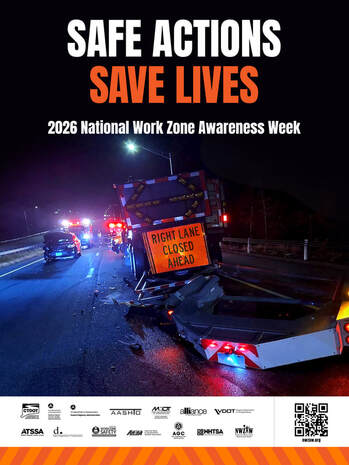 National Work Zone Awareness Week (April 20–24, 2026) is a reminder that roadway construction and utility projects save lives in the long run but can create serious dangers in the short term. Every day, drivers, passengers, pedestrians, cyclists, construction workers, flaggers, and utility crews are exposed to risks inside active work zones. When safety rules are ignored, the consequences can be devastating.
For injury victims and grieving families, one of the first legal questions is often simple: Who can be held responsible?
Work Zone Dangers Are Real
According to the 2026 National Work Zone Awareness Week data:
- At least two people are killed in work zones every day
- 850 people were killed in work zones in 2024
- More than half of fatal work zone crashes occurred at night
- Rear-end collisions caused nearly one-quarter of fatal work zone crashes
- Speed was a factor in more than one-third of fatal work zone crashes
- Nearly 170 pedestrians and cyclists were killed in work zones in 2024
- Large trucks or buses were involved in nearly one-third of fatal work zone crashes
These numbers show that work zone crashes are rarely “just accidents.” Many happen because preventable hazards were allowed to exist.
If You Were Injured in a Work Zone, Who Can You Sue?
The answer depends on how the incident happened. In many cases, more than one party may share liability.
1. The Negligent Driver
Many work zone injuries happen because a motorist was speeding, distracted, following too closely, intoxicated, or ignoring lane shifts and warning signs.
Examples include:
- Rear-ending another vehicle in slowed traffic
- Striking a flagger or road worker
- Crashing into barriers and hitting pedestrians
- Entering a closed lane at high speed
- Failing to yield in a narrowed traffic pattern
When a driver causes the crash, they may be financially responsible for injuries, lost income, medical expenses, and pain and suffering.
2. The Construction Company or Contractor
Road contractors must follow safety rules and traffic control plans. If they fail to do so, they may be liable.
Examples include:
- Missing or confusing warning signs
- Poorly placed cones or barrels
- Unsafe detours
- Lack of lighting for nighttime work
- Exposed drop-offs or debris in the roadway
- Unsafe equipment operation
- Failure to separate workers from traffic
A construction zone should not become a trap for the public.
3. The Government Agency That Owned or Controlled the Road
Many work zones are on city, county, state, or federally funded roads. In some cases, the public agency responsible for the project may be liable for negligent planning, dangerous roadway design, poor supervision, or failure to correct known hazards.
Claims against public entities often involve strict deadlines and special notice requirements, so immediate legal action is critical.
4. Trucking Companies and Commercial Vehicle Operators
Because large trucks and buses are involved in a significant share of fatal work zone crashes, commercial liability is often a major issue.
Potential defendants may include:
- Truck driver
- Trucking company
- Vehicle owner
- Maintenance contractor
- Cargo loading company
Commercial cases may also involve black box data, driver logs, dispatch records, and safety history.
5. Equipment Manufacturers or Maintenance Companies
If a crash or injury was caused by defective machinery, failed brakes, malfunctioning warning devices, or unsafe barriers, a product manufacturer or maintenance provider may also be responsible.
Work Zone Injury Cases Require Fast Investigation
Critical evidence can disappear quickly, including:
- Surveillance footage
- Dashcam video
- Work permits
- Traffic control plans
- Inspection logs
- Vehicle data
- Witness statements
- Contractor records
- 911 and police reports
The sooner an attorney investigates, the stronger the chance of preserving proof.
Injured in a New York Work Zone?
If you or someone you love was injured or killed in a roadway construction zone, do not assume the driver is the only one at fault. Contractors, trucking companies, and public entities may also bear responsibility.
The construction accident attorneys at Gair, Gair, Conason, Rubinowitz, Bloom, Hershenhorn, Steigman & Mackauf handle serious injury and wrongful death litigation throughout New York. Call 212-943-1090 for a free consultation.
