 New York Personal Injury Attorneys Blog
What Are Your Legal Rights After a Plane Crash in New York?


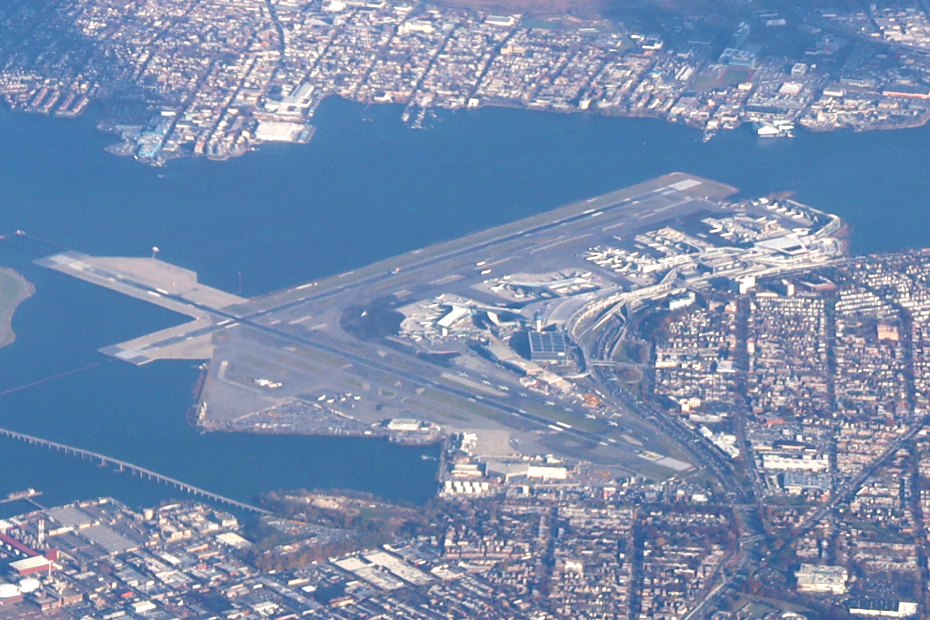 Guidance Following the LaGuardia Air Canada Tragedy
A serious aviation incident at LaGuardia Airport involving an Air Canada regional jet and a runway fire truck has left dozens injured and raised urgent legal questions. When a crash occurs on approach or on the runway, the situation is legally complex from the outset, often involving multiple parties, overlapping jurisdictions, and federal as well as international law.
For passengers and families, what happens in the hours and days after the crash can significantly impact any future claim.
Critical Legal Steps After an Aviation Accident
1. Get a Full Medical Evaluation, Even If You Feel “Fine”
After a crash, adrenaline often masks serious injuries. Victims may walk away believing they are unharmed, only to develop symptoms hours or days later.
- Head injuries, internal bleeding, and spinal trauma are common in aviation impacts, even at relatively low speeds.
- Psychological injuries such as acute stress disorder or PTSD can emerge later and are fully compensable.
- Medical records created immediately after the incident become key evidence linking injuries to the crash.
Failing to seek prompt care can give insurers an argument that your injuries were not caused by the accident.
2. Preserve Evidence Before It Disappears
Aviation accidents are investigated quickly, and physical evidence can be cleared or controlled within hours.
- Take photos or videos if possible—of the cabin, your seat area, injuries, and any visible damage.
- Save your boarding pass, ticket confirmation, and baggage tags.
- Write down what you remember: announcements, impact sequence, smells (like smoke or fuel), and crew instructions.
This type of firsthand documentation can later support or contradict official findings.
3. Do Not Provide Statements to Airline or Insurance Representatives
Shortly after the incident, representatives for the airline or its insurers may reach out.
- They may appear supportive, but their role is to limit financial exposure.
- Recorded statements can be used to shift blame or minimize the severity of injuries.
- Early settlement offers, if made, are often far below the true long-term value of a claim.
Before speaking with any representative, it is critical to speak to an airplane accident lawyer.
4. Understand That Multiple Parties May Be Responsible
Based on early reports and a chilling air traffic control audio, this incident unfolded during an active emergency response on the ground, with both an arriving Air Canada aircraft and a Port Authority emergency vehicle operating in close proximity on or near Runway 4.
This is exactly the type of situation where liability is shared, complex, and heavily investigated.
A Federal Investigation Is Already Underway
The National Transportation Safety Board (NTSB), along with other federal and local agencies, will lead the investigation.
They will analyze:
- Air traffic control recordings (including the “stop, stop, stop” transmission and post-incident admission of “I messed up”)
- Ground radar and runway movement data
- Cockpit voice recorders and flight data recorders
- Emergency response protocols and dispatch timing
- Communications between tower, ground crews, and the aircraft
These findings will ultimately shape how liability is assigned—but that process can take months or even years.
5. Know That International Law May Apply: The Montreal Convention
Because this flight originated in Canada and landed in Laguardia Airport in New York, claims against Air Canada are governed by the Montreal Convention. In practical terms, this means that if you were injured in the runway collision at LaGuardia Airport, you do not initially have to prove fault to bring a claim against the airline, the incident itself qualifies as an “accident” under the treaty. The airline is automatically responsible for damages up to a certain threshold, and additional compensation may be recovered if negligence is established. Importantly, the Convention applies only to the airline. Claims against other potentially responsible parties, such as airport authorities, air traffic control, or ground vehicle operators, must be pursued separately under U.S. and New York law. Understanding how these overlapping legal frameworks work together is key to maximizing recovery after an aviation accident.
6. While Pilots Cannot Sue the Airline, They May Pursue Claims Against Third Parties
In this case, early air traffic control recordings, including statements suggesting “I messed up” and urgent last-second warnings to stop, already point to potential issues beyond the airline itself, which is significant for how these claims may unfold. Pilots and crew members are treated differently from passengers in an aviation accident like the collision involving Air Canada at LaGuardia Airport. While passengers can bring direct claims against the airline under the Montreal Convention which imposes strict liability and allows recovery of full damages, pilots are considered employees, so their families are typically limited to workers’ compensation benefits when it comes to claims against the airline itself. However, where evidence suggests potential errors in runway coordination or emergency response, the pilots’ families may pursue wrongful death claims against third parties such as the Federal Aviation Administration, the Port Authority of New York and New Jersey, or other ground operators, which can allow for significantly broader recovery beyond workers’ compensation.
7. Evaluate the Full Scope of Compensation, Not Just Immediate Costs
Aviation claims are often high-value because injuries can be severe and long-lasting.
Victims may be entitled to compensation for:
- Medical expenses (including surgeries, rehabilitation, and long-term care)
- Lost income and diminished earning capacity
- Pain and suffering, including physical and emotional trauma
- Psychological injuries, including anxiety related to flying or travel
- Wrongful death damages for surviving family members
An early settlement rarely accounts for future medical needs or long-term consequences.
8. Act Quickly as Critical Deadlines Apply
Aviation claims are subject to strict legal deadlines.
Under international law, claims may need to be filed within two years.
Claims involving public entities such as airport authorities, may require notices of claim within 90 days under New York law.
Evidence, including black box data and operational records, must be preserved early.
Delays can jeopardize both the strength and viability of a case.
Why These Cases Require Experienced Aviation Counsel
Aviation litigation is one of the most complex areas of personal injury law. It involves:
- Federal aviation regulations
- International treaties
- Technical accident reconstruction
- Coordination with government investigations
Experienced trial attorneys understand how to navigate these layers while building a case that reflects the full extent of harm suffered.
Taking the Next Step
For those impacted by the LaGuardia crash, the legal process begins long before any lawsuit is filed. Early decisions, medical, practical, and legal, can shape the outcome of a claim.
Speaking with an attorney who has experience in aviation accidents ensures that your rights are protected from the very beginning.
Call 212-943-1090 for a free consultation or fill a form online.
Serious aviation accidents require serious legal representation.
