 New York Personal Injury Attorneys Blog
Deadly Brooklyn Building Collapse: 98 Open Housing Violations, Including 21 Immediately Hazardous Conditions


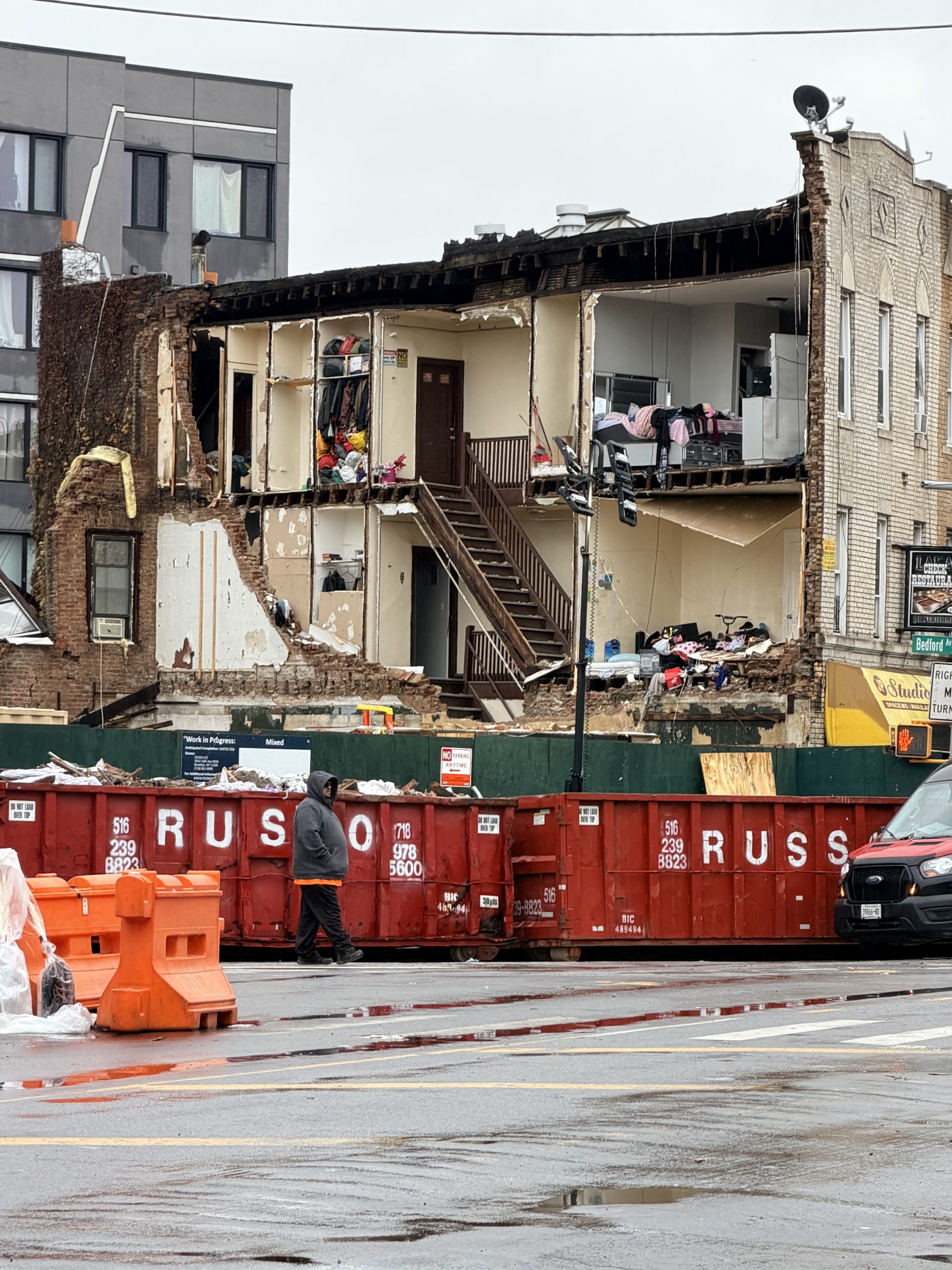 Deadly Brooklyn Building Collapse: 98 Open Housing Violations, Including 21 Immediately Hazardous Conditions
November 13, 2026
The devastating building collapse in Flatbush, Brooklyn, on November 11, 2026, has left eight people dead, including two children and two construction workers, and 18 others injured. As investigators examine what caused the three-story building at 1321 Flatbush Avenue to collapse beside an active excavation site, official New York City records reveal a troubling history of unresolved housing and safety violations.
For more information about the tragedy, the ongoing investigation, and the legal rights of victims and their families, visit the firm’s Flatbush Brooklyn Building Collapse Lawyer page.
According to official records from the New York City Department of Housing Preservation and Development (HPD), the collapsed building had 98 open violations, including 40 classified as hazardous and 21 classified as immediately hazardous. Some violations date back decades, while others were issued as recently as April 2026, just seven months before the tragedy.
Separate reports have also revealed that a pre-construction inspection documented cracks and deterioration in the building’s exterior walls before excavation work began next door.
The cause of the collapse remains under investigation, and no determination has been made that these violations or previously documented conditions contributed to the disaster. Nevertheless, the records raise important questions about building maintenance, construction safety, and whether adequate precautions were taken to protect the people living and working at the property.
City Records Reveal 98 Open Violations at the Collapsed Flatbush Building
The HPD records for 1321 Flatbush Avenue identify:
- 35 Class A violations, classified as non-hazardous.
- 40 Class B violations, classified as hazardous.
- 21 Class C violations, classified as immediately hazardous.
- 2 Class I administrative violations.
Altogether, 61 of the 98 open violations were classified as hazardous or immediately hazardous.
The records document a range of problems, including fire protection deficiencies, exposed electrical wiring, defective fire-resistant materials, roof leaks, and problems with emergency exits.
These are HPD housing maintenance violations, not Department of Buildings structural violations. Their existence does not establish that the building was structurally unsound or explain why it collapsed.
However, the nature and duration of some of the documented conditions raise questions about the building owner’s maintenance practices and the effectiveness of enforcement measures.
Fire Safety and Electrical Hazards Were Documented Months Before the Collapse
Among the most concerning violations are those involving essential fire protection systems and electrical safety.
On April 20, 2026, HPD issued several violations, including:
Violation #18814603 — Class C, Immediately Hazardous
The building was cited for failing to provide an adequate water supply for its wet sprinkler and/or standpipe system throughout the property.
Violation #18814630 — Class B, Hazardous
Inspectors documented exposed electrical wiring along the east wall of the third-floor public hallway.
Violation #18814619 — Class B, Hazardous
Inspectors identified broken or defective fire-retardant material in the ceiling of the third-floor public hallway.
Violation #18814611 — Class B, Hazardous
The owner was directed to repair a leaking roof affecting the third-floor public hallway.
Violation #18807708 — Class C, Immediately Hazardous
Inspectors cited a defective or missing self-closing entrance door at a third-floor apartment.
These violations were recorded less than seven months before the November 11 collapse.
Although these conditions are not evidence of the collapse’s structural cause, they document serious safety concerns affecting the building’s occupants.
The Building Had Previously Been Ordered to Provide a 24-Hour Fire Guard
The HPD records reveal that fire protection problems were not limited to 2026.
On August 13, 2024, the building received Class C violation #17190664, directing the owner to provide a continuous 24-hour fire guard because of dangerous fire hazards.
Other violations issued that same day included:
- Inadequate water supply for the sprinkler and/or standpipe system, violation #17190663.
- Exposed electrical wiring in the third-floor public hallway, violation #17190670.
- Defective fire-retardant plaster, violation #17190668.
- A defective building entrance self-closing door, violation #17190662.
- A leaking roof, violation #17190666.
The recurrence of similar violations in 2024 and 2026 raises questions about whether the underlying problems were adequately addressed.
A history of repeated violations may also be relevant when evaluating what a property owner knew, or reasonably should have known, about unsafe conditions.
Older Records Documented Deteriorated Masonry and Other Building Deficiencies
The HPD records extend back decades and include several violations involving building materials and masonry.
On December 1, 1980, inspectors documented:
Violation #1457191: Broken or defective masonry along the west wall of the cellar boiler room.
Violation #1457189: Eroded mortar joints along the front parapet wall at roof level.
Violation #1457188: Loose and eroded concrete coping along the front roof parapet.
These historical violations are noteworthy because they concern deterioration of building components.
However, the age of these records is important. The presence of an unresolved historical violation does not establish that the same physical condition persisted unchanged until 2026 or that it contributed to the collapse.
Determining the building’s actual structural condition immediately before the disaster will require examination of engineering reports, inspection records, photographs, maintenance work, and other evidence.
Pre-Construction Survey Reportedly Identified Cracks Before Excavation Began
Separate from the HPD violations, a pre-construction survey dated March 5, 2026, reportedly documented significant deficiencies in the exterior of 1321 Flatbush Avenue.
According to News 12 and NBC New York, the survey identified visible cracks and rated the building’s north facade, facing the neighboring construction site, in poor condition.
The survey was intended to document existing conditions before nearby construction activities.
This raises several important questions:
- Were the documented cracks and deficiencies evaluated by a structural engineer?
- Were the conditions considered when planning excavation and foundation work?
- What measures were designed to protect the neighboring building?
- Was movement or additional cracking monitored during construction?
- Did the building owner and construction professionals take appropriate steps in response to the documented conditions?
The existence of visible cracks does not necessarily mean that a building is in danger of collapse. Their significance depends on their location, severity, progression, and the building’s structural system.
Investigators will need to determine whether the documented conditions were relevant to the failure.
Neighboring Construction Site Had Previously Violated a Stop-Work Order
The neighboring property at 2625 Bedford Avenue was also the subject of Department of Buildings enforcement actions before the collapse.
On March 20, 2026, inspectors found demolition underway without adequate overhead protection for neighboring properties and issued a stop-work order.
During an April 23 inspection, DOB determined that demolition had continued despite the order.
The violations were subsequently addressed, and the stop-work order was lifted on May 8.
On November 11, excavation was underway at the property when 1321 Flatbush Avenue collapsed into the adjacent construction site.
The earlier demolition violations do not establish that the contractor responsible for that work caused the collapse. The investigation must examine the activities and responsibilities of the various parties involved in demolition, excavation, foundation construction, and protection of neighboring structures.
Could the Building Owner, Developer or Contractors Be Held Liable?
A catastrophic building collapse can involve overlapping responsibilities under New York law.
Property owners have obligations to maintain their buildings in reasonably safe condition. Developers, contractors, engineers, and other construction professionals may also have duties to protect adjoining properties and the people who occupy them.
Depending on the evidence, a civil investigation may examine whether:
- The building owner failed to address dangerous conditions or obtain necessary repairs.
- Existing structural deficiencies were properly evaluated before excavation.
- Excavation support and protection systems were appropriately designed and installed.
- Contractors followed approved construction plans and applicable safety requirements.
- Warning signs of structural movement or instability were recognized and addressed.
In cases involving injured construction workers, New York Labor Law Sections 200, 240(1), and 241(6) may also be relevant, depending on the circumstances of the accident and the work being performed.
Families who lost loved ones may have grounds for wrongful death claims, while injured residents, workers, and other victims may have personal injury claims against legally responsible parties.
Whether any individual or company can be held liable for this collapse will depend on the findings of the ongoing investigation.
Could This Deadly Brooklyn Building Collapse Have Been Prevented?
The November 11 tragedy has devastated families and the surrounding Flatbush community.
The existence of 98 open HPD violations, including 21 immediately hazardous conditions, raises serious concerns about the building’s history of maintenance and safety problems.
When considered alongside the pre-construction survey documenting exterior deterioration and the previous stop-work order at the neighboring construction site, the records underscore the importance of a comprehensive investigation.
The central question is not simply whether violations existed, but whether any failures in maintenance, engineering, construction practices, or safety oversight contributed to the collapse.
Answering that question will require a careful examination of the evidence.
Experienced Brooklyn Building Collapse and Construction Accident Attorneys
For more than a century, the personal injury attorneys at Gair, Gair, Conason, Rubinowitz, Bloom, Hershenhorn, Steigman & Mackauf has represented individuals and families seriously injured in catastrophic accidents throughout New York including Brooklyn.
The firm’s attorneys have extensive experience handling complex construction accident, building collapse, and wrongful death litigation, including the litigation arising from the 2008 Tribeca crane collapse, which resulted in a $272.5 million settlement.
Cases involving building collapses often require detailed investigations, engineering analysis, review of construction records, and an understanding of the legal responsibilities of property owners, developers, contractors, and other parties.
Individuals seriously injured in a building collapse, and families who have lost loved ones, can contact Gair, Gair, Conason, Rubinowitz, Bloom, Hershenhorn, Steigman & Mackauf for a free consultation at 212-943-1090.
