 New York Personal Injury Attorneys Blog
New York Hospital Safety Grades Reveal Serious Patient Risk Gaps – What Injured Patients Need to Know


From our New York medical malpractice lawyers
When the Leapfrog Group released its Fall 2025 Hospital Safety Grades on November 13, 2025, New York patients were given a stark reminder of how uneven hospital safety can be across the state. Out of 143 New York hospitals, only 33 earned an “A”, while 16 received a “D” and 2 were given a failing “F” grade.
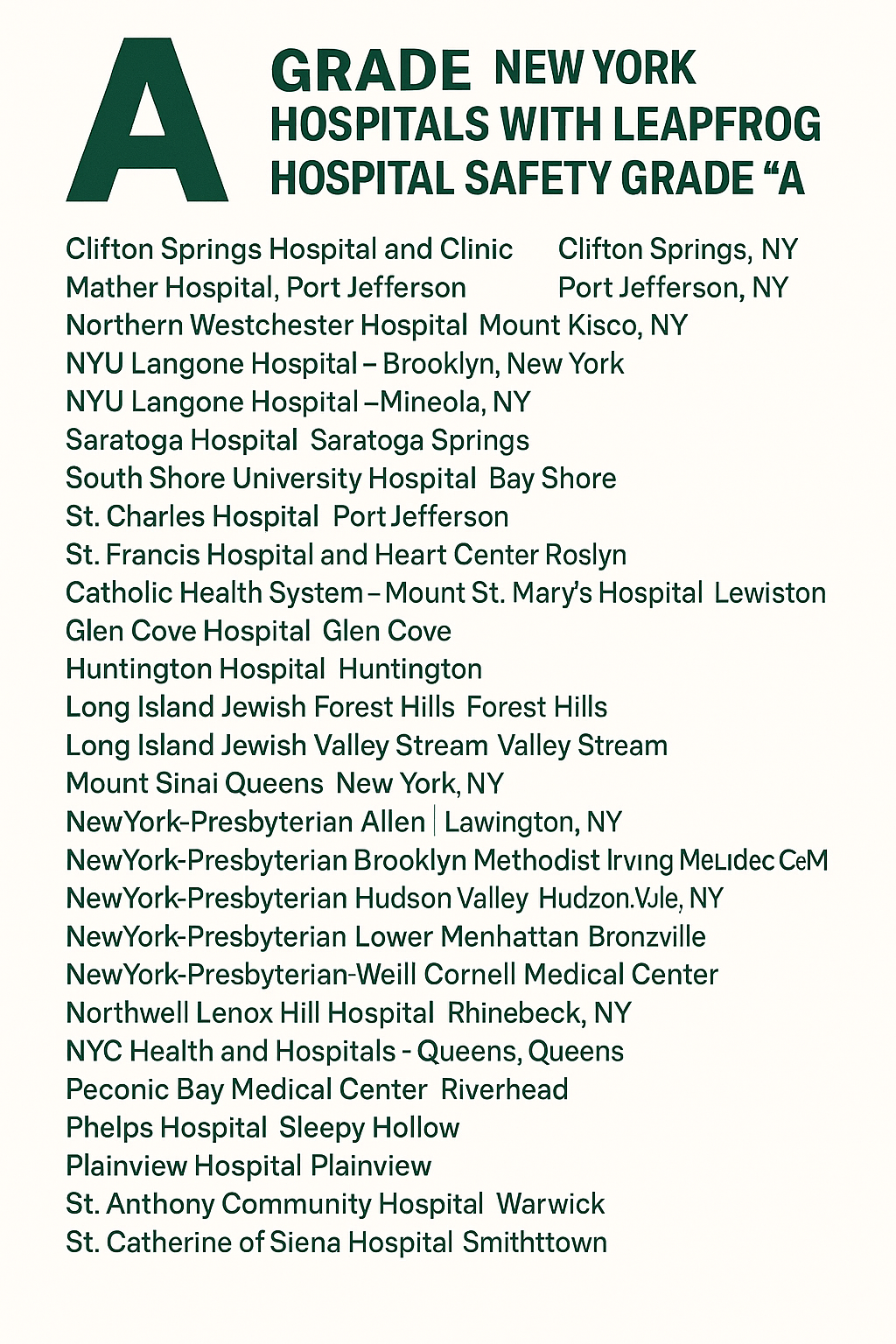
For patients and families who have suffered serious harm in a hospital, these grades are not just abstract numbers – they can be powerful evidence of broader patient safety problems and systemic negligence.
Below, our New York medical malpractice attorneys explain what these grades mean, how they may relate to a potential malpractice case, and what to do if you or a loved one was seriously injured in a New York hospital.
What Is the Leapfrog Hospital Safety Grade?
The Leapfrog Hospital Safety Grade is a national scorecard that evaluates general acute-care hospitals on how well they protect patients from preventable harm, including:
-
Hospital-acquired infections
-
Falls and other injuries
-
Problems with staffing, communication, and safety culture
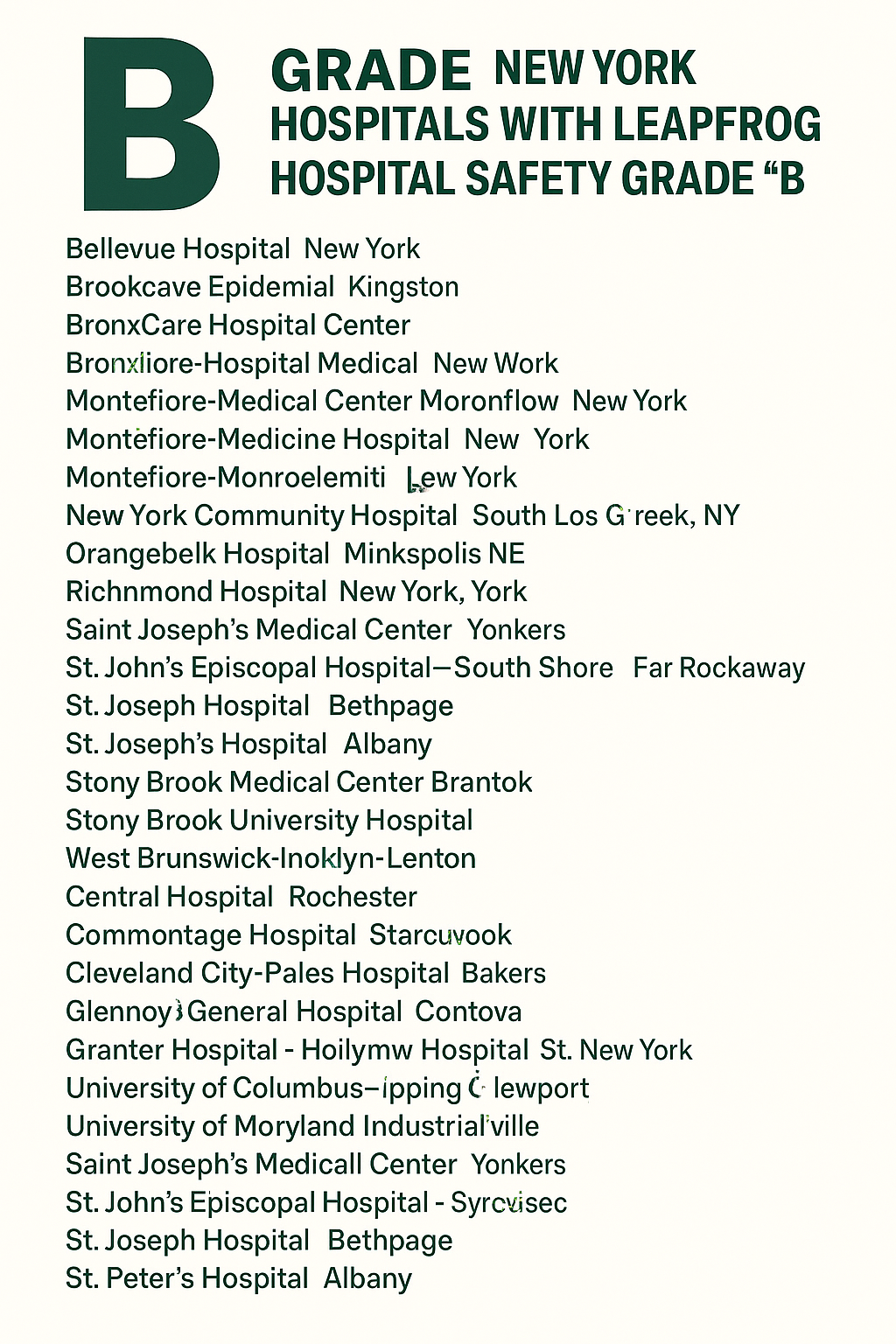 Using up to 31 evidence-based measures from federal data and hospital surveys, Leapfrog assigns each hospital a letter grade: A, B, C, D, or F.
These scores are not a substitute for legal analysis or medical review, and they are not a final judgment on whether a particular hospital committed malpractice in a specific case. However, they are one of the most widely cited, independent benchmarks of how safely hospitals operate.
Snapshot of New York: 2025 Hospital Safety Grades
From the data you provided for Fall 2025, the New York landscape looks like this:
-
143 hospitals graded statewide
-
33 hospitals with an “A” – roughly 23% of New York hospitals
-
30 hospitals with a “B”
-
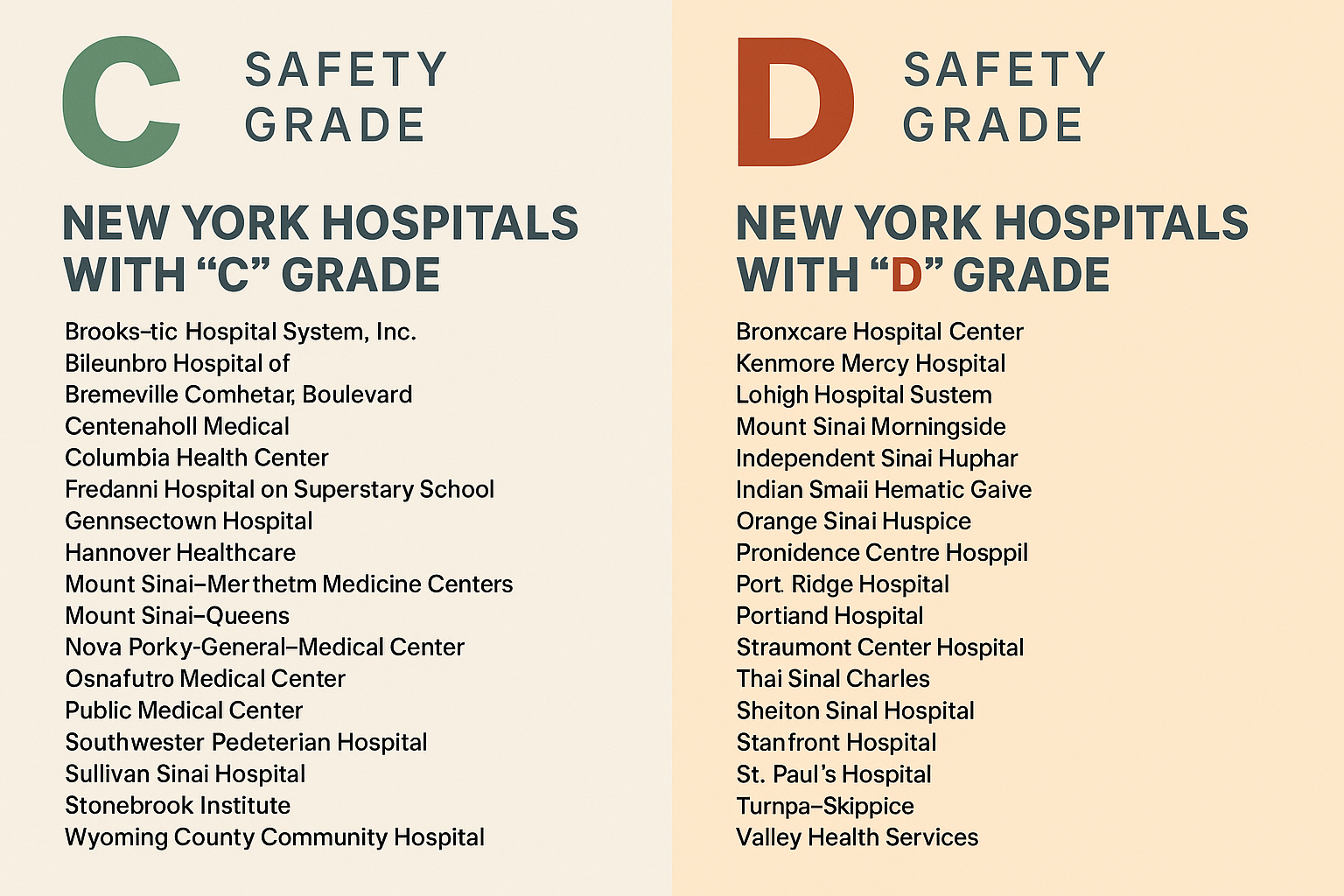
62 hospitals with a “C” – the largest group
-
16 hospitals with a “D”
-
2 hospitals with an “F”
Some hospitals consistently perform well, including many major centers in Manhattan, Brooklyn, Queens, Westchester, and Long Island that received A or B grades. But a substantial number of facilities are graded C, D, or F, signaling persistent safety challenges.
For patients, this means that your experience – and your risk of preventable harm – can vary dramatically depending on where you receive care.
What These Grades Do (and Don’t) Mean for a Malpractice Case
It is important to understand what a Leapfrog grade can and cannot do in the context of a medical malpractice claim.
A high grade does not guarantee safety
Even an “A” hospital can have:
-
A dangerously understaffed unit on a given night
-
A single physician or provider who repeatedly violates protocols
-
Breakdowns in communication that lead to catastrophic errors
Patients can and do suffer life-changing injuries at highly rated hospitals. A strong grade does not immunize a hospital or doctor from liability.
 A low grade is a warning sign, not automatic malpractice
On the other end of the spectrum, a “D” or “F” grade does not automatically prove malpractice in your individual case. What it does suggest is that:
-
The hospital has long-standing, measurable safety problems
-
There may be systemic issues with infection control, medication safety, staffing, or communication
-
Leadership may have been on notice about safety failures and failed to correct them
In litigation, this type of information can support arguments about corporate negligence, failure to provide a safe environment of care, or a pattern of ignoring known risks.
How Our New York Medical Malpractice Lawyers Use Hospital Safety Data
When we investigate a serious hospital injury or wrongful death, we never rely on a single number or rating. Instead, we use tools like the Leapfrog Hospital Safety Grade as one piece of a much larger puzzle.
In appropriate cases, hospital safety data can help us:
-
Identify patterns of similar harm
If the metrics show high rates of infections, surgical complications, or patient falls, and your injury fits that pattern, it may point toward a systemic breakdown rather than a one-off mistake. -
Support claims of corporate negligence
A hospital with a long history of poor safety performance may have failed to allocate resources, staff, training, or oversight to fix known problems – a key issue in claims against the hospital entity itself. -
Challenge a defense that your injury was “unavoidable”
When a facility with poor safety scores claims that a devastating outcome was simply “bad luck” or a risk you had to accept, objective data showing repeated safety failures can undercut that argument. -
Cross-check hospital policies and real-world practice
We compare the hospital’s written protocols to what actually happened in your case and to how the hospital performs on related safety measures.
Of course, any malpractice case ultimately turns on your specific facts: your medical history, the decisions made by your doctors and nurses, the timing of your symptoms, the test results, and the hospital’s actions or failures to act.
Common Types of Hospital Negligence Behind These Grades
The same issues that drive down a hospital’s safety score are often at the heart of serious malpractice cases we see in New York, including:
-
Failure to diagnose or delayed diagnosis – missing signs of stroke, sepsis, heart attack, pulmonary embolism, or other emergencies
-
Medication errors – giving the wrong drug, wrong dose, or dangerous combinations, or failing to monitor for side effects
-
Surgical errors – operating on the wrong level, damaging critical structures, uncontrolled bleeding, or inadequate post-operative monitoring
-
Birth injuries – failing to respond to fetal distress, delayed C-section, mismanaged labor and delivery
-
Hospital-acquired infections – infections from poor sterile technique, contaminated devices, or inadequate infection control
-
Falls and preventable injuries – failing to protect high-risk patients from falls, bedsores, or other avoidable harm
If you see your experience reflected in these categories – especially at a hospital that has struggled with safety – you should have your case reviewed by an experienced New York medical malpractice attorney.
What to Do If You Were Seriously Harmed in a New York Hospital
If you or a loved one suffered catastrophic injury, permanent disability, or wrongful death after treatment at a New York hospital, there are several critical steps you should take as soon as possible:
-
Get a complete copy of your medical records
Do not rely on discharge summaries alone. Full records often reveal delays, abnormal test results, or ignored warnings that were never explained to you. -
Write down everything you remember
Dates, names, conversations, symptoms, and what you were told. These details fade quickly and can become crucial evidence later. -
Be cautious about signing releases or forms
Hospitals and insurers may request broad authorizations or push for early settlements before you know the full extent of your injuries. -
Speak with a New York medical malpractice lawyer promptly
New York’s statute of limitations for malpractice and wrongful death is strict, and shorter deadlines apply to city- and state-run hospitals (including a 90-day Notice of Claim for many public entities). Delay can cost you your rights.
How Our NYC Medical Malpractice Attorneys Can Help
Serious hospital negligence cases are complex. They require:
-
Detailed review of thousands of pages of medical records
-
Consultation with leading medical experts in the relevant specialties
-
Thorough understanding of hospital systems, safety standards, and regulatory requirements
-
Trial experience in presenting complex medicine clearly and persuasively to a jury
Our New York medical malpractice lawyers have decades of experience litigating catastrophic injury and wrongful death cases against some of the largest hospital systems in New York City and across the state. We are familiar with the safety issues highlighted in reports like the Leapfrog Hospital Safety Grade, and we know how to use that data effectively where appropriate in building a case.
If You Believe Hospital Negligence Caused a Life-Changing Injury, Contact us for a Free Consultation
Hospital safety grades show that too many New York patients are still at risk for preventable harm. If you or a family member suffered a devastating injury, permanent disability, or death following treatment at a New York hospital, you do not have to navigate the medical and legal system alone.
You can speak with an experienced New York medical malpractice attorney about your case, your options, and whether the hospital, doctors, or other providers may be legally responsible for what happened.
📞 Free consultation: 212-943-1090
We carefully review each potential case and, where appropriate, pursue full accountability and maximum compensation for our clients, including damages for medical costs, lost earnings, and the human suffering caused by avoidable medical errors.
