 New York Personal Injury Attorneys Blog
Fatal NYC Truck and Bicycle Crash Raises Questions About Side Guard Waivers and Liability


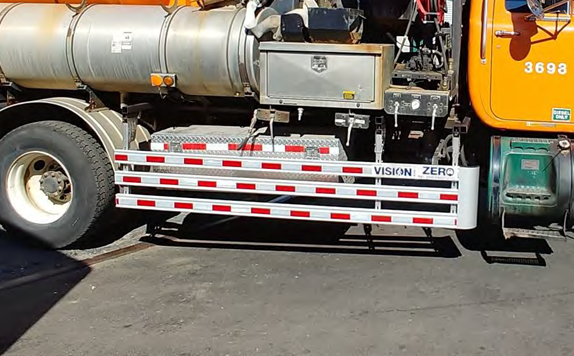 The recent fatal truck crash involving a 15-year-old Citi Bike rider on East 14th Street is raising significant legal questions about commercial truck safety, driver responsibility, and the effect of a New York City exemption that allowed the truck to operate without a side guard designed to protect cyclists and pedestrians.
15-year-old Daria Serkov was killed on September 18, 2026, after a hydro-excavation truck traveling west on East 14th Street turned right onto First Avenue and struck the electric Citi Bike she was riding with another teenager. The precise circumstances remain under investigation, and the truck driver had not been criminally charged as of September 21.
The crash is particularly notable because the truck reportedly did not have a side guard. The New York City Business Integrity Commission had granted the vehicle a waiver from the City’s side-guard requirement in 2023.
New York Law Requires Drivers to Exercise Due Care Around Cyclists
Regardless of whether a truck has received an exemption from a particular equipment requirement, its driver remains subject to New York’s traffic laws.
New York Vehicle and Traffic Law § 1146 requires every driver to exercise due care to avoid colliding with a bicyclist or pedestrian.
New York law also specifically governs turning movements. Under Vehicle and Traffic Law § 1163, a driver may not turn or otherwise move from a direct course unless the movement can be made with reasonable safety. The statute also requires an appropriate turn signal.
These rules can become particularly important in a collision involving a large truck making a right turn across the path of a cyclist.
In a civil case, investigators would typically examine questions such as whether the driver adequately checked mirrors and blind spots, whether the cyclist was visible before the turn began, whether an appropriate signal was used, the truck’s speed and positioning, and whether the driver could have completed the turn safely.
A Side-Guard Waiver Does Not Eliminate Other Duties of Care
New York City’s side-guard law generally applies to trade-waste vehicles with a gross vehicle weight rating exceeding 10,000 pounds.
The Business Integrity Commission states that covered vehicles must either provide proof that side guards have been installed or obtain a waiver when installation would be impractical.
The truck involved in this crash received such a waiver because incorporated features including toolboxes and fuel tanks made installation of a side guard impractical.
Legally, however, an exemption from one regulatory requirement should not be confused with immunity from negligence claims.
A waiver may establish that the vehicle was permitted to operate without the equipment required of other covered trucks. It does not by itself determine whether the driver operated the vehicle negligently, whether the company took reasonable safety precautions, or whether some other aspect of the vehicle’s design or operation contributed to a crash.
Those questions would depend on the evidence developed during an investigation.
Could the Truck Company Still Face Liability?
Potential civil liability following a commercial truck crash can extend beyond the individual driver.
Depending on the facts, an investigation may examine the conduct of the company that owned or operated the truck, including its driver training and supervision, safety policies, vehicle maintenance, internal procedures for operating vehicles with significant blind spots, and whether other available safety technology was installed or used.
In a case involving a truck operating without a side guard pursuant to an exemption, attorneys may also investigate what alternative safety measures were available.
For example, relevant evidence could include:
- side and rear camera systems;
- proximity or cyclist-detection technology;
- mirrors and visibility equipment;
- driver training regarding right-turn conflicts with bicyclists;
- company safety manuals and policies;
- prior crashes or safety complaints involving the vehicle or company;
- the waiver application and supporting documentation submitted to the City; and
- records showing why the company chose to operate that particular vehicle in dense New York City traffic.
The existence of a valid waiver may be an important fact, but it would be only one part of a broader liability investigation.
Why the Absence of a Side Guard Could Matter to Causation and Damages
Side guards are intended to prevent a cyclist or pedestrian who comes into contact with the side of a large truck from falling underneath the vehicle and into the path of its rear wheels.
New York City has stated that side guards can reduce fatalities involving certain side-impact crashes by approximately 40 percent. The equipment is intended to protect against the type of underride event involved in this collision.
That distinction can be important legally.
The first question in a negligence case is typically what caused the collision. A separate but related question may be what caused the injuries to become fatal.
Even if a side guard would not have prevented the initial contact between a truck and a cyclist, evidence that a safety device could have prevented the cyclist from going beneath the vehicle may become relevant to the circumstances surrounding the fatal injuries.
Any conclusion on that issue would require accident reconstruction, medical evidence, vehicle inspection and expert analysis.
The City’s Waiver May Also Require Investigation
The Business Integrity Commission has issued hundreds of side-guard waivers, including 312 in 2026, and that approximately half of the City’s trade-waste vehicles have received exemptions.
Where a government agency played a role in permitting or regulating the condition implicated in an accident, attorneys may examine whether any viable claim against a governmental entity exists.
Such claims involve special legal rules and should not be assumed merely because a City agency issued a permit or waiver. Governmental immunity and other defenses can significantly affect municipal liability.
There are also strict procedural deadlines.
When New York law requires a Notice of Claim as a prerequisite to a tort action against a municipality, General Municipal Law § 50-e generally requires it to be served within 90 days. In a wrongful death matter, that 90-day period generally runs from the appointment of the decedent’s estate representative.
Determining whether a viable municipal claim exists therefore requires prompt investigation.
Wrongful Death Claims After a Fatal Bicycle or Truck Accident
When negligence causes a person’s death in New York, the personal representative of the estate may bring a wrongful death action under Estates, Powers and Trusts Law § 5-4.1. The statute generally provides a two-year limitations period for commencing the wrongful death action.
A fatal commercial truck case may therefore involve several separate areas of investigation:
the driver’s conduct, the responsibility of the driver’s employer or truck owner, vehicle design and safety equipment, available electronic and video evidence, and potentially the conduct of governmental entities.
Evidence should be preserved quickly. Commercial vehicles may contain onboard cameras, GPS information, telematics, electronic records and other data that can help reconstruct the seconds before a collision. Nearby businesses, buses, buildings and traffic infrastructure may also have surveillance footage that could later be erased.
Fatal Truck and Bicycle Accidents Require a Detailed Liability Investigation
This tragedy demonstrates why serious commercial truck crashes cannot always be evaluated simply by asking which road user made the first mistake.
The investigation must address the driver’s actions, the company’s safety practices, the design and equipment of the truck, and whether available safety measures could have prevented either the collision or the fatal consequences that followed.
The fact that a government agency authorized the truck to operate without a side guard adds another layer to that analysis, but it does not by itself resolve the question of civil responsibility.
The New York bicycle accident and truck accident attorneys at Gair, Gair, Conason, Rubinowitz, Bloom, Hershenhorn, Steigman & Mackauf investigate catastrophic and fatal vehicle accidents involving commercial trucks throughout New York City.
If a family member has been seriously injured or killed in a bicycle or commercial truck accident, call 212-943-1090 or contact us online to discuss your legal options.
