 New York Personal Injury Attorneys Blog
Man Killed After Bag Caught in A Train Doors: What the Brooklyn Subway Accident Raises About MTA Liability


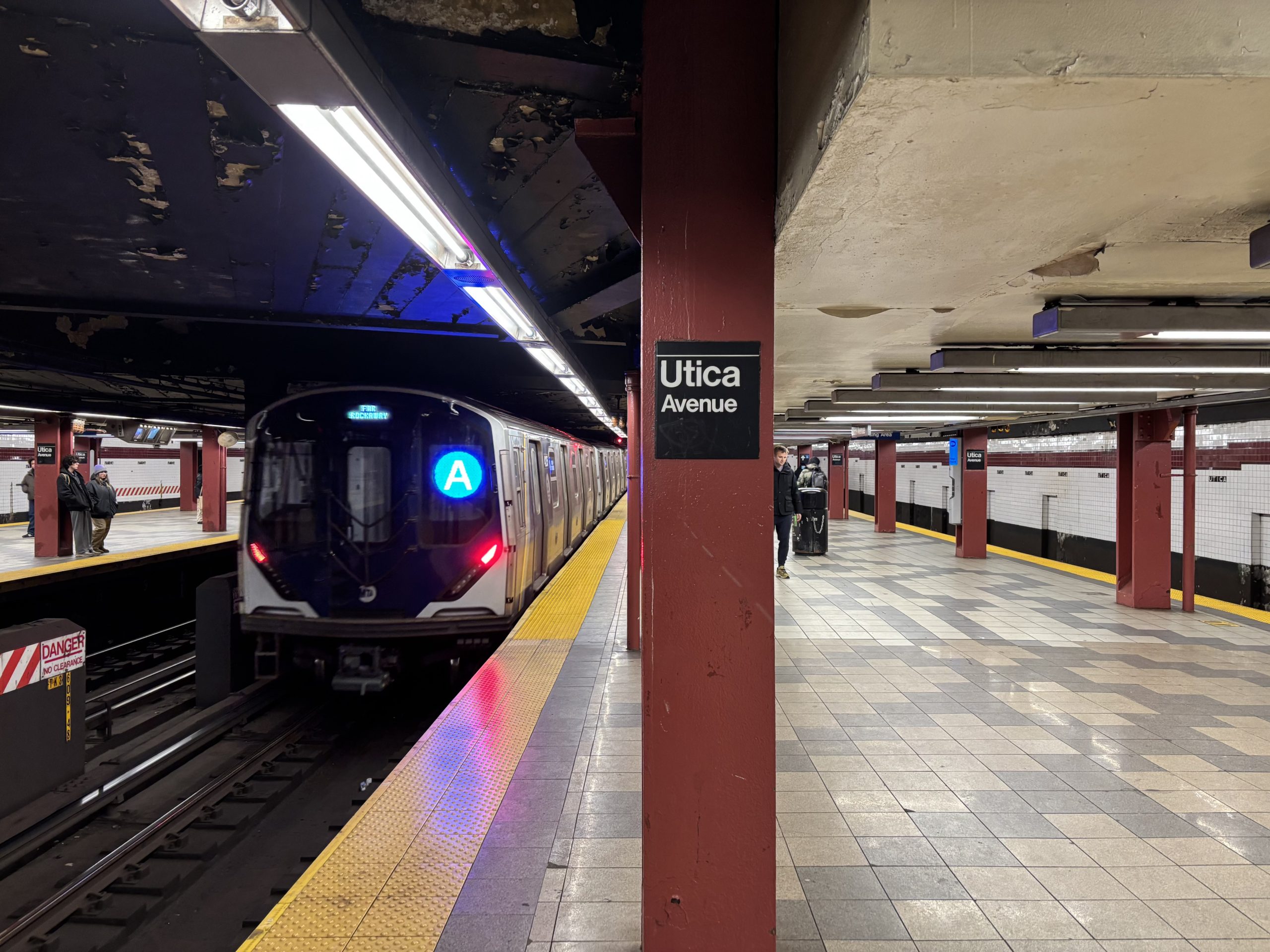 A 57-year-old Brooklyn man was killed Monday evening after a bag he was carrying became trapped in the doors of a Manhattan-bound A train at the Utica Avenue subway station in Bedford-Stuyvesant, raising serious questions about subway door safety, train departure procedures and potential liability.
Police identified the victim as Yaw Boahene. According to investigators, Boahene was exiting the train shortly before 6 p.m. on September 28, 2026, when a plastic bag he was carrying became caught in the closing doors. The train then began moving, reportedly dragging him along the platform for approximately seven train cars before he struck a wall near the end of the station and fell onto the tracks. He was pronounced dead at the scene.
The investigation remains ongoing, and no final determination has been made as to why the train was able to leave the station while Boahene was still connected to it.
For our subway accident lawyers, one of the central legal questions is whether reasonable safety procedures could have prevented the train from departing.
How Could an A Train Leave the Station With a Bag Trapped in the Doors?
That is likely to be one of the most important questions investigators attempt to answer.
According to NBC New York, surveillance video reportedly shows Boahene leaving the train carrying a plastic bag in one hand and a cane in the other. A law-enforcement source said investigators are examining whether the bag may have been wrapped around his wrist or whether he continued holding it after the doors closed. Investigators are also reportedly examining whether part of his body may have entered the gap between the train and platform.
The Metropolitan Transportation Authority said the train involved was inspected after the accident and no mechanical problems were initially found. The train operator and conductor were temporarily removed from service, which the MTA said is standard procedure following an incident of this nature.
However, the absence of an immediately identified mechanical defect does not resolve the question of negligence.
An investigation into a fatal subway door accident may examine multiple factors, including:
- whether the doors and door-interlock systems functioned as designed;
- whether the trapped object should have prevented the train from moving;
- whether the conductor adequately observed the platform before authorizing departure;
- whether the train operator or conductor had an opportunity to recognize the danger and stop the train;
- whether surveillance cameras captured the incident;
- whether appropriate departure and door-closing procedures were followed;
- the maintenance and inspection history of the train and its doors; and
- whether the transit system was aware of similar door-related incidents or safety concerns.
The conductor told the MTA that he was looking but did not see anyone being dragged. Determining exactly what could and should have been visible from the conductor’s position will therefore likely be an important part of any investigation.
What Duty Does New York City Transit Owe Subway Passengers?
New York law requires public transportation operators to exercise reasonable care under the circumstances for passenger safety.
In Bethel v. New York City Transit Authority, the New York Court of Appeals held that common carriers such as the Transit Authority are governed by the ordinary negligence standard of reasonable care under all the circumstances.
In a case involving a passenger dragged by a departing subway train, the legal analysis could therefore focus on whether the Transit Authority and its employees acted reasonably in operating the train, closing the doors, observing the platform and allowing the train to depart.
The precise facts will matter enormously. At this stage, neither the publicly reported facts nor the MTA’s preliminary inspection establishes whether negligence occurred.
Could Passenger Conduct Affect a Subway Accident Claim?
Possibly, but it would not automatically eliminate a claim.
Reports indicate that investigators are examining whether Boahene continued holding the bag after it became caught in the doors or whether it may have been wrapped around his wrist. Those circumstances could become relevant if a civil case were brought.
New York follows a comparative negligence system. Under CPLR § 1411, conduct attributed to an injured person or decedent generally does not bar recovery. Instead, damages may be reduced according to the percentage of fault assigned to that person.
Accordingly, even if investigators concluded that a passenger’s actions contributed to an accident, that would not necessarily answer the separate question of whether the Transit Authority, its employees, or a defective safety system also contributed to the death.
Evidence Can Be Critical After a Fatal Subway Accident
In a case such as this one, evidence generated in the moments before and after the accident could become extremely important.
That may include station and train surveillance video, conductor and operator statements, event-recorder or train-operating data, door-system records, inspection and maintenance records, internal incident reports, radio communications, witness statements and records concerning previous similar incidents.
Video evidence may be especially significant because it can help establish the passenger’s position, the timing of the doors closing, when the train began moving and whether the danger was visible before or during departure.
Prompt preservation of this evidence can therefore be important in serious subway injury and wrongful-death investigations.
New York Has Seen Similar Subway Door Accidents Before
Although these accidents are uncommon, Monday’s death was not unprecedented.
A 20-year-old passenger was killed in a similar incident at the Columbus Circle subway station in 2022 and that a 51-year-old man was dragged to his death at the Kew Gardens–Union Turnpike station in 2016.
Prior incidents can become relevant to broader safety questions, particularly when determining whether a transit operator had notice of a recurring hazard and whether existing safety procedures were adequate to address it.
Wrongful Death Claims Involving the New York City Transit Authority Have Special Rules
Claims involving the New York City Transit Authority are subject to procedural requirements that differ from ordinary negligence cases.
New York Public Authorities Law § 1212 incorporates notice-of-claim requirements for tort claims involving the Transit Authority. General Municipal Law § 50-e generally requires a notice of claim within 90 days; in a wrongful-death action, that 90-day period runs from the appointment of a representative of the decedent’s estate.
New York’s wrongful-death statute also permits the duly appointed personal representative of a decedent to pursue an action where a wrongful act, neglect or default caused the death.
Because claims against public transportation authorities can involve special defendants, notice requirements and shorter procedural deadlines, families affected by a catastrophic subway accident should obtain legal advice promptly.
What Happens Next in the Utica Avenue A Train Investigation?
The most important questions remain unanswered.
Investigators will need to determine precisely how Boahene became trapped, whether the train’s doors and safety systems operated as intended, what the conductor and operator could see, whether established departure procedures were followed, and whether anything could reasonably have been done to prevent the train from leaving the station.
The fact that the incident has initially been described as an accident does not itself determine whether civil negligence occurred. That question depends on the evidence and on whether the people and entities responsible for operating the subway exercised reasonable care under the circumstances.
Our firm has significant experience investigating catastrophic train accidents in which the ability of train personnel to recognize and respond to a passenger in danger became a central issue. In 2023, Gair, Gair, Conason, Rubinowitz, Bloom, Hershenhorn, Steigman & Mackauf obtained a $20 million settlement for a 23-year-old tourist who fell onto the tracks at the 14th Street PATH station and was struck by two consecutive trains. The case focused in part on whether the train operators recognized the victim’s presence on the tracks and reacted appropriately. The young woman suffered catastrophic injuries, including a below-the-knee amputation of one leg and a partial amputation of the opposite foot.
That experience underscores why the prompt preservation and careful analysis of video, operational records, employee testimony and train data can be so important when investigating a serious subway or train accident.
If you or a family member has been seriously injured in a New York subway or public transportation accident, call 212-943-1090 or contact us online to discuss your legal rights.
