 New York Personal Injury Attorneys Blog
Fatal Bronx Hit-and-Run Crash in Tremont: Legal Issues When a Driver Flees the Scene


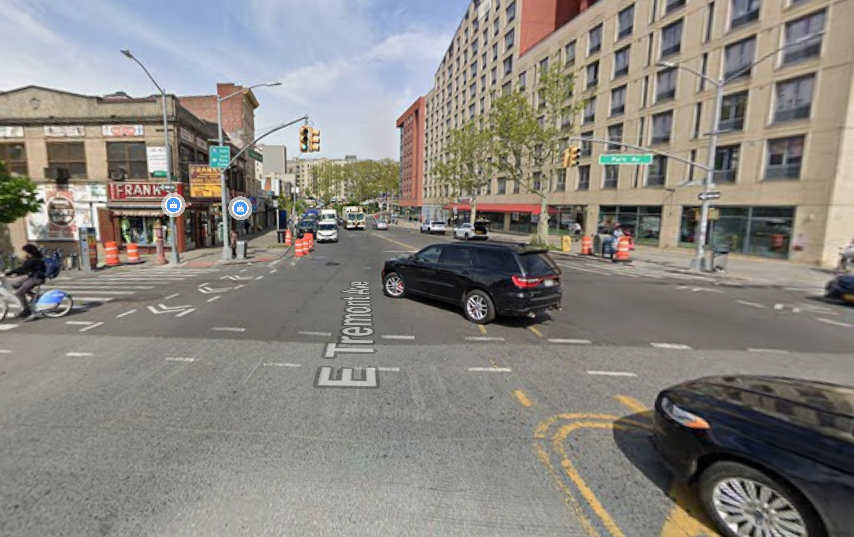 A fatal hit-and-run crash in the Tremont section of the Bronx on September 21, 2026, raises several important legal issues for families after a pedestrian is killed by a driver who leaves the scene.
A 68-year-old pedestrian was crossing near East Tremont Avenue and Park Avenue shortly before 6:00 a.m. when he was struck by a white vehicle. Witnesses reported that the vehicle was speeding and traveling the wrong way on Park Avenue. Police reportedly believe the vehicle may have been a white Lamborghini. The impact threw the pedestrian onto the windshield of a parked Hyundai. The driver fled, and investigators recovered a white bumper believed to have come from the suspect vehicle.
For our Bronx car accident attorneys, a case such as this involves much more than determining whether the fleeing driver committed a crime. A fatal hit-and-run can create separate criminal, wrongful death, insurance and potentially third-party liability issues that must be investigated immediately.
Leaving the Scene of a Fatal Accident Under New York Vehicle and Traffic Law § 600
New York Vehicle and Traffic Law § 600 imposes specific duties on a driver who knows or has reason to know that an accident involving the driver’s vehicle caused personal injury.
The driver must stop and provide identifying and insurance information to the injured person, if practical, and to a police officer. If no police officer is present, the driver must report the incident as soon as physically able to the nearest police station or judicial officer.
Where leaving the scene involves an accident resulting in death, a violation of VTL § 600(2)(a) can constitute a Class D felony.
Importantly, however, the criminal case and the family’s civil case are separate.
Even if a driver is ultimately arrested and prosecuted, a criminal prosecution does not by itself compensate surviving family members for the financial losses caused by a wrongful death. Conversely, a family does not necessarily have to wait for the criminal case to be completed before investigating and preserving potential civil claims.
Fleeing the Scene Does Not Eliminate Civil Liability
Leaving the scene can make an accident investigation significantly more difficult, but it does not relieve the driver of potential civil responsibility for causing the crash.
If police identify the driver, attorneys representing the victim’s estate will ordinarily investigate the driver’s conduct immediately before the collision. In the Tremont case, for example, witnesses reportedly described a vehicle traveling at high speed and in the wrong direction on Park Avenue. Those allegations have not yet been adjudicated, but they could become important evidence in determining negligence if the suspected vehicle and driver are identified.
The investigation should also determine:
- who owned the vehicle;
- whether the driver had permission to operate it;
- what insurance policies apply;
- whether the vehicle was being used in connection with a business;
- whether another person or entity contributed to the collision; and
- whether evidence exists demonstrating speed, direction of travel or other dangerous driving before impact.
The identity of the driver is therefore only one part of the liability investigation.
Who Can Bring a Wrongful Death Claim After a Fatal Bronx Crash?
Under New York Estates, Powers and Trusts Law § 5-4.1, the personal representative of a deceased person’s estate may bring a wrongful death action when a wrongful act, neglect or default caused the death and the defendant would have been liable to the victim had the victim survived.
New York’s wrongful death statute generally requires the action to be commenced within two years of the date of death, although particular circumstances can affect the applicable deadline. The statute also contains an extension associated with a criminal action against the same defendant arising from the occurrence.
A fatal crash may also give rise to a survival claim on behalf of the estate for damages that accrued between the injury and death. New York law treats survival and wrongful death claims as distinct causes of action, although they can be litigated together.
Because these claims involve the estate as well as surviving family members, addressing the proper estate representative is an important early step in a fatal accident case.
What If Police Never Find the Hit-and-Run Driver?
One of the most important legal questions in any hit-and-run case is whether compensation may still be available if the driver cannot be identified.
The answer can be yes.
A hit-and-run vehicle can potentially be treated as an uninsured vehicle for purposes of New York uninsured motorist coverage. Depending on the circumstances, coverage may potentially be available through an applicable automobile insurance policy even though the injured person was a pedestrian rather than an occupant of a vehicle.
If there is no applicable insurance policy, the Motor Vehicle Accident Indemnification Corporation, commonly known as MVAIC, may provide another potential avenue of recovery for qualifying victims.
This is one reason families should not assume that they must wait until the NYPD finds the fleeing driver before speaking with an attorney. Insurance and MVAIC claims can involve strict notice, reporting and eligibility requirements, and those issues should be investigated promptly.
Vehicle Ownership Can Be Critical in a Hit-and-Run Investigation
When police locate the vehicle involved in a hit-and-run, identifying the registered owner can substantially change the civil investigation.
New York Vehicle and Traffic Law § 388 generally provides that vehicle owners may be responsible for negligence arising from the use or operation of their vehicles by persons operating them with the owner’s express or implied permission.
Accordingly, the fact that the person behind the wheel fled does not necessarily mean that the driver will ultimately be the only potential defendant.
Hit -and-Run lawyers should determine who owned the vehicle, who had access to it, whether permission to operate it existed and what liability coverage was in force at the time of the collision.
These questions may become particularly important when the vehicle involved is expensive, leased, commercially owned or registered to someone other than the person suspected of driving it.
Why Immediate Evidence Preservation Matters After a Bronx Hit-and-Run
Hit-and-run cases frequently depend upon evidence that can disappear quickly.
Surveillance footage from apartment buildings, stores, parking facilities and private security systems may be overwritten within days or weeks. Traffic cameras and other electronic records may also be subject to retention policies.
In addition to surveillance footage, attorneys investigating a serious hit-and-run may seek to preserve:
- vehicle debris recovered at the scene;
- photographs and measurements of the roadway;
- witness contact information and statements;
- nearby private surveillance footage;
- traffic-camera recordings;
- license-plate-reader information;
- vehicle registration and ownership records;
- repair or body-shop records;
- towing records;
- cellphone evidence when obtainable through legal process;
- vehicle event data if the automobile is recovered; and
- physical damage that may connect a vehicle to debris left at the crash scene.
In the September 21 Tremont crash, police reportedly recovered a white bumper believed to have come from the suspect vehicle. Physical evidence of that kind can become important not only to law enforcement but also to a later civil case.
Recent Bronx Hit-and-Run Fatalities Show the Different Liability Issues These Cases Can Present
The Tremont crash follows at least two other reported fatal Bronx hit-and-run incidents in recent weeks.
On August 18, Angelo Camara, a 51-year-old mechanic and father of five, was killed while riding his bicycle on Bruckner Boulevard near Longwood Avenue. Police said a BMW struck multiple vehicles before hitting Camara, after which the driver abandoned the BMW and fled.
That type of case raises several legal questions beyond identifying the driver, including ownership of the abandoned BMW, applicable insurance coverage and the circumstances under which the driver obtained or operated the vehicle.
Another fatal crash occurred in Morrisania on August 8. A man was lying in the roadway near College Avenue and East 166th Street following an altercation when he was struck by a white BMW SUV whose driver fled. A marked NYPD vehicle subsequently struck the man while he remained in the roadway.
A sequence involving more than one impact illustrates another fundamental principle of serious accident litigation: lawyers must investigate the conduct of every potentially responsible party and determine whether multiple acts contributed to the injuries or death.
A Hit-and-Run Case Requires Both an Accident Investigation and an Insurance Investigation
Families understandably focus first on whether police will locate and arrest the driver. From the civil-law perspective, however, two investigations should often proceed simultaneously.
The first asks who caused the accident and who can legally be held responsible.
The second asks what insurance or other source of compensation is available.
Those questions can lead to different parties and different sources of recovery. A comprehensive investigation may therefore examine the fleeing driver, vehicle owner, applicable automobile policies, uninsured motorist coverage, MVAIC eligibility and any additional person or entity whose negligence may have contributed to the crash.
At Gair, Gair, Conason, Rubinowitz, Bloom, Hershenhorn, Steigman & Mackauf, our Bronx personal injury attorneys attorneys represent pedestrians, bicyclists and families in serious and fatal motor vehicle accident litigation. In a hit-and-run case, beginning the civil investigation promptly can be critical even while law enforcement continues searching for the driver.
If you or a family member has been seriously injured, or if you have lost a family member in a Bronx hit-and-run accident, call 212-943-1090 or contact us online to discuss your legal options.
