 New York Personal Injury Attorneys Blog
Ben Rubinowitz and Evan Torgan will speak on Civil Trial Practice at the dinner to be held on January 15, 2013 at Westbury Manor, Jericho Turnpike, Westbury, NY 11590 from 6:00 – 9:00 PM. For further information contact Crystal Brook Associates, Inc. 6 Crystal Brook Court Islip, NY 11751 Phone: 631/581-6657, FAX: 631/581-6657.
Published on:
Building a Winning Case: The Law of Construction Site Accidents


In this one hour and a half Lawline.com Webnar Anthony Gair discusses the current state of New York Construction accident law under Section 240(1) of The New York State Labor Law.
Among the topics discussed are a brief history of Section 240, the most important cases over the last several years, the sole proximate cause defense and the current state of falling worker/falling object cases among other topics.
To view this course for free or for CLE credit click here for Lawline.
Published on:
NYSTLA Seminar-Jury Selection: Getting the Jury You Want
Our Partner, Ben Rubinowitz, will be participating in this New York State Trial Lawyers seminar to be held February 6, 2013, 6:00 PM – 9:00 PM at Hudson Valley Bank 21 Scarsdale Road, Yonkers, New York 10707. As described by NYSTLA;
“ Experienced trial attorneys will offer an intensive and practical analysis of the successful methods, strategies, law and mechanics of jury selection. Topics discussed will include effective and revealing juror questioning, common mistakes and how to avoid them, identifying juror bias, analyzing the meaning of certain juror responses and how to identify and sell case themes. ”
To Register Click Here.
Published on:
Ben Rubinowitz to Lead NITA Webnar on Direct Examination
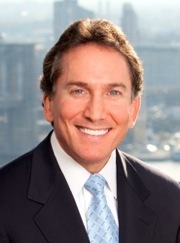 Our Partner Ben Rubinowitz willl Lead a NITA studio 71 Webnar on Direct Examination at Trial. As described by NITA;
“During direct examination the focus should be on the witness, not the lawyer. You want to let the witness tell the story and you can do so by asking open-ended questions designed to allow the witness to narrate the story. Framing these questions, using transitions for guidance and setting the scene will be the focus of this discussion led by Ben Rubinowitz.”
•Dates: January 30, 2013
Published on:
New York Construction Accident Law: ELEVATION RELATED DIFFERENTIALS AND THE REJECTION OF THE SAME LEVEL RULE
By Anthony H. Gair;
In Wilinski v. 334 East 92nd Housing Development Fund Corp., 18 N.Y.3d 1, 935 N.Y.S.2d 551 (Ct. Apps. 2011) The New York Court of Appeals rejected The Same Level Rule first enunciated by The Court in Misseritti v. Mark IV Constr. Co., 86 NY2d 487, 657 N.E.2d 1318, 634 N.Y.S.2d 35 [1995]. The Rule precluded recovery under Labor Law §240(1) where a worker sustained an injury caused by a falling object whose base stood at the same level as the worker.
In order to understand the holding in Wilinski, one must consider what was transpiring at The Court at the time of the decision. There was an obvious philosophical difference with regard to the reach of 240(1). Judge Piggot led a faction consisting of him and Judges Graffeo and Read who interpreted 240(1) more restrictively and a faction led by Judge Lippman together with Judges Ciparick and Jones who interpreted 240(1) more liberally with Judge Smith as the swing vote. With the untimely death of Judge Jones and the retirement of Judge Ciparck at the end of the year it will be an interesting 2013 regarding The Court’s holdings in 240(1) cases. The majority opinion was written by Judge Ciparick who also wrote the opinion in Misseritti. She was joined by Judges Lippman, Jones and Smith.
In Wilinski The plaintiff and co-workers were demolishing brick walls at a warehouse. Previous demolition of the ceiling and floor above had left two vertical plumbing pipes unsecured. The pipes rose from the floor on which plaintiff was working approximately ten feet. Debris from a nearby wall that was being demolished hit the pipes causing them to fall over both of which struck the plaintiff who was 5’6″ tall. The Court stated the pipes thus fell approximately four feet. In rejecting the same level rule Judge Ciparick writing for the majority stated:
“Some New York courts have interpreted our decision in Misseritti v. Mark IV Constr. Co., 86 NY2d 487, 657 N.E.2d 1318, 634 N.Y.S.2d 35 [1995] to preclude recovery under Labor Law §240(1) where a worker sustains an injury caused by a falling object whose base stands at the same level as the worker. We reject that interpretation and hold that such a circumstance does not categorically bar the worker from recovery under section 240(1). However, in this case, an issue of fact exists as to whether the worker’s injury resulted from the lack of a statutorily prescribed protective device.”
In explaining why, in its opinion lower courts had been misinterpreting Misseritti, Judge Ciparick stated:
“In Narducci v. Manhasset Bay Assocs., (96 NY2d 259, 750 N.E.2d 1085, 727 N.Y.S.2d 37 [2001]), though we noted that section 240(1) applies to both ‘falling worker’ and ‘falling object’ cases, we declined to impose liability where a plaintiff was cut by a piece of glass that fell from a nearby window pane (id. at 267). We concluded that ‘[t]his was not a situation where a hoisting or securing device of the kind enumerated in the statute would have been necessary or even expected’ and that the absence of such a device ‘did not cause the falling glass here’ (id. at 268-269). Therefore, the accident was outside the scope of section 240(1) (see id.).
In Misseritti, we applied a similar rationale. The plaintiff’s decedent in that case sustained severe injuries, leading to his eventual death, when a completed concrete firewall collapsed on top of him (see 86 NY2d at 489). Before the wall collapsed, ‘decedent and his co-worker had just dismantled the scaffolding used to erect the completed firewall and . . .[m]asons had not yet vertically braced the wall with the . . . planks it had on the work site’ (id. at 491). We held that section 240(1) did not apply to those facts, as the firewall did not collapse due to a failure to provide a protective device contemplated by the statute (see id.). We determined that, in fact, the kind of braces referred to in section 240(1) are ‘those used to support elevated work sites not braces designed to shore up or lend support to a ‘completed structure’ (id.). Thus the firewall’s collapse, though tragic in consequences, was simply ‘the type of peril a construction worker usually encounters on the job site.’ (id.).
Continue reading →
Published on:
“Best Law Firms” Rankings by U.S. News and Best Lawyers® Names Gair, Gair, Conason, Steigman, Mackauf, Bloom & Rubinowitz 2013 Law Firm Of The Year, Personal Injury Litigation-Plaintiffs

Gair, Gair, Conason, Rubinowitz, Bloom, Hershenhorn, Steigman & Mackauf has been named 2013 Law Firm of the Year, Personal Injury Litigation-Plaintiffs as well as being listed in six practice areas in the just released ranking of law firms by U.S. News Media Group, the publishers of U.S. News & World Report, and Best Lawyers®. This is the third edition of this highly-anticipated annual analysis.
Gair, Gair, Conason, Rubinowitz, Bloom, Hershenhorn, Steigman & Mackauf was nationally ranked in the top tier in Plaintiffs Product Liability Litigation, Medical Malpractice Law, Professional Malpractice Law and Mass Tort Litigation/Class Actions. The firm also ranked in the top tier in six legal specialties in the New York City Metropolitan Area in Plaintiffs Legal Malpractice, Medical Malpractice, Personal Injury Litigation, Product Liability Litigation, Professional Malpractice Law and Mass Tort Litigation/Class Actions in the New York Metropolitan area.
Inclusion in the “Best Law Firms” listing is based on a rigorous evaluation process that includes data collection, evaluation and feedback from thousands of clients, lawyers and law firm representatives spanning a wide range of practice areas nationwide.
Published on:
Cross-Examination: Comparison of Different Approaches
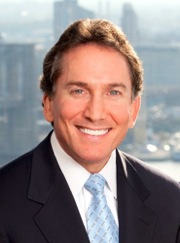
In their most recent Article on Cross Examination, Ben Rubinowitz and Evan Torgan discuss comparative approaches to that part of the trial in which witnesses are often confronted with inaccurate statements based on dishonesty or mistake.Cross examination, if done properly, can disclose those facts. Too often, lawyers fail to take advantage of details that can make or break the case. In this article, the authors discuss when to use an aggressive approach on cross and when to use a friendly, even tempered approach to prove dishonesty or mistake and maximize argument for summation.
http://www.newyorklawjournal.com/PubArticleNY.jsp?id=1202575819706&CrossExamination_Comparison_of_Different_Approaches&slreturn=20120927104112
Published on:
New York Crane Accident – Boom Collapse at One57
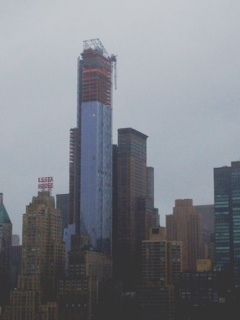
This is a picture of the boom collapse at One57, New York City on October 29, 2012. Given the fact that it was well known that Hurricane Sandy was approaching New York City one has to wonder why this crane boom was allowed to remain partially boomed out. Why didn’t the Crane Contractor lower the boom and properly rig it to avoid this quite foreseeable occurrence.
Published on:
New York Construction Site Accidents: The Law & the Trial 2012
Howard S. Hershenhorn and Christopher L. Sallay will serve as Overall Planning Chairs of the New York State Bar Association’s Construction Site Accidents: The Law & the Trial 2012 Seminar. Anthony H. Gair and Ben B. Rubinowitz will also be speaking at the event. Ben B. Rubinowitz is also the chair of the Long Island seminar. The Seminar will be held at the following locations:
Friday, November 30, 2012
– Location –
Published on:
Jeffrey Bloom Spoke at The Mt. Sinai Update 2012: Breast Imaging Seminar
Jeffrey Bloom spoke on Breast Imaging Malpractice:An Attorney’s Perspective:for the Plaintiff, at this seminar sponsored by The International Institute for Continuing Medical Education, Inc. (IICME). The seminar was held at The New York Academy of Medicine New York, New York from October 15-17, 2012.
The International Institute for Continuing Medical Education, Inc. (IICME) was formed in 1995 and is accredited by the Accreditation Council for Continuing Medical Education (ACCME) to provide continuing medical education for physicians.
