 New York Personal Injury Attorneys Blog
Officer Patricia Espinosa Case: Criminal Sentencing Marks One Step as Civil Lawsuit Seeks Accountability from All Responsible Parties


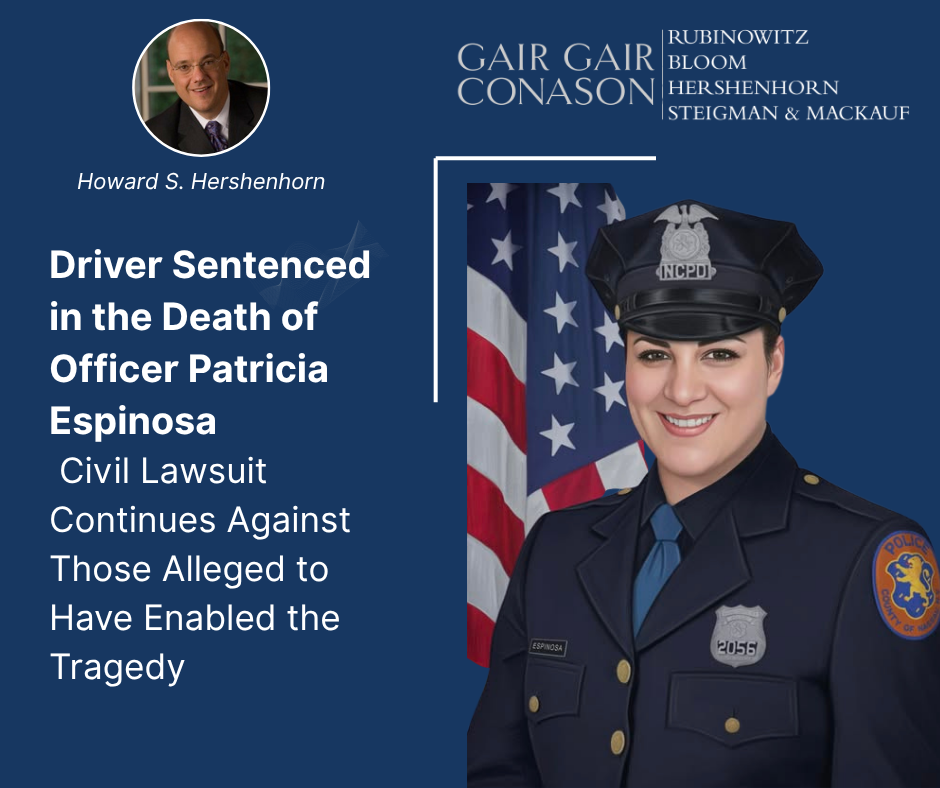 The criminal sentencing of the driver responsible for the death of Nassau County Police Officer Patricia Espinosa represents an important milestone in the pursuit of justice. But for Officer Espinosa’s family, the legal process is far from over.
On July 20, 2026, Matthew Smith, who was 20 years old at the time of the crash, was sentenced to 7 1/3 to 22 years in prison for causing the fatal drunk driving collision that claimed Officer Espinosa’s life. The sentence brings closure to the criminal prosecution, but a separate civil wrongful death lawsuit continues against the businesses and individuals alleged to have unlawfully provided alcohol to the underage driver in the hours leading up to the crash.
The civil case raises an important question that extends beyond one driver’s criminal conduct: Who else bears responsibility when an entirely preventable tragedy occurs?
Criminal Accountability Is Only Part of the Story
The criminal justice system focuses on punishing individuals who violate the law. In this case, the court held Matthew Smith accountable for driving while intoxicated and causing the death of Officer Espinosa.
During the sentencing hearing, members of the Espinosa family spoke about the profound and permanent loss they continue to endure. Patricia’s parents described the unimaginable pain of losing their daughter. Her husband spoke of raising their two-year-old daughter without her mother. Their statements served as a powerful reminder that every drunk driving fatality leaves behind families whose lives are forever changed.
No prison sentence can restore what was taken from them.
The Civil Lawsuit Seeks Accountability Beyond the Driver
While the criminal case has concluded, the civil litigation now turns to the actions of those who allegedly enabled the events that led to Officer Espinosa’s death.
According to the lawsuit, Matthew Smith was served alcohol throughout the evening despite being only 20 years old. The complaint alleges that multiple establishments and individuals continued to provide alcohol even though they knew, or reasonably should have known, that he was under the legal drinking age and already intoxicated.
The defendants include:
- A liquor store alleged to have sold alcohol to Smith.
- Buffalo Wild Wings.
- Local bars where alcohol was allegedly served.
- Individuals who allegedly continued serving alcohol at a private gathering.
The lawsuit alleges that these parties violated New York law by failing to fulfill their legal duty to refuse alcohol to an underage person and to refrain from serving someone who was visibly intoxicated.
Why New York’s Dram Shop Laws Exist
New York’s Dram Shop Act was enacted to protect the public from exactly this type of preventable tragedy.
Businesses licensed to sell alcohol, and in certain circumstances, individuals who unlawfully provide alcohol, have legal responsibilities that extend beyond making a sale. They are required to verify age, refuse service to minors, and stop serving patrons who are visibly intoxicated.
These obligations are not technical requirements or paperwork exercises. They exist because impaired drivers can cause devastating car accidents and deaths to innocent people sharing New York’s roads.
When those responsibilities are ignored, the consequences can be devastating.
Officer Patricia Espinosa Dedicated Her Life to Protecting Others
Officer Patricia Espinosa spent her career serving the people of Nassau County and enforcing the very laws designed to keep communities safe.
She was also a devoted wife, mother, daughter, sister, and friend.
Her death was not simply the result of one person’s decision to drive while intoxicated. According to the civil complaint, it was the culmination of a series of preventable decisions made throughout the evening by adults who allegedly ignored legal obligations intended to prevent exactly this outcome.
Every decision to sell or serve alcohol to an underage or visibly intoxicated individual increases the risk that innocent lives will be placed in danger.
The Purpose of the Civil Action
Civil lawsuits serve a different purpose than criminal prosecutions.
While criminal courts impose punishment, civil courts examine whether negligent businesses and individuals should be held financially accountable for the harm their actions caused.While the criminal justice system is designed to punish wrongdoing, civil litigation focuses on holding negligent parties financially accountable and helping victims’ families recover after devastating car accidents. It also examines whether businesses and individuals whose negligence contributed to a tragedy should be held responsible for the harm they caused.
The wrongful death lawsuit filed on behalf of Officer Espinosa’s family seeks to:
- Hold every responsible party accountable under New York law.
- Enforce New York’s Dram Shop Act and related safety laws.
- Encourage businesses to comply with their legal obligations when serving alcohol.
- Help prevent similar tragedies from happening to other families.
- Obtain justice for the devastating losses suffered by Officer Espinosa’s loved ones.
A Preventable Tragedy
Officer Patricia Espinosa should have returned home to her family.
Instead, her husband lost his wife, a young child lost her mother, and parents lost their daughter.
The criminal sentence imposed on Matthew Smith is an important step toward justice, but it is not the final chapter. The civil lawsuit continues because accountability does not end with the driver when others may have contributed to making a deadly crash possible.
New York’s Dram Shop laws were created to prevent tragedies like this one. When those laws are ignored, the consequences can be irreversible.
