Gair, Gair, Conason, Rubinowitz, Bloom, Hershenhorn, Steigman & Mackauf is a New York Plaintiff's personal injury law firm specializing in automobile accidents, construction accidents, medical malpractice, products liability, police misconduct and all types of New York personal injury litigation.

Articles Posted in Medical Malpractice

Published on:

“Malpractice claims may capture nonlethal errors; however, they are most often associated with permanent disability or death. Only about 1% of adverse events due to medical negligence result in a claim.” write David E. Newman-Toker, MD and Martin A. Makary, MD, MPH in this article commenting on Singh H, Giardina TD, Meyer AND, Forjuoh SN, Reis MD, Thomas EJ. Types and origins of diagnostic errors in primary care settings [published online February 25, 2013]. JAMA Intern Meddoi: .1001/jamainternmed.2013.2777.

The Newman-Toker article from JAMA Intern Med. 2013;():1-2. doi:10.1001/jamainternmed.2013.225 was Published online February 25, 2013. The authors go on to state;

“Nevertheless, with more than half a billion primary care visits annually in the United States, if these data from Singh et al are generalizable, at least 50 000 missed diagnostic opportunities occur each year at US primary care visits, most resulting in considerable harm. Combining this figure with autopsy-based estimates of US hospital deaths from diagnostic errors (40 000/y to 80 000/y1) and unaccounted nonlethal morbidity from hospital misdiagnoses and acknowledging another half billion visits annually to non–primary care physicians, more than 150 000 patients per year in the United States might have undergone misdiagnosis-related harm.”

Published on:

From USA TODAY: In a stunning article Peter Eisler reports that “Thousands of patients a year leave the nation’s operating rooms with surgical items in their bodies. And despite occasional tales of forceps, clamps and other hardware showing up in post-operative X-rays, those items are almost never the problem. Most often, it’s the gauzy, cotton sponges that doctors use throughout operations to soak up blood and other fluids, a USA TODAY examination shows.”

He goes on to report that despite this thousands of hospitals and surgical centers have failed to adopt readily available technologies that all but eliminate the risk of leaving sponges in patients.

He further points out that there’s no federal reporting requirement when hospitals leave sponges or other items in patients, but research studies and government data suggest it happens between 4,500 and 6,000 times a year. That’s up to twice government estimates, which run closer to 3,000 cases, and sponges account for more than two-thirds of all incidents.

Published on:

From The New York State Trial Lawyers Association:

“New York’s healthcare industry has long pressed for enactment of so-called “tort reform” so they can be relieved of supposedly “excessive” medical liability payments. In fact, payments to medical malpractice victims have already declined substantially:

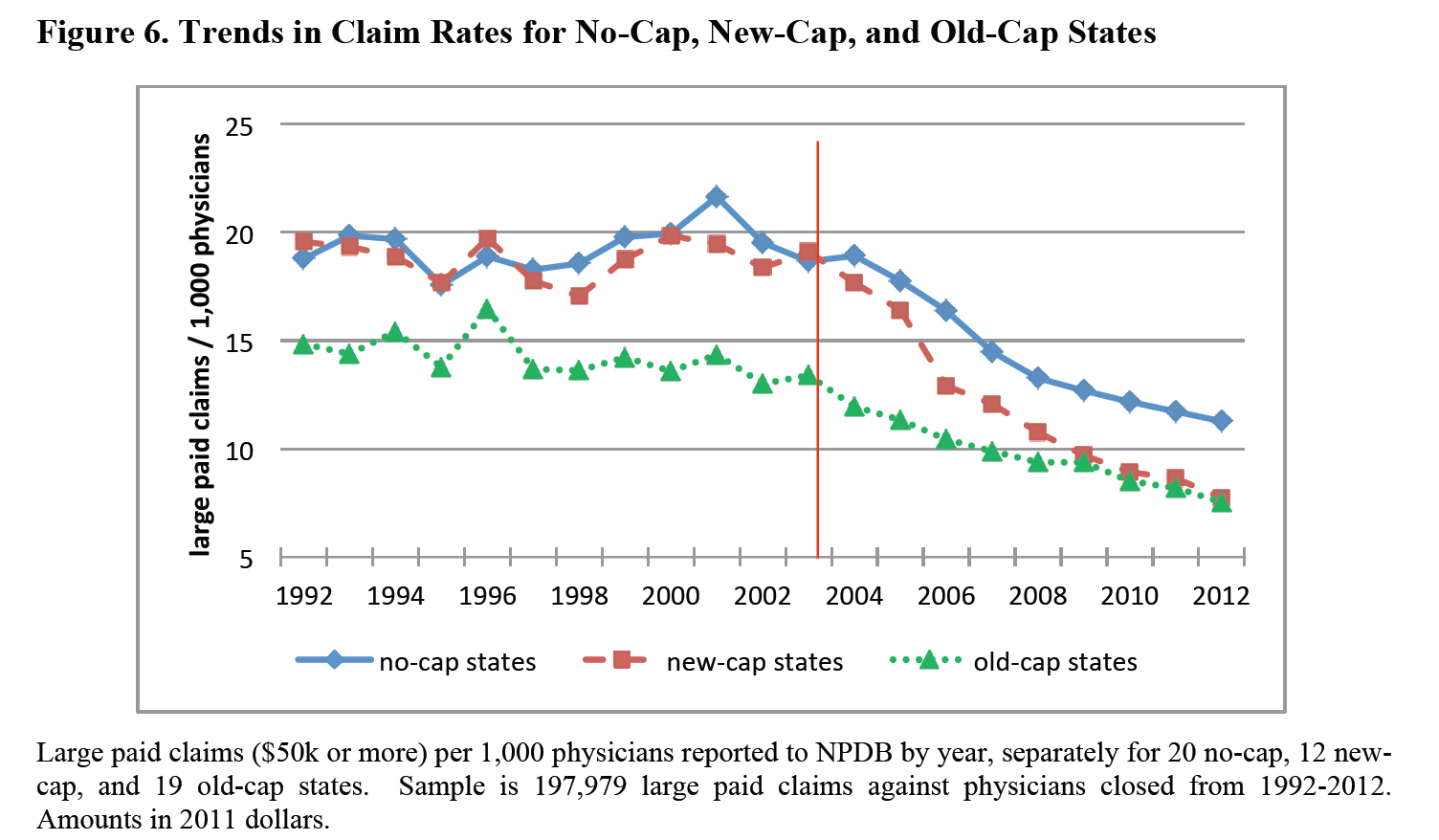
• The number of medical malpractice claims filed in New York courts has declined every year since 2007. Fewer claims were filed in 2012 than in any year since 1992, even as New York’s population grew.

Published on:

From Reuters: “Missed or wrong diagnoses are common in primary care and may put some patients at risk of serious complications, according to a U.S. study.” The study appeared in JAMA Internal Medicine. David Newman-Toker from Johns Hopkins University School of Medicine who co-wrote a commentary on the study was quoted as follows in the article;

“We have every reason to believe that diagnostic errors are a major, major public health problem,” Newman-Toker told Reuters Health. “You’re really talking about at least 150,000 people per year, deaths or disabilities that are resulting from this problem.”

The article goes on to state that, “Most of the missed diagnoses were traced back to the office visit and the doctor not getting an accurate patient history, doing a full exam or ordering the correct tests.”

Published on:

law-firm-gair-gair-conason-steigman-mackauf-bloom-rubinowitz-photo-572119.jpg
Gair, Gair, Conason, Rubinowitz, Bloom, Hershenhorn, Steigman & Mackauf has been named 2013 Law Firm of the Year, Personal Injury Litigation-Plaintiffs as well as being listed in six practice areas in the just released ranking of law firms by U.S. News Media Group, the publishers of U.S. News & World Report, and Best Lawyers®. This is the third edition of this highly-anticipated annual analysis.

Gair, Gair, Conason, Rubinowitz, Bloom, Hershenhorn, Steigman & Mackauf was nationally ranked in the top tier in Plaintiffs Product Liability Litigation, Medical Malpractice Law, Professional Malpractice Law and Mass Tort Litigation/Class Actions. The firm also ranked in the top tier in six legal specialties in the New York City Metropolitan Area in Plaintiffs Legal Malpractice, Medical Malpractice, Personal Injury Litigation, Product Liability Litigation, Professional Malpractice Law and Mass Tort Litigation/Class Actions in the New York Metropolitan area.

Inclusion in the “Best Law Firms” listing is based on a rigorous evaluation process that includes data collection, evaluation and feedback from thousands of clients, lawyers and law firm representatives spanning a wide range of practice areas nationwide.

Published on:

Jeffrey Bloom spoke on Breast Imaging Malpractice:An Attorney’s Perspective:for the Plaintiff, at this seminar sponsored by The International Institute for Continuing Medical Education, Inc. (IICME). The seminar was held at The New York Academy of Medicine New York, New York from October 15-17, 2012.

The International Institute for Continuing Medical Education, Inc. (IICME) was formed in 1995 and is accredited by the Accreditation Council for Continuing Medical Education (ACCME) to provide continuing medical education for physicians.

Published on:

pprsa1031b.jpgRubinowitz-Ben-B_12d7428b-27a7-4195-bebc-7788dce43088.jpg
On May 23, 2012, a healthy 41 year old mother of three, Yolanda Medina, was admitted to Montefiore Medical Center for the sole purpose of donating a healthy kidney to her brother, Roberto Medina, who suffers from end-stage renal disease. The surgery went horribly wrong – – Yolanda Medina died during the surgery and her brother never received the kidney. To this day, he remains on dialysis.

The events surrounding the death of Yolanda Medina made national news. The case was one that cried out for resolution. Clearly, the hospital was at fault. And just as clearly, the lives of Yolanda Medina’s three young daughters were turned upside down.

While the tragic events surrounding the death of Yolanda Medina would result in a protracted and lengthy medical malpractice claim, such was not to be the case. Judge Douglas McKeon, the Administrative Judge of Bronx County and a jurist who has presided over thousands of civil claims in one of the busiest courts in the country, had other ideas. It seems that the United States Department of Health and Human Services Agency for Healthcare Research and Quality (AHRQ) had funded a program whose main goals, among others, were to improve the quality of care and patient safety and at the same time compensate patients fairly and expeditiously when they are harmed. To make the program work, however, those involved would have to be educated. This doesn’t just mean educating the lawyers representing the doctors and hospitals but more specifically, the Judges who would be involved in administering the AHRQ program. Obviously, without medically informed, judge-directed negotiations, the program would be doomed from the start.

Published on:

From The Daily Beast; By Lizzie Crocker;

“Groundbreaking new research has discovered four distinct types of breast cancer, possibly opening the door to better treatment. What you should know about the study one of its authors called ‘the breast-cancer equivalent of putting a man or woman on the moon.’ “

The Study’s Purpose

Published on:

Medical errors kill enough people to fill four jumbo jets a week. A surgeon with five simple ways to make health care safer.

From The Wall Street Journal By Dr. MARTY MAKARY;

“When there is a plane crash in the U.S., even a minor one, it makes headlines. There is a thorough federal investigation, and the tragedy often yields important lessons for the aviation industry. Pilots and airlines thus learn how to do their jobs more safely.

Published on:

By: Anthony H. Gair, Esq.

This New York malpractice case involved a fifty-three year old man who was diagnosed with squamous cell carcinoma of the mouth encompassing the soft palate, the uvula, the tonsil and the base of the tongue. He underwent extensive radiation therapy and fortunately the cancer was irradicated. The patient developed osteoradionecrosis of the mandible following a wisdom tooth extraction by his dentist who was well aware that he had undergone radiation therapy.

As a result, he had to have three major surgeries involving removal of part of the mandible and extensive bone grafting and reconstructive surgery.

The definition of osteoradionecrosis is bone death due to radiation. Teeth removed in irradiated jaws often initiate Osteoradionecrosis.¹

In patients who have undergone radiation therapy for cancer of the mouth, the tissues in the mouth become hypoxic. Further, the vascular supply to the tissues is impaired and blood vessels are destroyed as a result of the radiation. The tissues also become hypocellular. These effects on the tissues of the mouth are permanent.

The important issues in the development of Osteoradionecrosis are endothelium, bone, periosteum and fibrous connective tissue of the mucosa and skin. The effects of radiation on the tissue level are endothelial necrosis, hyalinization, and thrombosis of vessels. The periosteum becomes fibrotic and bone osteoblasts and osteocytes undergo death with fibrosis of the marrow spaces. Mucosa and skin also undergo fibrosis, with decline in the cellularity and vascularity of the connective tissue. The result is a composite tissue which is hypovascular and hypocellular and has proved to be hypoxic compared with non-irradiated tissue. Once any wound is created, it would be unrealistic to expect effective healing, given the hypovascular, hypocellular and hypoxic nature of the affected tissue.²

It was the plaintiff’s contention that when a tooth is extracted a wound is always created at the site of extraction and that as a result of the radiation induced hypoxia, hypovascularity and hypocellularity of the tissues there will be problems with the healing process which may often lead to infection spreading to the bone and leading to osteoradionecrosis. This is even more so in patients with periodontal disease, which is often the case in those facing tooth extraction.
Continue reading →