 New York Personal Injury Attorneys Blog
What Are Your Legal Rights If an Ambulance Hits a Pedestrian or Cyclist in New York?


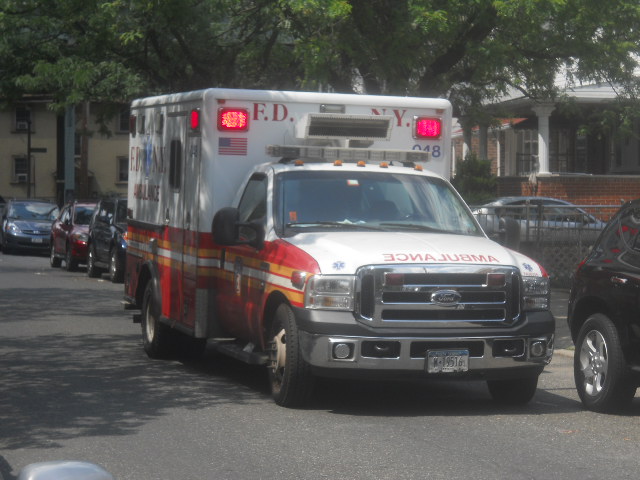 A bicyclist was killed Monday night in a collision with an FDNY ambulance on Staten Island, raising important questions about liability when a cyclist or pedestrian is struck by an emergency vehicle in New York.
According to news reports, the fatal collision occurred near Richmond Avenue and Christopher Lane in the Graniteville section of Staten Island. Police said the bicyclist, a man in his 40s, was traveling southbound in the northbound lanes of Richmond Avenue when he collided with an FDNY ambulance that was traveling southbound and beginning a left turn onto Christopher Lane. The impact threw the cyclist from his bicycle, causing severe head and body injuries. He was transported to Richmond University Medical Center, where he was pronounced dead.
Importantly, authorities reported that the ambulance was not transporting a patient and was not responding to an emergency at the time of the collision.
The circumstances remain under investigation, and no determination of civil liability should be made based solely on preliminary reports. However, the tragedy illustrates an important issue under New York law: an ambulance or other emergency vehicle is not automatically immune from liability when it injures or kills a pedestrian or cyclist.
Can an Ambulance Be Held Liable for Hitting a Cyclist or Pedestrian in New York?
Yes. Depending upon the circumstances, an ambulance driver, ambulance operator, municipality, hospital, private ambulance company, or another responsible party may potentially be held liable when negligent driving causes serious injury or death.
The legal standard that applies, however, can be different from the standard governing an ordinary motor vehicle accident.
One of the first questions car accident attorneys must determine is whether the ambulance was engaged in an actual emergency operation when the collision occurred.
When Does New York’s Emergency Vehicle Law Apply?
New York Vehicle and Traffic Law § 1104 provides certain driving privileges to authorized emergency vehicles when they are involved in an emergency operation.
Depending upon the circumstances, those privileges can permit an emergency vehicle driver to:
- proceed through a red light or stop sign after slowing as necessary for safe operation;
- exceed the speed limit provided the driver does not endanger life or property;
- disregard certain regulations governing the direction of travel or turns; and
- stop or park in locations where other vehicles ordinarily could not.
These privileges are not unlimited.
The law specifically provides that emergency vehicle drivers must continue to operate with due regard for the safety of others and are not protected from the consequences of acting with reckless disregard for the safety of others.
Whether this heightened legal standard applies can become one of the central issues in an emergency-vehicle accident case.
What If the Ambulance Was Not Responding to an Emergency?
This distinction may be particularly significant in the Staten Island collision.
Authorities reportedly stated that the FDNY ambulance involved in the crash was not responding to an emergency and was not carrying a patient.
When an ambulance is not engaged in an emergency operation, the special privileges afforded to emergency vehicles under Vehicle and Traffic Law § 1104 may not apply in the same manner. Depending on the particular facts, the driver’s conduct may instead be evaluated under ordinary principles of negligence.
That means investigators may examine issues such as whether the driver:
- maintained a proper lookout;
- yielded when legally required;
- made a safe left turn;
- properly observed approaching cyclists or pedestrians;
- traveled at a safe speed;
- used reasonable care under the traffic and lighting conditions; or
- could reasonably have avoided the collision.
Video footage, vehicle data, witness statements, roadway evidence and the ambulance driver’s testimony may all become important evidence.
What If the Cyclist Was Riding Against Traffic?
Police reports indicate that the Staten Island cyclist was riding southbound in lanes designated for northbound traffic.
That fact may be relevant to any eventual liability analysis, but it does not necessarily end the inquiry into whether another party also contributed to the collision.
New York follows a comparative negligence system. More than one person can therefore potentially bear responsibility for the same accident.
For example, investigators could consider both the cyclist’s direction of travel and the conduct of the ambulance driver while making the left turn.
Questions could include:
- How long was the cyclist visible before the collision?
- Where exactly was the bicycle when the ambulance began turning?
- Was the ambulance driver looking in the direction from which the cyclist approached?
- At what speed were both parties traveling?
- Was the intersection adequately illuminated?
- Were there surveillance or traffic cameras?
- Did either party have sufficient time to brake or take evasive action?
Even when a cyclist or pedestrian is found partly responsible for an accident, New York’s comparative-fault rules may permit recovery against another party whose negligence also contributed to the crash, with damages potentially reduced according to the injured person’s percentage of fault.
Claims Against an FDNY Ambulance Are Different From Claims Against a Private Driver
Because the Staten Island collision involved an FDNY EMS vehicle, another important issue is the involvement of the City of New York.
Claims against a municipality can involve procedural requirements that do not ordinarily apply to claims against private motorists or private ambulance companies.
Under New York’s General Municipal Law, a person bringing certain tort claims against a municipality generally must serve a Notice of Claim within 90 days after the claim arises.
Wrongful death claims have additional rules, including a provision under which the 90-day Notice of Claim period generally runs from the appointment of a representative of the decedent’s estate.
These deadlines can be significantly shorter than the deadlines people normally associate with personal injury litigation.
For that reason, anyone seriously injured by an FDNY ambulance, NYPD vehicle, sanitation truck or other New York City vehicle should speak with an attorney promptly. Waiting can result in important evidence disappearing and may affect a person’s ability to pursue a claim.
What Evidence Should Be Preserved After an Ambulance Accident?
Emergency vehicle cases can require a detailed investigation.
Attorneys representing an injured pedestrian, cyclist or surviving family may seek evidence including:
- surveillance and traffic-camera footage;
- body-camera footage where applicable;
- 911 and dispatch records;
- ambulance GPS and vehicle-location information;
- electronic vehicle data;
- photographs of the roadway and vehicle damage;
- emergency response records;
- ambulance driver training and employment records;
- witness statements;
- NYPD collision reports;
- intersection signal data; and
- accident reconstruction evidence.
Dispatch records can be especially important because they may help establish whether an ambulance was actually responding to an emergency at the time of the collision.
Our New York bicycle accident lawyers regularly investigate serious crashes involving cyclists and motor vehicles, including cases in which questions of roadway design, visibility, driver conduct and comparative negligence must be carefully reconstructed.
What Happens When a Pedestrian Is Struck by an Ambulance?
The same basic liability questions can arise when an ambulance strikes a pedestrian.
A pedestrian may be hit while crossing a street, walking through an intersection, standing near the roadway or while an emergency vehicle is making a turn.
The applicable legal standard can depend heavily on whether the ambulance was engaged in an emergency operation and what the driver was doing immediately before the collision.
Our New York pedestrian accident attorneys have represented pedestrians who suffered catastrophic injuries after being struck by buses, cars and other vehicles throughout New York City.
These cases can require careful analysis of traffic signals, crosswalk positioning, visibility, turning movements and the respective actions of both the driver and pedestrian.
Wrongful Death Claims After a Fatal Ambulance Collision
When a pedestrian or cyclist is killed because of another party’s negligence, certain surviving family members may have rights under New York’s wrongful death laws.
A New York wrongful death claim may seek compensation for losses resulting from the death, depending upon the facts of the case and applicable New York law.
A separate survival claim may also sometimes address damages suffered by the injured person between the time of the collision and death.
When a fatal crash involves a municipal vehicle such as an FDNY ambulance, the interaction between wrongful death law, estate administration and municipal Notice of Claim requirements makes it particularly important for the family to obtain legal guidance promptly.
Ambulance Accidents Require a Careful Investigation of the Facts
The Staten Island accident demonstrates why liability in an ambulance collision cannot be determined simply by identifying one vehicle as an emergency vehicle or pointing to a single traffic violation.
Investigators must determine what both parties were doing immediately before the crash, whether the ambulance was engaged in an emergency operation, whether special emergency-vehicle protections applied, whether either party violated traffic laws and whether one or more acts contributed to the collision.
The investigation into the Staten Island crash remains ongoing, and the publicly available facts may change as authorities obtain additional evidence.
For families dealing with a catastrophic bicycle or pedestrian accident involving an ambulance or other government vehicle, early investigation can be critical.
Gair, Gair, Conason, Rubinowitz, Bloom, Hershenhorn, Steigman & Mackauf represents victims and families in serious personal injury cases and wrongful death litigation throughout New York City and New York State.
If you or a loved one has been seriously injured in a collision involving an ambulance, emergency vehicle or municipal vehicle, call 212-943-1090 or contact us online for a free consultation.
