Gair, Gair, Conason, Rubinowitz, Bloom, Hershenhorn, Steigman & Mackauf is a New York Plaintiff's personal injury law firm specializing in automobile accidents, construction accidents, medical malpractice, products liability, police misconduct and all types of New York personal injury litigation.

Articles Tagged with product liability

Published on:

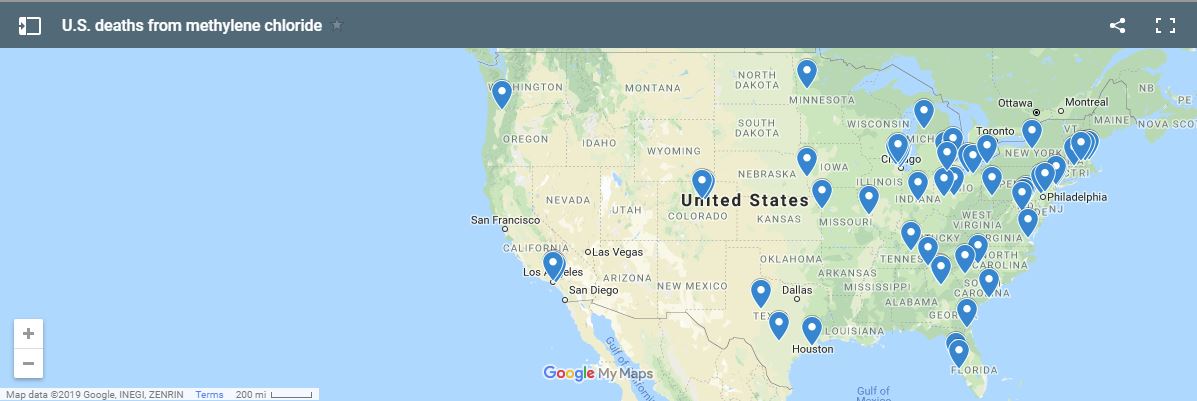
US deaths from Methylene ChlorideMethylene Chloride is a dangerous product that has previously caused the death of many people. Short term exposure to methylene chloryde can cause mental confusion, nausea, vomiting , headache and death in the worst cases. In the long term, workers exposed to it can develop cancer, nervous system problems, toxicity in their kidney, liver and reproductive system.Major retailers such as Lowes and Home Depot have removed it from their shelves even before the EPA finalized a ban proposal that was published one day before President Obama left office.  In Europe the deadly chemical was pulled from general use in 2011.

Last May, Scott Pruit confirmed that the EPA was committed to finalize the proposed methylene chloride ban however last month the EPA drafted two new final rules that would ban the use of methylene chloryde to regular consumers but not to commercial operators.  Two new final rules drafted by the EPA allow the usage of the dangerous product for commercial use as long as the workers using it have been trained.  These rules that have not been made public yet but that have been sent by the EPA to the Office of Management and Budget have sparked the furor of public health advocates and and of congressional Democrats. This is a major step back compared to the proposed rule announced by the EPA during the Obama era.


Workers specialized in refinishing bathtubs are the most at risk of dying from Methylene Chloride exposure

Published on:

regulatory robotAny company involved in the manufacturing of a product can be the subject to a product liability lawsuit if the product is defective and caused harm to a consumer. To protect consumers,  companies that are involved in product manufacturing have to make sure that they comply with the federal product safety requirements related to their product. While big corporate have their own legal department dealing with all these requirements, small business  most of the time don’t. In order to help them, the U.S. Consumer Product Safety Commission (CPSC) just relaunched an improved version of a Regulatory Robot tool which can be found online or downloaded as smart phone app. After answering a few questions small businesses are provided a customized report of product safety information related to their product.

The new Regulatory Robot is much more efficient than its previous version according to the CPSC. While in the past small businesses had to answer 15 to 20 questions to get information, now most of them only need to answer 3 questions.

The Robot also speaks Chinese as well as some Spanish, Vietnamese and Indonesian.

Published on:

3.3 million units of four varieties of Goldfish Crackers have been recalled over fears that the products might be contaminated with salmonella. Peperidge Farm, the manufacturing company, indicated the potential contamination was caused by whey powder used in the fabrication of the crackers. The varieties of Goldfish Crackers being recalled are:

  • Flavor Blasted Xtra Cheddar
  • Flavor Blasted Sour Cream & Onion
Published on:

OxyContinWhen Purdue Pharma launched OxyContin in 1995, the Food and Drug Administration permitted the company to make a unique claim for it: that its long acting formula would reduce its appeal to drug abusers who preferred short-acting opiates such as Percocet and Vicodin.

The exact opposite occurred and OxyContin became the most expensive and the most sought after drug on the black market. The New York Times obtained a copy of a confidential report from the Justice Department that indicates that shortly after the new drug was launched company officials were aware that the drug was being crushed, snorted, stolen from pharmacies and that doctors were being criminally charged for selling it to drug abusers.

A four year investigation found that despite being fully aware that OxyContin was one of the most abused drugs, the drug company failed to warn about its dangers, lied and continued to promote it as a drug less prone to abuse than any other prescription opioids. In 2006 the prosecutors recommended that 3 Purdue Pharma executives be indicted on felony charges. One of the charges was conspiracy to defraud the United States. That meant jail time for the 3 executives.  At the time, Georges Bush was the president and Justice Department officials declined the recommendation. Instead, the case was settled in 2007.

Published on:

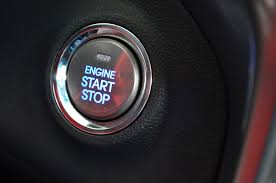
keyless carMultiple owners of key-less cars have been dying of Carbon Monoxide Poisoning after mistakenly thinking that their car had stopped running. In most scenarios the car owner parks the vehicle in the house garage and takes the wireless key fob thinking that the car has shut down while it hasn’t. Overnight the garage and the house fills with odorless carbon monoxide gas, leaving the owner and other potential house residents dead or severely injured.

There are no exact records of how many people have died or how many people were left with serious injuries such as brain damage after inadvertently leaving their car running but 24 deaths nationwide were reported to the National Highway Traffic Safety Administration since 2006 when the first known case occurred. 70 year old Jeanette Colter, a Florida resident who  left her Toyota Avalon running in the garage ended up collapsing and dying between her kitchen and her living room. Her 89 year old husband died in the bedroom.

In 2009 after several other similar accidents were reported, the Society of Automotive Engineers formed a panel to develop recommended practices to address key-less ignition hazards. In 2011, the group recommended an externally audible or visual alert or automatic shut off of the engine if all doors are closed and the key fob is not present. That same year the NHTSA proposed a new rule with similar recommendations.

Published on:

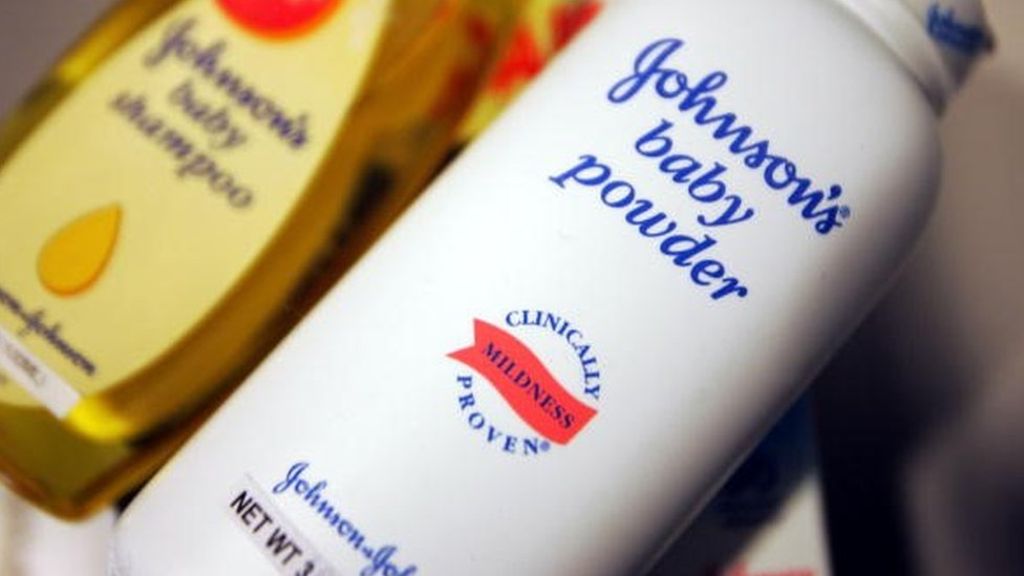
JohnsonA New Jersey jury recently found that Johnson & Johnson baby powder contained asbestos and that the tainted product caused mesothelioma to a New Jersey banker. Mesothelioma is a deadly cancer linked to asbestos.

Stephen Lanzo was awarded $30 million for his pain and suffering and his wife was awarded $7 million in damages as well. 70% has to be paid by J&J and the other 30% by talc supplier Imery Talc America.

Both companies are planning to appeal. They pretend the banker developed cancer after being exposed to another asbestos source such as his school or childhood home.

Published on:

boy using cell phoneBig Wireless companies were told 20 years ago by scientists that cell phone usage could lead to cancer. The wireless industry didn’t listen to them and used the same tactics as the Tobacco and Oil industry to hide dangers from consumers. The Nation just released the results of an investigation that found that the top wireless companies have spent millions convincing people that their products were safe.

At the begining of the nineties, when only a minority of people owned a cell phone, some consumers and industry workers complained that they may have developed cancer caused by their cell phone. At the time Tom Wheeler president of the Cellular Telecommunications and Internet Association (CTIA) was the wireless industry’s point man in Washington. To shut down the complaints and calm down consumer concerns Wheeler hired George Carlo, a pro-industry scientist to run a comprehensive research on cell phones. George Carlo had previously conducted controversial studies helping the breast implant industry and the chemical industry. He seemed to be the perfect man to support the cell phone industry’s claims that their products were safe for consumers.

George Carlo was allocated $28.5 million for his investigation which is the highest funded cell phone study to date. Critics of the study complained that such a big amount of money could easily guarantee silent obedience of the scientific community. George Carlo denied these allegations.

Published on:

Defective Panasonic TVA potentially defective tabletop swivel stand sold with a 55-inch flat screen TV  was recently recalled by Panasonic. The Panasonic 55-inch, LED/LCD flat screen televisions with a tabletop swivel stand is a model that was sold to schools, government buildings and hotels from July 2012 through March 2014 .  The mounting screws that connect the stand to the TV can become loose and the TV can unexpectedly fall off the stand. This pose a risk of severe injury or even deaths to children.

If you see one these TVs on a swivel stand at your child’s school, at work or in a hotel please inquire if it was recalled and repaired. If it wasn’t please make sure that the  TV is detached from the stand and placed in a safe location before calling Panasonic for a free repair kit.

Panasonic indicates that so far nobody was injured.  755 models have been sold in the US and 130 in Canada. The TV is black with Panasonic printed in the front and the swivel stand is in a glossy black color and is 50 inches long. The model number for the television is TH055LRU50. It can be found on a tag on the back of the television.

Published on:

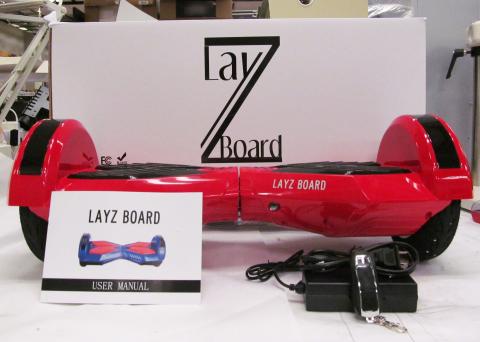
Defective Hoverboard Lazy BoardDespite the many fire accidents and injuries caused by defective lithium-ion battery packs in hoverboards, the toy remains among the most popular holiday gifts. If you or your kids own a self balancing scooter or if you are planning to buy one as a gift you should visit the Consumer  Product Safety Commission website and check on the recent Self Balancing Scooter recalls. Here are some of the most recently recalled models:

  • The Layz Board hoverboard was recently the subject of a second warning by the Consumer Product Safety Commission. According to the agency this hoverboard caused a fire on October 23, 2017, in Manchester Township, Pennsylvania, which destroyed one town home and damaged four others. The hoverboard was the object of a previous warning in May 2017 after two young girls died in a house fire caused by the Layz Board hoverboard on March 10, 2017, in Harrisburg, Pennsylvania
  • Salvage World just recalled 700 Smart Balance Wheel self-balancing Scooters/Hoverboards. The battery can overheat and pose a risk of smoking, exploding or catching fire
Published on:

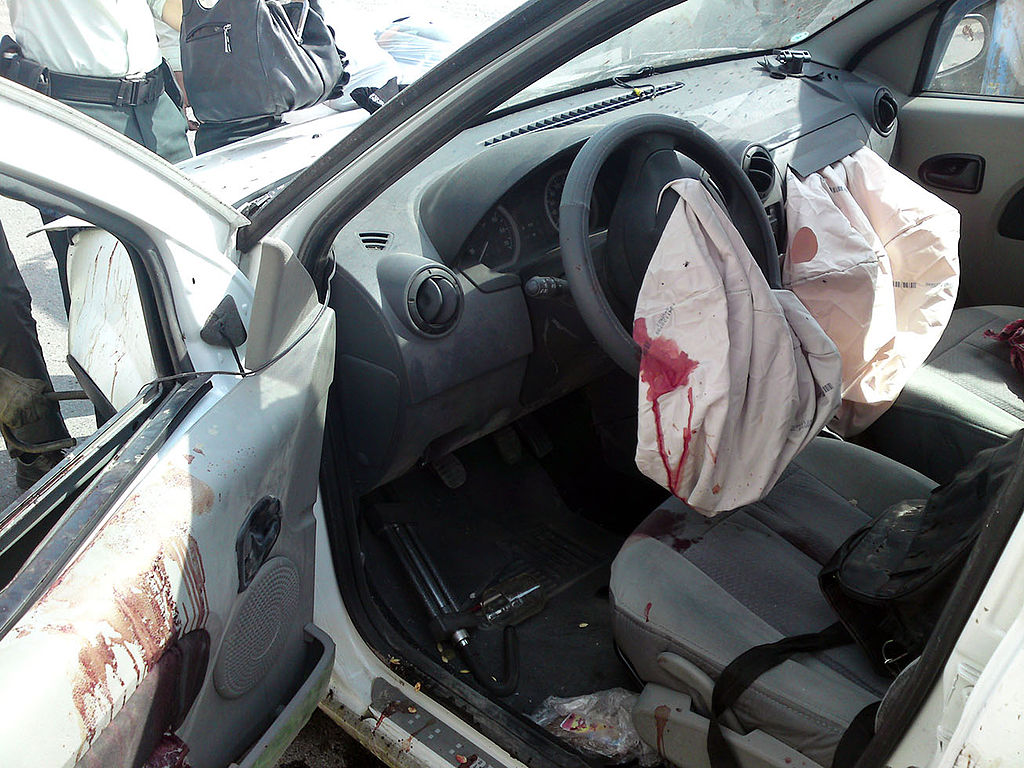
AirbagTakata just recalled an additional 2.7 million vehicles that may have a defective airbag. The recalls affect Ford Mazda and Nissan models from 2005 to 2012 that have a PSDI-5 PSAN airbag inflator. These types of airbags are only installed on the driver side. The PSDI-5 PSAN airbag inflators are a different type of airbag than the type of airbags recalled in the past by Takata.

The PSDI-5 PSAN airbag inflator is a desiccated inflator. Desiccated inflators contain calcium sulfate the purpose of which is to prevent the ammonium nitrate inside the airbag to deteriorate in case of humidity or high temperature. The ammonium nitrate is the most important component of the airbag. It inflates the airbag in case of  an accident. If the ammonium nitrate deteriorates, the airbag may not inflate proprely and may explode causing potential injury or death to the car driver and the passengers.

In its report to the National Highway Traffic Safety Administration (NHTSA) Takata indicates that the PSDI-5 PSAN airbag inflator posed a potential risk to the car occupants. When testing the inflator, Takata found that the amonium nitrate used to inflate the airbag was showing signs of deterioration and could lead to a breakage over time. However Takata  also indicates that so far in all the testing conducted none of the inflators tested broke off.