Gair, Gair, Conason, Rubinowitz, Bloom, Hershenhorn, Steigman & Mackauf is a New York Plaintiff's personal injury law firm specializing in automobile accidents, construction accidents, medical malpractice, products liability, police misconduct and all types of New York personal injury litigation.

Articles Posted in Medical Malpractice

Published on:

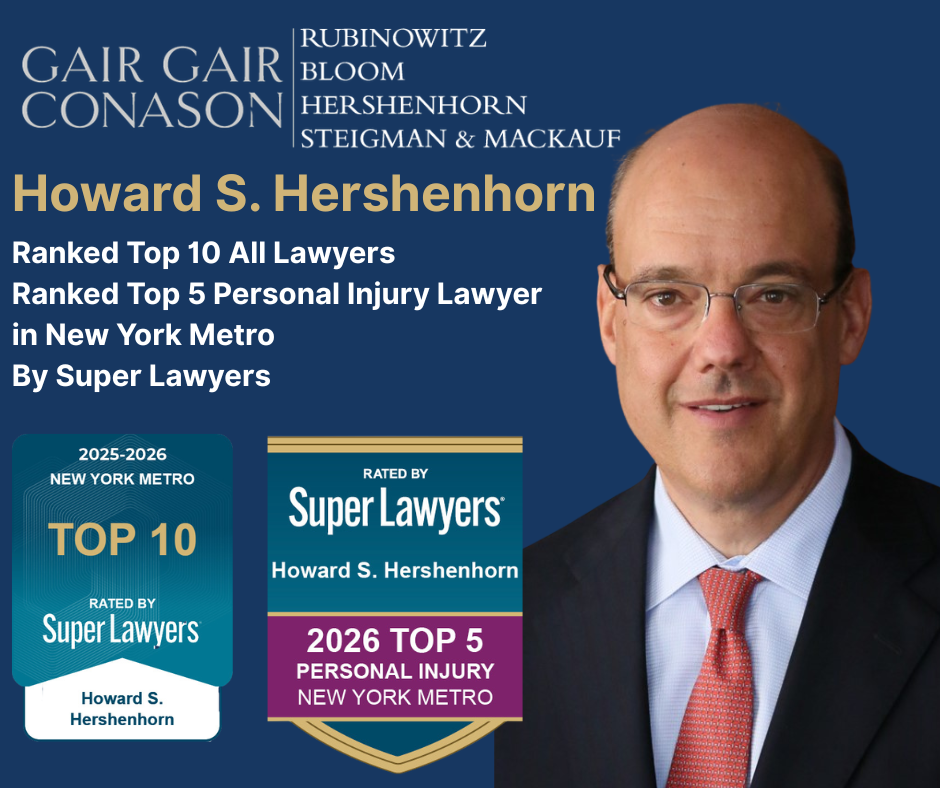
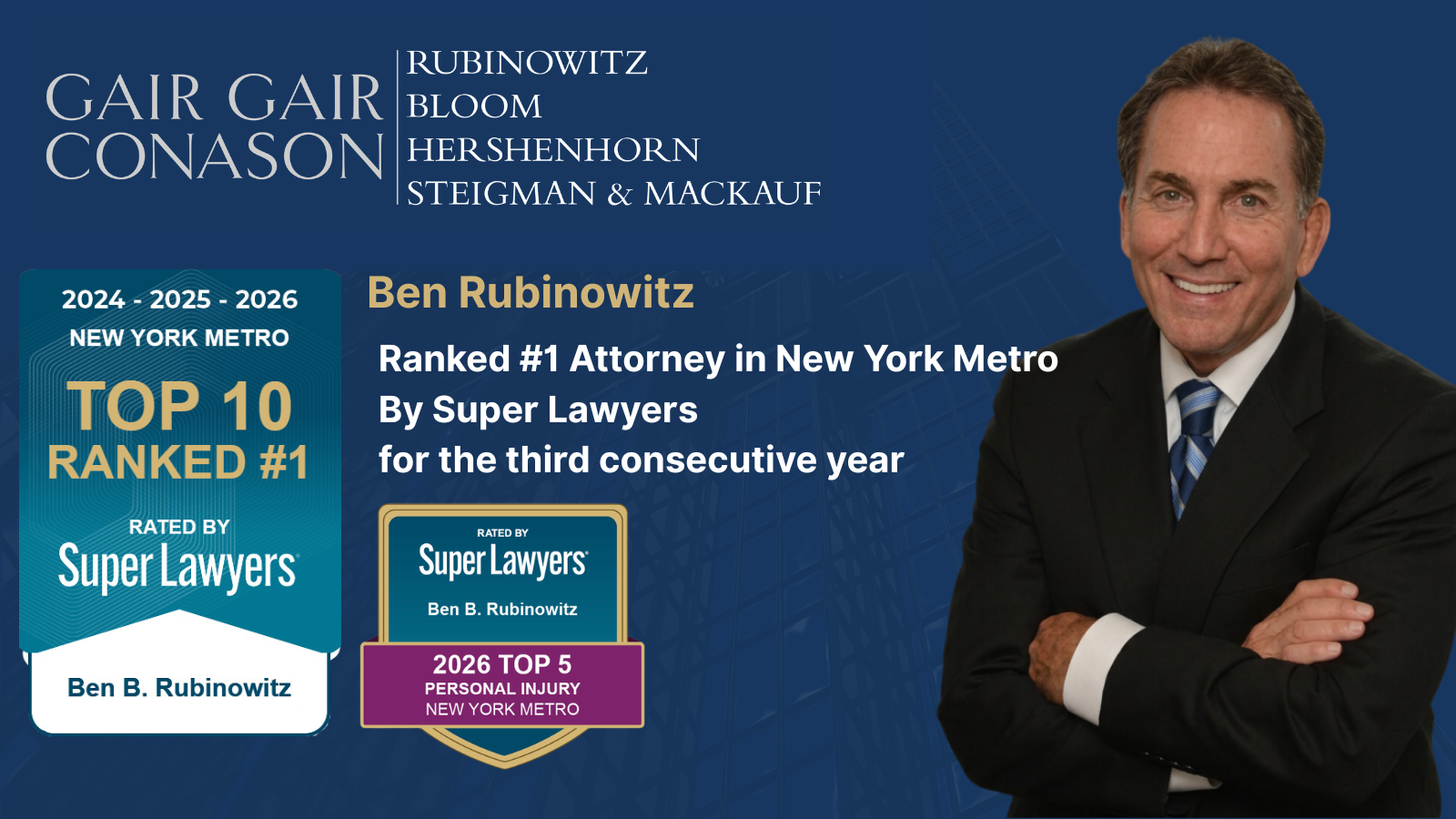
Bren Rubinowitz was ranked #1 attorney in New York for the third consecutive yearGair, Gair, Conason, Rubinowitz, Bloom, Hershenhorn, Steigman & Mackauf is proud to announce that Managing Partner Ben B. Rubinowitz has once again been ranked the #1 attorney in the New York Metro area by Super Lawyers. This marks the third consecutive year that Rubinowitz has earned the highest overall ranking among all attorneys and all practice areas in the New York Metro region.

In addition to receiving the top overall ranking, Rubinowitz was recognized among the Top 5 Personal Injury attorneys in the New York Metro area in Super Lawyers’ newly introduced practice area rankings, further reinforcing his standing as one of the nation’s premier trial lawyers.

Landmark Results

Published on:

Gair, Gair, Conason, Rubinowitz, Bloom, Hershenhorn, Steigman & Mackauf Named a 2026 Top Firm by Super Lawyers Gair, Gair, Conason, Rubinowitz, Bloom, Hershenhorn, Steigman & Mackauf is proud to announce that it has been recognized as a 2026 Top Firm for Personal Injury in New York by Super Lawyers.

The recognition reflects the firm’s continued commitment to excellence in representing victims of catastrophic injuries, medical malpractice, construction accidents, auto accidents and transportation disasters as well as wrongful death throughout New York.

In addition to the firm’s Top Firm designation, thrirteen attorneys were selected to the 2026 New York Metro Super Lawyers and Rising Stars lists.

Published on:

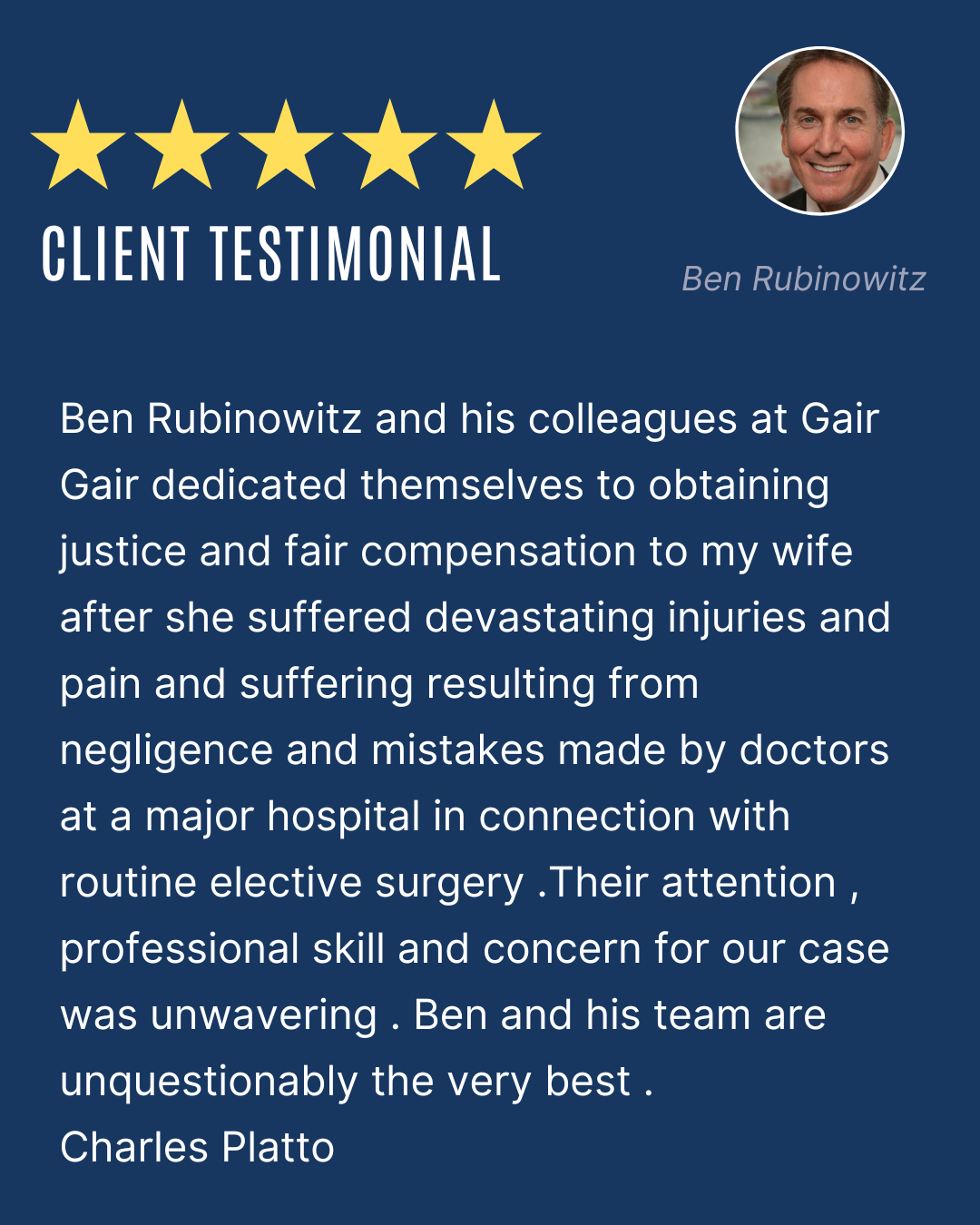
CLIENT TESTIMONIAL A routine elective procedure should never leave a patient facing devastating, life-altering injuries. When medical providers fail to meet accepted standards of care, the consequences can be profound, physically, emotionally, and financially. In those moments, families are left searching for answers, accountability, and meaningful compensation.

A recent client review highlights exactly what is at stake in these cases and what it takes to pursue justice at the highest level:

“Ben Rubinowitz and his colleagues at Gair Gair dedicated themselves to obtaining justice and fair compensation to my wife after she suffered devastating injuries and pain and suffering resulting from negligence and mistakes made by doctors at a major hospital in connection with routine elective surgery. Their attention, professional skill and concern for our case was unwavering. Ben and his team are unquestionably the very best.”

Published on:

cover of the top 10 patient safety concern ECR 2026 reportA newly released report by the ECRI and the Institute for Safe Medication Practices identifies the most serious threats to patient safety expected to impact healthcare in 2026. The annual Top 10 Patient Safety Concerns report underscores a troubling reality: despite decades of reform efforts, preventable harm remains deeply embedded in the American healthcare system.

According to the report, medical errors and other preventable adverse events cost U.S. hospitals approximately $17.1 billion every year. Another $4.6 billion annually is linked to physician burnout. When the broader consequences of unsafe care are considered, including additional treatment required after medical errors, as much as 12.6% of total healthcare spending in high-income countries may be devoted to managing the aftermath of unsafe care.

From the perspective of our New York medical malpractice attorneys, these numbers highlight a persistent systemic problem. Preventable medical errors are not rare anomalies. They often arise from failures in hospital systems, staffing, communication, and oversight.

Published on:

Elderly woman falling in hospital roomFalls with injury remain one of the most common causes of preventable harm in hospitals. Federal regulators are now placing increased scrutiny on these incidents as part of broader patient safety initiatives. New and updated reporting measures from the Centers for Medicare & Medicaid Services (CMS) are designed to improve how hospitals track, report, and ultimately prevent patient falls that lead to serious injury.

From the perspective of our medical malpractice lawyers, these measures reinforce an important principle: hospitals are expected to implement effective systems to identify patients at risk and prevent avoidable falls.

A Renewed Federal Focus on Falls With Injury

Published on:

Brooklane Hospital in BrooklynBrookdale Hospital Medical Center in Brooklyn recently received a “D” safety grade from the Leapfrog Group, a national nonprofit organization that evaluates hospitals on patient safety, staffing, infection prevention, and medical error risks.

While the hospital achieved several administrative and procedural safety benchmarks, the overall grade reflects significant concerns in areas that directly affect patient outcomes, including nurse staffing levels, surgical performance measures, and maternity care practices.

For patients and families seeking medical care in Brooklyn, understanding what these grades mean and why they matter is essential.

Published on:

NYC Health and Hospitals Kings CountyAn analysis from our Brooklyn medical malpractice lawyers

Leapfrog hospital safety grades are designed to give patients and families a clear, data-driven picture of how safely a hospital delivers care. Despite some areas of strong performance,  received a D grade, reflecting systemic safety concerns that directly intersect with the types of cases Brooklyn medical malpractice lawyers routinely investigate.

Below is a clear breakdown of why this hospital scored poorly—and what it can mean for patients.

Published on:

2025 year in review for the NYC personal injury law firm of Gair, Gair, Conason, Rubinowitz, Bloom, Hershenhorn, Steigman & MackaufThe 2025 Year in Review documents another extraordinary year for the NYC personal injury law firm of Gair, Gair, Conason, Rubinowitz, Bloom, Hershenhorn, Steigman & Mackauf, marked by record-setting verdicts, precedent-shaping settlements, and litigation that advanced safety and accountability across New York.

Throughout 2025, the firm secured results in cases involving catastrophic injury, wrongful death, medical malpractice, construction accidents, transportation disasters, premises liability, and sexual abuse, many of which rank among the most significant outcomes in New York State history.

Record-Setting and Notable 2025 Results

Published on:

NYC Health Hospital WoodhullNYC Health + Hospitals Woodhull, located at 760 Broadway in Brooklyn, received a “D” Hospital Safety Grade from The Leapfrog Group based on data submitted June 30, 2025.

A “D” grade does not mean that every aspect of care is unsafe. In fact, Woodhull performs well in several important areas, including medication safety, leadership accountability, and hand hygiene. However, Leapfrog grades are driven by patterns of risk, and Woodhull’s score reflects persistent safety vulnerabilities that patients and families should understand before undergoing treatment—especially for complex or invasive care.

Below is a clear, patient-focused breakdown of what drove the lower grade and what it means in real-world terms.

Published on:

St John's episcopal hospital has a D ratingSt. John’s Episcopal Hospital in Far Rockaway recently received a “D” rating from the Leapfrog Group, a nationally recognized nonprofit that evaluates hospital safety using objective, data-driven measures. Leapfrog safety grades focus on preventable medical harm—including infections, staffing, surgical safety, and outcomes—not bedside manner or community reputation.

This article is part of a broader series examining every New York City hospital rated by the Hospital Safety Grade program of The Leapfrog Group—not only top-rated institutions, but also those receiving failing grades. Drawing on the experience of our NYC medical malpractice lawyers, the goal is to help patients and families understand what these grades mean in real-world terms and how hospital safety data can affect clinical outcomes.

While St. John’s performs well in several important areas, the Leapfrog data reveals systemic safety gaps that likely contributed to its low overall grade. For patients and families, understanding these risks is critical.