 New York Personal Injury Attorneys Blog
One pedestrian died and another suffered catastrophic personal injury after both being struck by a car in two separate accidents in dangerous Brooklyn intersections this Saturday


A 63 year old woman died and a 58 year old man is in critical condition after both were involved in two separate car accidents in Brooklyn, NYC, this week-end. The first accident happened at the intersection of Coney Island Ave and Avenue N. Two cars collided and went spinning through the intersection. One of them hit 63 year old Galina Truglio who was walking in the crosswalk before hitting another car. Galina Ruglio was pronounced dead at the hospital.
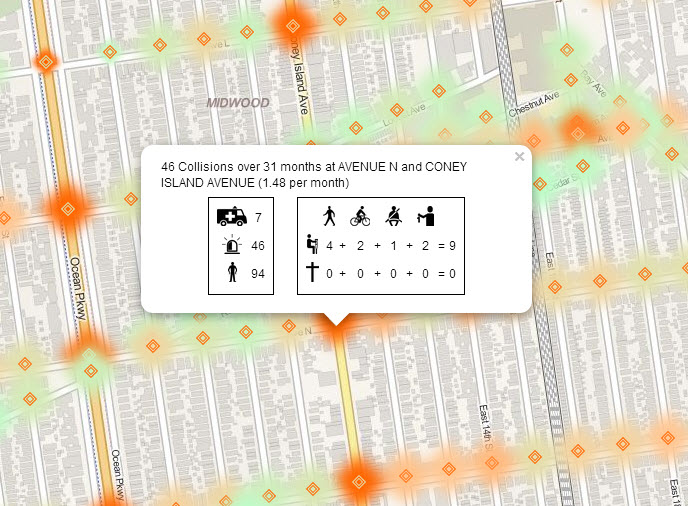
The Intersection of Coney Island Ave and Avenue N is a very dangerous intersection. According to NYC Crashmapper there were 46 collisions over the last 31 months at this intersection. 4 pedestrians, 2 cyclists, one passenger and one driver suffered personal injuries at this location during the last 31 months.
 6 hours later a 58 year old man suffered serious personal injury after being struck by a car while crossing Nostrand Ave at Church Ave in Brooklyn as well.
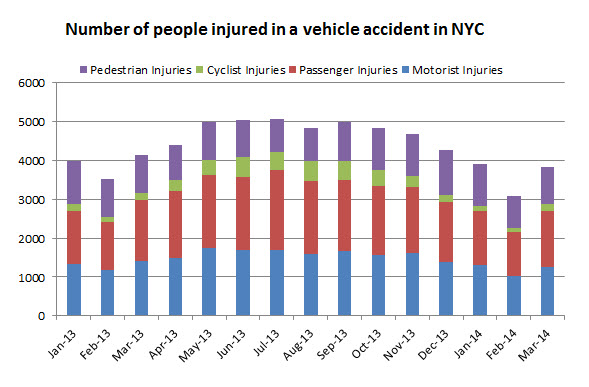
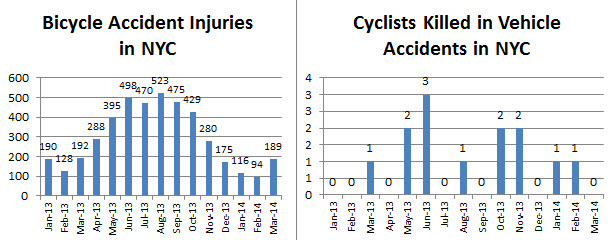
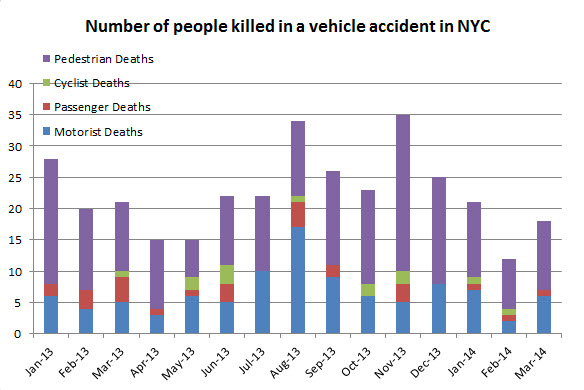 The number of pedestriandeaths, 11, is exactly the same in March this year than it was in March last year. 952 pedestrians were injured in auto accident this march compared to 990 in March 2013 and 820 the month before. The number of bicyclists injured was also pretty much the same from one year to the other.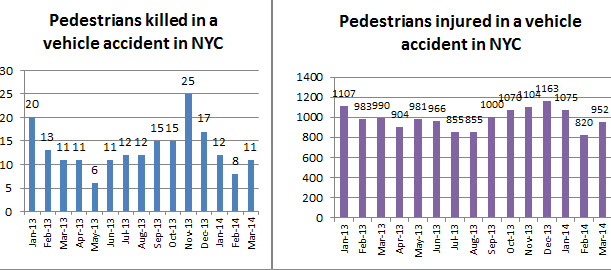
 Bus Accidents were slightly on the rise from one year to the other with 572 accidents in March 2014 compared to 523 in March 2013.