Gair, Gair, Conason, Rubinowitz, Bloom, Hershenhorn, Steigman & Mackauf is a New York Plaintiff's personal injury law firm specializing in automobile accidents, construction accidents, medical malpractice, products liability, police misconduct and all types of New York personal injury litigation.

Articles Posted in Product Liability

Published on:

Orla Baxendale lost her life due to anaphylactic shock resulting from a severe allergic reaction to a cookie manufactured by Cookies UnitedWhen a family loses a daughter to a preventable tragedy, accountability is not optional. It is essential. At Gair, Gair, Conason, Rubinowitz, Bloom, Hershenhorn, Steigman & Mackauf, our attorneys are representing the family of Órla Baxendale, a 25-year-old dancer whose life was cut short by a mislabeled cookie that was packaged and sold by Stew Leonard’s. The substitute complaint we filed on October 16, 2025, details systemic failures in the grocery chain’s allergen disclosure and product labelingprocedures — procedures that the complaint describes as “broken, unreliable, inherently dangerous, undependable, untrustworthy, erratic, and deplorable.”

Órla had severe allergies to peanuts. On January 11, 2024, she ate a Vanilla Florentine cookie that was purchased from a Stew Leonard’s store in Connecticut.  The cookies’ label did not list peanuts as one of its ingredients. Specifically, the cookies’ “contains” statement did not list peanuts. But the cookies contained peanuts — and Órla suffered a fatal anaphylactic reaction as a result of eating one.

Our substitute complaint outlines how this mislabeling was not an isolated mistake. Instead, it reflects systemic shortfalls in the grocer’s allergen-control and labeling systems.

Published on:

Recognized once again for excellence in trial advocacy and record verdicts

GaiGair, Gair, Conason, Rubinowitz, Bloom, Hershenhorn, Steigman & Mackauf have been named a NYC tier one firm in personal Injury, Medical Malpractice and Product Liability Litigationr, Gair, Conason, Rubinowitz, Bloom, Hershenhorn, Steigman & Mackauf has once again been honored among the nation’s top litigation firms, earning a Metropolitan Tier 1 ranking in the 2025 edition of Best Law Firms for New York City.

The firm received Tier 1 recognition in three major practice areas:

Published on:

Patients are at risk of technology hazardsArtificial intelligence is rapidly entering hospitals and clinics, powering devices that interpret imaging scans, assist with diagnoses, and monitor patient health in real time. While these tools hold enormous promise, a new study in JAMA Health Forum warns that many AI-enabled devices are being cleared for use without clinical validation — and those devices are significantly more likely to be recalled.

Why This Matters for Patient Safety

AI is increasingly trusted in critical areas of patient care. When these devices are rushed to market without real-world testing, the risks fall directly on patients:

Published on:

Best Lawyers 2026 finalThe 2026 edition of The Best Lawyers in America® has once again recognized the attorneys of Gair, Gair, Conason, Rubinowitz, Bloom, Hershenhorn, Steigman & Mackauf among the very best trial lawyers in New York. This year, eight of the firm’s top-rated attorneys were selected for their excellence in personal injury litigation, medical malpractice law, legal malpractice law, and product liability litigation, while two rising attorneys earned spots in Best Lawyers: Ones to Watch in America®.

Attorneys Recognized in The Best Lawyers in America® 2026

  • Marijo C. Adimey – Medical Malpractice Law – Plaintiffs; Personal Injury Litigation – Plaintiffs

Published on:

Hospitals across the country have been warned to immediately stop using certain Draeger mechanical ventilation filters after the U.S. Food and Drug Administration (FDA) issued a high-risk recall notice. The affected devices — SafeStar and TwinStar filters — are used during anesthesia and mechanical ventilation to prevent bacterial and viral contamination.

According to the FDA, the filters can cause misleading carbon dioxide readings during procedures. Carbon dioxide monitoring (capnography) is critical in surgery, particularly under anesthesia, as it helps ensure that a patient is ventilating properly. When readings are inaccurate, medical teams may administer unnecessary or harmful interventions — or fail to provide urgently needed care.

Scope of the Recall

Published on:

3D_Medical_Animation_of_Left_Atrial_Appendage_OcclusionBoston Scientific has issued updated instructions for products used in the implantation of its Watchman left atrial appendage closure device after the Food and Drug Administration (FDA) linked the procedure to 120 serious injuries and 17 patient deaths.

FDA Safety Alert Highlights Increased Risk Under Sedation

According to an FDA safety communication released on August 8, 2025, the updated instructions apply to the FXD Curve, Truseal, and Trusteer access systems—all of which are used to implant the Watchman device. The FDA warned that patients sedated but not placed on mechanical ventilation during the procedure face a heightened risk of air embolism, a dangerous condition caused when an air bubble enters the bloodstream.

Published on:

Stapler recalled by J&JFrom the Medical Malpractice and Product Liability Attorneys at Gair, Gair, Conason, Rubinowitz, Bloom, Hershenhorn, Steigman & Mackauf

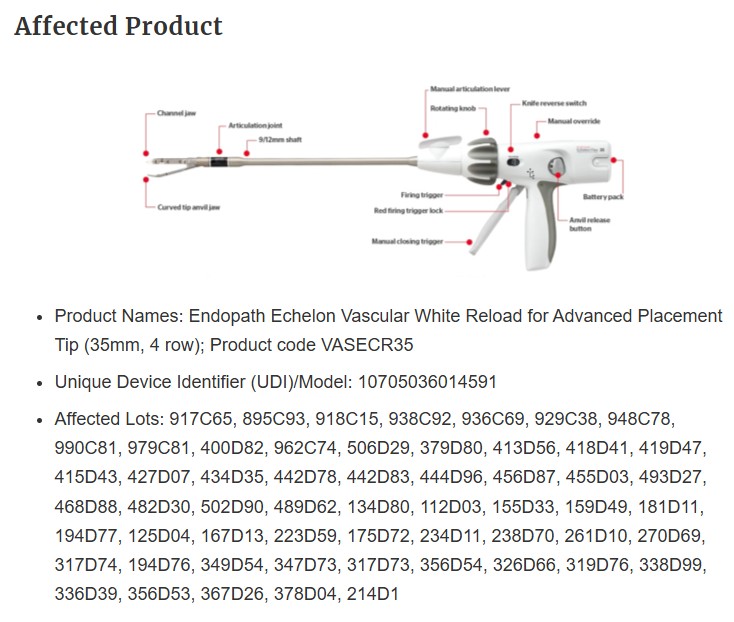
Johnson & Johnson’s Ethicon division has issued a correction and Class 1 recall of its Echelon surgical stapler reload cartridges, following reports of a serious defect linked to at least one death and multiple injuries. The U.S. Food and Drug Administration (FDA) has confirmed that 678,526 units are affected by the recall, which involves staplers used to cut and staple tissue during surgery.

The FDA warned that the stapler may lock during use, failing to properly cut or seal tissue. This malfunction can result in the device becoming trapped in the patient, causing surgical delays, excessive bleeding, hemorrhagic shock, emergency conversion to open surgery, and even death.

Published on:

250px-Tacrolimus-1YAT-ball-and-stick-model When a patient receives a life-saving kidney transplant, they rely on immunosuppressive medications like tacrolimus to prevent their body from rejecting the organ. These drugs are not optional—they are critical. But what happens when the very drug meant to protect a transplant patient may have contributed to the failure of their new organ?

According to a recent Pro Publica Investigation, that is the unsettling reality facing Joe DeMayo, a transplant recipient who was prescribed generic tacrolimus manufactured by Intas Pharmaceuticals. Despite faithfully taking the drug as directed, his donated kidney began to fail much earlier than expected. What DeMayo didn’t know—and what thousands of patients across the country likely didn’t know—is that the FDA had found serious manufacturing violations at the Indian factory where his medication was produced, including the manipulation of drug-testing records.

As New York medical malpractice attorneys, we are deeply concerned by the implications of this case—not only for DeMayo, but for the many transplant patients who trust that the drugs they take are both safe and effective.

Published on:

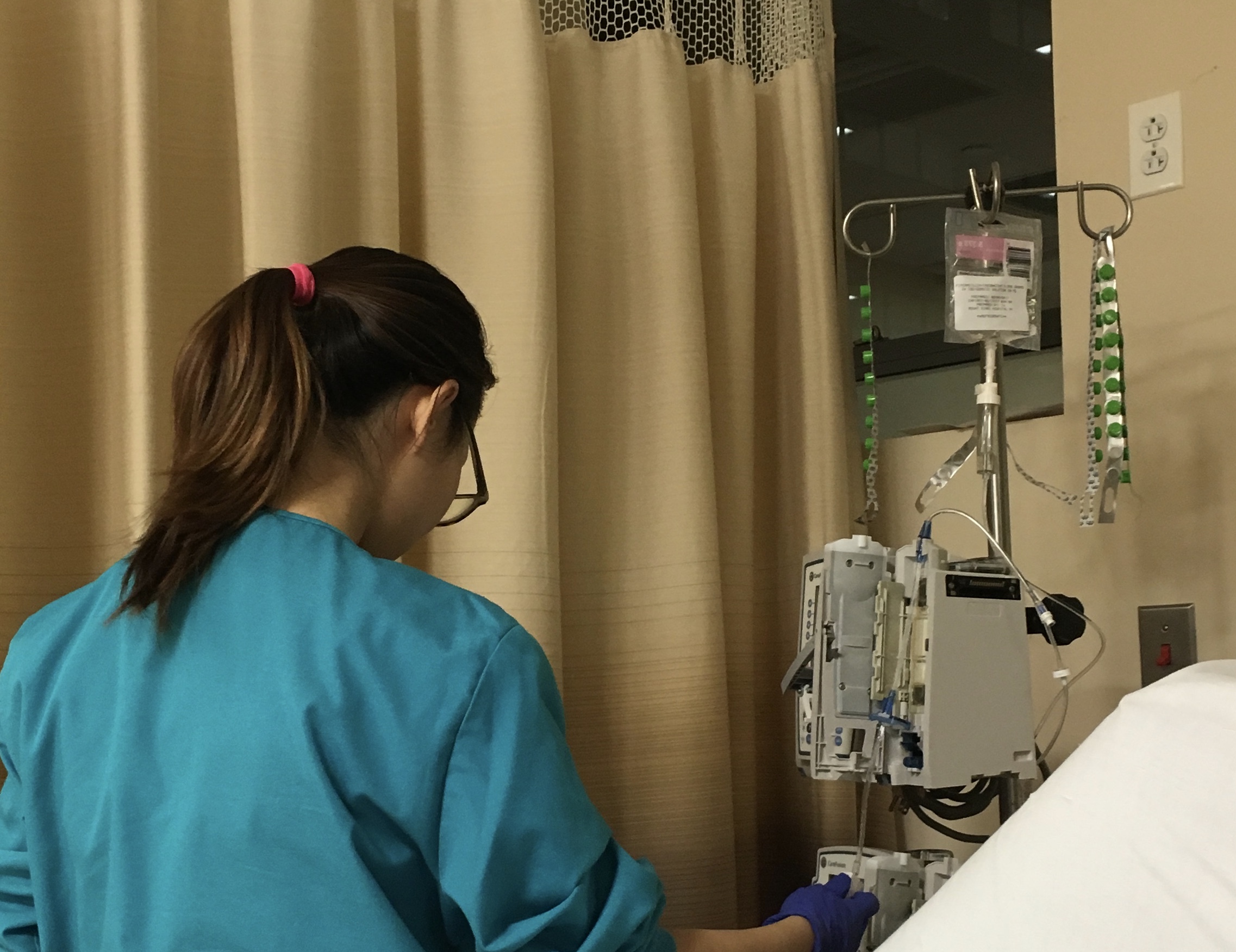
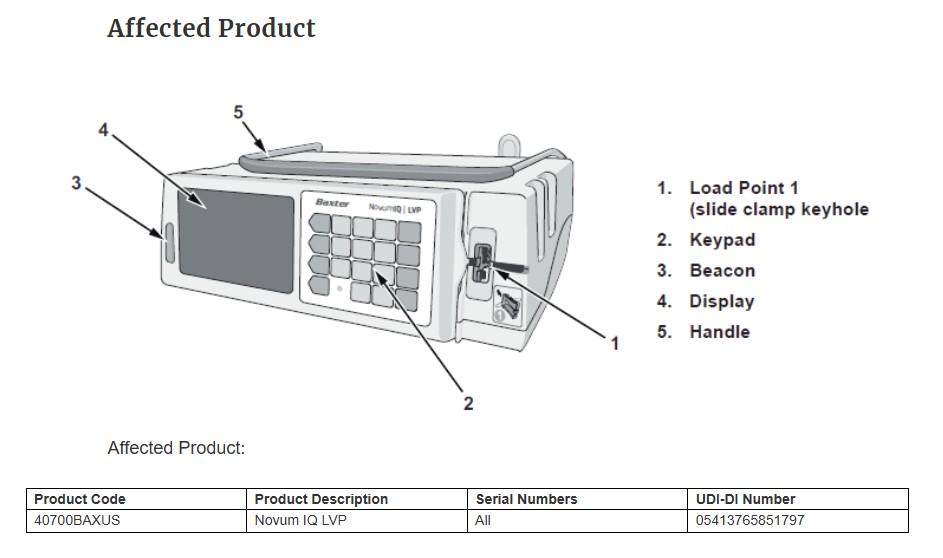
Defective Baxter PumpInfants in neonatal intensive care units rely on precise intravenous infusions for survival—but a recent recall by Baxter International reveals that a widely used infusion pump may be putting vulnerable newborns at risk.

Baxter has issued a Class I recall—the FDA’s most serious designation—for its Novum IQ large volume pump after the device was linked to a serious injury caused by under-infusion. According to the FDA, variability of just 10% in infusion delivery can lead to dehydration, malnutrition, inadequate drug therapy, and even death in infants. Yet Baxter has allowed over 34,500 affected units to remain in hospitals across the U.S. and Canada.

The Risk to Infants: Under-Infusion Can Be Catastrophic

Published on:

FDA logoAs product liability attorneys, we recognize the critical importance of timely adverse event reporting by medical device manufacturers. Such reporting is not only a regulatory obligation but also a fundamental aspect of patient safety and corporate accountability. Delayed reporting can have significant legal ramifications, including:

  1. Regulatory Non-Compliance: Manufacturers are mandated by federal law to report adverse events to the FDA within 30 days of becoming aware of them. Failure to comply can result in enforcement actions, fines, and potential injunctions against the company.
  2. Increased Liability Exposure: Delayed reporting may be construed as negligence, exposing manufacturers to lawsuits from patients harmed by undisclosed device risks. Courts may view the failure to report promptly as a breach of duty to consumers.