Articles Posted in Product Liability
Philips Respironics Recall: New Investigation Reveals Blatant Corporate Negligence
In a startling revelation brought to light by the investigative efforts of ProPublica and the Pittsburgh Post-Gazette, the Philips Respironics case has unveiled a disturbing narrative of corporate negligence. Over an 11-year period, this medical device manufacturer concealed mounting evidence of serious issues with its breathing machines, placing profit above patient safety.
In 2010, Philips Respironics, a renowned manufacturer of breathing machines used globally in homes and hospitals, made a pivotal decision to redesign its best-selling devices. The intention was to eliminate an annoying rattle that kept users awake at night. However, this seemingly well-intentioned decision led to a cascade of problems that has left countless individuals in distress and brought the company under intense scrutiny.
To dampen the irritating noise issue, Philips opted for an industrial foam, akin to what you might find in your sofa or mattress. Little did they know that this choice would prove catastrophic. Reports began to emerge, describing “black particles,” “dirt and dust,” and even an “oily-like” substance within the breathing machines. Users were sounding the alarm about “contamination,” signaling that something was seriously amiss.
A Collective Triumph: Ben Rubinowitz Named Lawyer of the Year Twice, and 11 Other Personal Injury Attorneys from Our Firm Listed in the 2024 Edition of Best Lawyers®
In the dynamic and ever-evolving world of law, few accomplishments resonate as profoundly as those that redefine excellence itself. Today marks a significant milestone for all of us at Gair, Gair, Conason, Rubinowitz, Bloom, Hershenhorn, Steigman & Mackauf, as we celebrate the exceptional achievements of our Managing Partner, Ben Rubinowitz who was named “Lawyer of the Year” twice by The Best Lawyers in America (2024 Edition) in “Personal Injury Law – Plaintiff in New York City” and “Product Liability Law – Plaintiff in New York City. Ben was also included in the 2024 edition of Best Lawyers® Medical Malpractice Law and Legal Malpractice Law – Plaintiffs in New York, New York.
This remarkable recognition for Ben Rubinowitz is a testament to the collective ethos of Gair, Gair, Conason, Rubinowitz, Bloom, Hershenhorn, Steigman & Mackauf. 11 other of our NYC Personal Injury Attorneys have been acknowledged in the Best Lawyers® 2024 list and the “Ones to Watch” list, exemplifying our commitment to excellence and ethical standards.
7 attorneys were named “Best Lawyers” in multiple practices:
Product Liability and Patient Safety: The Philips Evo Ventilator Recall
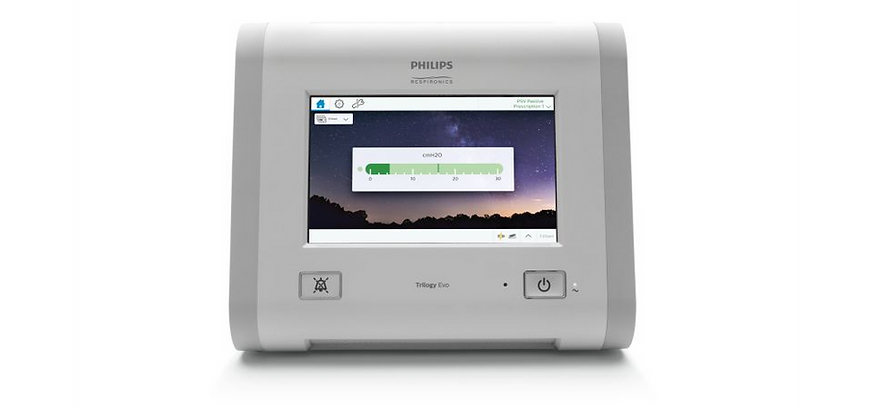
Recent recalls by Philips have highlighted the importance of product liability and patient safety in the healthcare sector. The latest recall involves approximately 57,000 Evo ventilators due to issues with the machines’ air flow sensors.
Philips’ Respironics unit has faced a series of recalls since 2021, initially related to soundproofing foam used in its sleep apnea devices and ventilators. The Evo ventilator, designed for hospital and professional care settings, is now undergoing its second Class I recall in recent months. The recent recall, labeled as Class I by the U.S. Food and Drug Administration (FDA), highlights the severity of the issue.
Reasons for Recall
Top 10 Health Technology Hazards for 2023
While health technology is often synonymous with progress, some medical devices can be dangerous and lead to patient injury and death. Every, year the ECRI Institute compiles a list of the 10 most hazardous technologies in healthcare. This year the Top 10 health hazards are:
1. Confusing recalls of at-home medical devices
This health hazard arises from Philips’ chaotic recall of defective respirators that cost the lives of hundreds of at home patients suffering from sleep apnea. Between April 2021 and October 2022, the FDA received 260 reports of patients who died while using the Philips respirator. The device was recalled but the manufacturer contacted mostly healthcare providers which were supposed to pass the information to their patients. The process was chaotic and many patients were never proprely informed. As a result, they continued to use the defective device and died. Some patients were contacted directly by the manufacturer, but the notification was unclear. The language was technological jargon that patients did not understand proprely.
Gair, Gair, Conason, Rubinowitz, Bloom, Hershenhorn, Steigman and Mackauf named by U.S. News – Best Lawyers ® “Best Law Firms” a New York City Tier 1 Best Law Firm for Personal Injury, Medical Malpractice and Product Liability
Our firm is proud to announce that for the 13th consecutive year it has been named by U.S. News – Best Lawyers ® “Best Law Firms” a Tier 1 Firm in New York City for:
Potentially defective e-bike lithium battery recalled after 4 people got injured
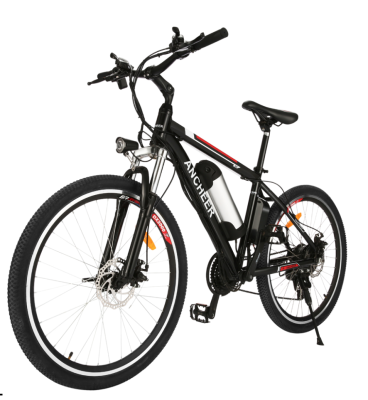
Ancheer is recalling the potentially defective lithium battery of 22,000 e-bikes. The recall decision was made after the company received 6 reports of accidents that include batteries igniting and causing sparks, fires and/or explosions. Among the 6 accidents reported, 4 resulted in burn injuries.
The battery recalled is a cylindrical battery that looks like a water bottle and is mounted on the Ancheer e-bikes model AM001907. The model number can not be found on the bike but on the packaging and on the user manual.
The recalled Ancheer e-bikes models were sold between January 2016 and June 2022 by major retailers including Walmart, Sears, Amazon, eBay, Overstock, Aliexpress, Ancheer, Newegg, Rakuten and Wish.
Battery problems with the Medtronic HeartWare Ventricular Assist Device (HVAD) causes 6 more patients to suffer personal injury and another one to die
Me
dtronic HeartWare Ventricular Assist Device (HVAD) device caused the wrongful death of more than 3,000 people since it was introduced on the market more than 10 years ago. The sale and distribution of the heart pump was stopped in June last year but many patients still have the pump implanted in them. Now some of the batteries powering the device might be deadly too.
Medtronic announced last May that a model of battery that was powering the Medtronic HeartWare Ventricular Assist Device (HVAD) was defective and that it could cause serious personal injury or death if it was not changed for a new battery. An urgent Medical Device Correction letter was sent out by Medtronic to all affected customers on May 5th recalling 429 devices manufactured in April 2021. Then a month later, after the company received 1,159 complaints including 6 injuries and one death, the recall of the same model of batteries was extended to those that were distributed since January 2009.
The recall affects 23,372 Medtronic HVDA Batteries with model number 1650DE that were distributed between January 1st 2009 and now
A 5 year old girl and a 36 year old girlfriend were killed while the dad was critically injured in E-bike battery fire in Harlem, NYC
An e-bike battery explosion caused a deadly fire in Harlem, NYC, inside NYCHA’s Jackie Robinson Houses.
5 year old Erika Williams was sleeping in a an apartment with her dad Erik Williams and his 36 year old girlfriend Chanise Anderson when a little after 2:30 am on Wednesday morning, the lithium battery of an e-bike stored next to the apartment entrance door exploded and created a fire.
The fire and heavy smoke prevented the toddler and the girlfriend to escape while the father covered in flames ran into the hallway screaming for help. He is still in the hospital in critical condition. The 5 year old girl and the girlfriend both died. 3 dogs also died in the fire.
Recent cybersecurity alerts from FDA affect more than 150 different types of medical devices that if hacked can potentially result in harm to patients
More than 150 models of medical devices manufactured by more than 100 manufacturers and equipped with PTC Axeda agent and Axeda Desktop Server have dangerous cybersecurity vulnerabilities that could potentially harm patients. The Axeda agent and Axeda Desktop server sold by PTC are components allowing one or more people to view and operate the same remote desktop, through the Internet. However, it was recently found that hard-coded credentials were used in these components making them particularly vulnerable to cyber attacks. Hard code credential is a practice used by software developers in which authentication data such as password are embedded directly in the source code. This practice was identified 9 years ago as a significant cybersecurity threat and is considered outdated and dangerous. It is particularly concerning that medtech vendor PT is still selling products using this technology, especially products providing remote support functionality which are among the most targeted by hackers. Hard code credential vulnerabilities, if exploited, allow hackers to fully access the system, execute remote code, change the configuration, read or save changes directly to files and folders on the user’s device, access user’s login information and flood the targeted device or network with traffic until the target cannot respond or simply crashes, preventing access for legitimate users. Designing medical devices containing such outdated and dangerous components is negligence that can cause injury or death to patients.
Defective medical devices with cybersecurity flaws are considered the number one health technology hazards in 2022 by the ECRI Institute. The FDA issued a cybersecurity alert and the Cybersecurity and Infrastructure Security Agency issued an advisory with a detailed description of the vulnerabilities, recommendations to mitigate them and a list of the main manufacturers using Axeda agent and Axeda Desktop servers in some of their products. Among them are Accuracy, Agilent, Bayer, BD, Elektra, GE, Roche Diagnostic, Smith Medical and Varian. These manufacturers have all released their own information in regards to affected products.
Read more in Medtech Dive

New York Personal Injury Attorneys Blog