July 6, 2009

New York City Transit Authority Bus Strikes Woman-$27,500,000 Verdict

The following is an extract from a report in The National Edition of Verdict Search, Vol. 8 Issue 6, June 2009.

Our Partner, Ben B. Rubinowitz represented the plaintiffs, Gloria Aguilar and Aristides Aguilar.

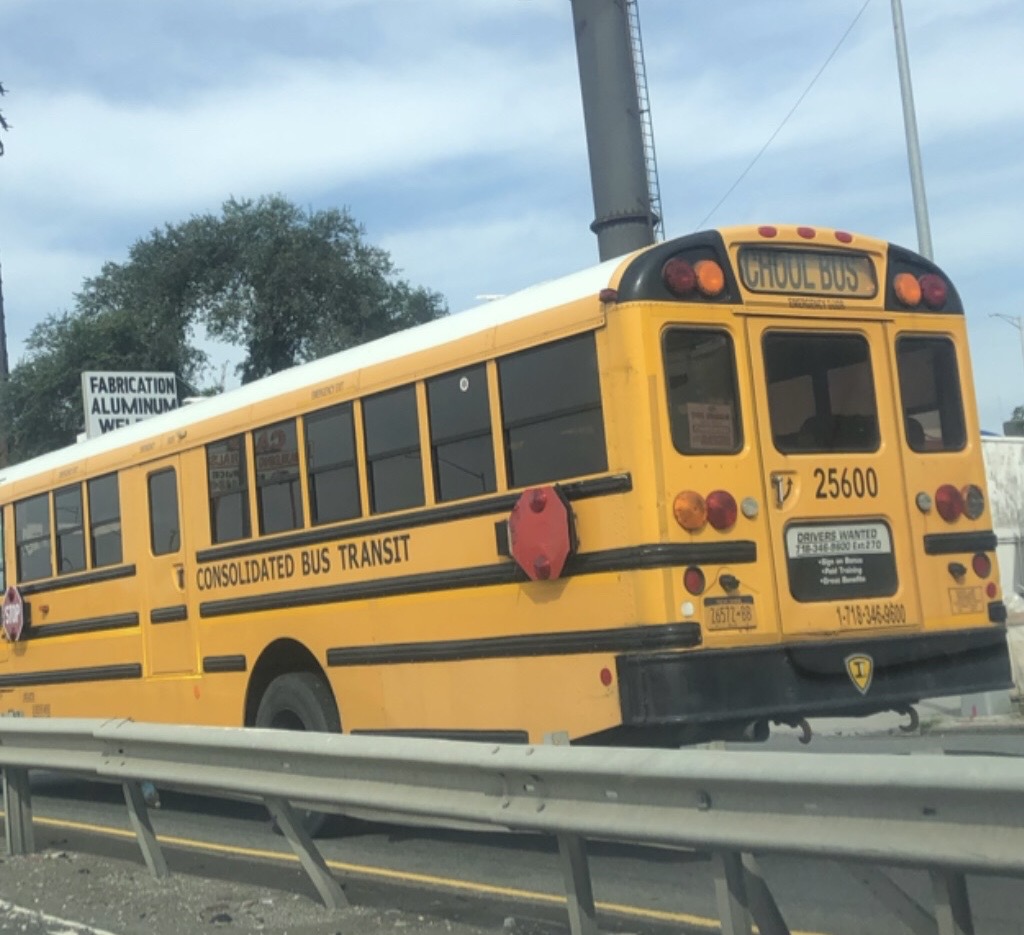
On Nov. 4, 2005, plaintiff Gloria Aguilar, 45, a homemaker and part-time housecleaner, was struck by a New York City Transit Authority bus. The incident occurred on West 50th Street, alongside its intersection at 10th Avenue, in Manhattan. Aguilar sustained injuries of her arms, head, legs and torso. Aguilar sued the bus's driver, Andrew Monaco, and the bus's operator, the New York City Transit Authority. Aguilar alleged that Monaco was negligent in his operation of the bus. She further alleged that the New York City Transit Authority was vicariously liable for Monaco's actions.

Aguilar's left leg was crushed by the bus's front right tire. She also sustained an injury of her right leg and abrasions and road rash of her head, limbs and torso. She was placed in an ambulance, and she was transported to Bellevue Hospital Center, in Manhattan. Her left leg could not be saved, so it was amputated below the knee.

Aguilar subsequently developed an infection of the remaining portion of her left leg. As a result, she had to undergo surgeries that included further amputation of the leg. She ultimately lost her left knee and about four additional inches of the area above the knee. She wears a prosthetic device. Her hospitalization lasted two months, and she subsequently underwent orthopedic treatment. Aguilar claimed that she suffers residual damage of her legs' nerves. She also claimed that she experiences "phantom" pain that seems to stem from the missing portion of her left leg. She further claimed that she undergoes treatment of residual psychological conditions that include post-traumatic stress disorder and major depression. She contended that her disability prevents her resumption of work.

Aguilar's life-care-planning expert opined that Aguilar must undergo lifelong physical therapy. He also opined that Aguilar's prosthesis must be replaced every three to five years. Aguilar sought recovery of about $5.6 million for her future medical expenses. She also sought recovery of damages for her past and future pain and suffering. Her husband sought recovery of damages for his past and future loss of services and society.

This case was also reported in The New York Times.

Bookmark and Share

April 16, 2009

New York City Bus Accident-$27,500,000.00 Verdict


Following a six week trial in New York Supreme Court before Judge Paul Feinman, our Partner, Ben B. Rubinowitz obtained a jury verdict of $27,500,000.00.

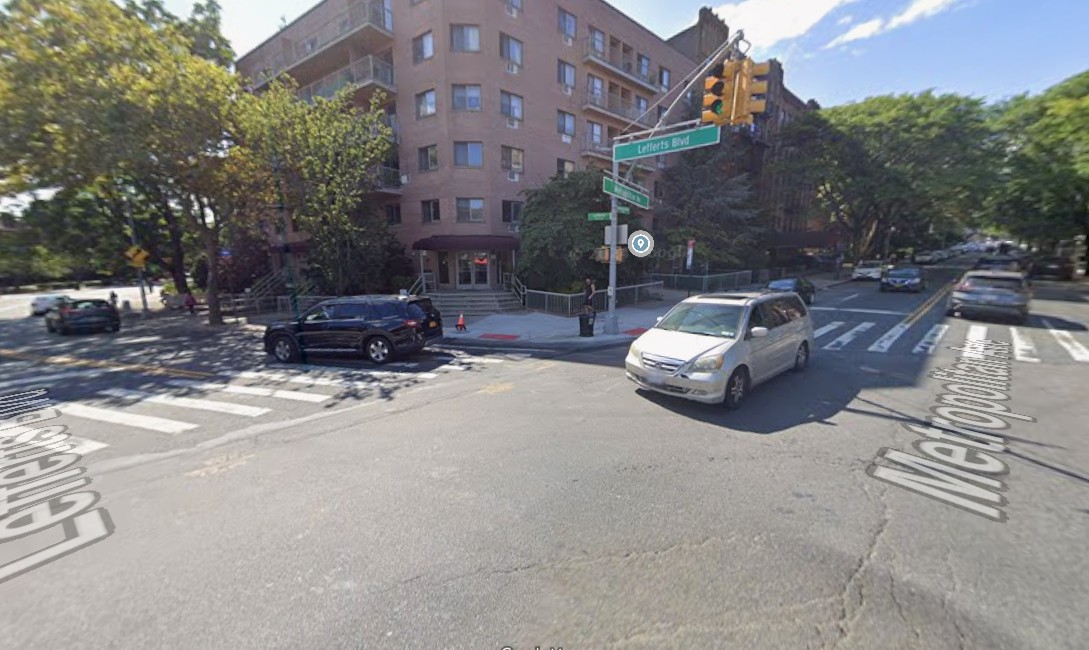
The plaintiff, Gloria Aguilar, was a 45 year old woman, returning from work. As she was crossing 50th St at 10th Ave, a New York City Transit Authority bus made a right turn into her. The bus knocked her down and then ran over her left leg. Although the leg was attached "by a thread", the doctors at Bellevue Hospital were unable to perform microsurgery due to the crush injuries from the 40,000 pound bus. Ms Aguilar underwent multiple surgeries and eventually had an above-the-knee amputation.

The defendant Transit Authority claimed that Ms Aguilar was outside of the crosswalk at the time she was struck, that she failed to look and walked into the side of the Bus.

The jury rejected that argument finding the Transit Authority 100% at fault and awarded Ms Aguilar $27,500,000.00 - one of the highest verdicts, if not the highest verdict, ever awarded for a woman who lost her leg in an accident.

Judge Feinman denied the motion by the Transit Authority to set the verdict aside as excessive.


Bookmark and Share

August 19, 2008

NEW YORK AUTOMOBILE ACCIDENTS

In Tirado V. Elrac Inc., U-Haul Co., Inc. decided August 5, 2008, The First Department reversed the order of the Supreme Court granting U-Haul’s motion for summary judgment and granted plaintiffs cross motion to amend his Complaint and held the amendment related back to the original date of filing of the initial complaint thus avoiding application of The Graves Amendment. The facts were as follows;

" Plaintiff alleges that on November 9, 2004, while a passenger in a car driven by defendant Litzey and owned by defendant Elrac, he sustained injuries when their vehicle was struck by a truck owned by U-Haul Co., Inc. (UHI) and operated by defendant McFarlan. The truck in question bore Arizona registration number AB24019 and was apparently owned by U-Haul Co. of Arizona (UHAZ). "

"On July 29, 2005, plaintiff filed a verified complaint, naming Elrac, Litzey and McFarlan as defendants. Believing that the rental truck was owned by UHI, plaintiff sued that entity, claiming vicarious liability for the negligent use or operation of the vehicle. UHI was served on August 26, 2005, by service on the New York Secretary of State, and an additional copy was mailed to UHI at 2727 N. Central Ave., Phoenix, Arizona. On October 7, 2005, U-Haul Co. of New York (UHNY) filed an answer in lieu of UHI, presuming it was the intended defendant."

"On February 6, 2006, UHNY moved for summary judgment dismissing the complaint on the ground that UHAZ, not UHNY, owned the truck, and that UHI was an inactive New York corporation that did not, on November 9, 2004, operate any rental outlets in this state. UHNY also argued that any attempt by plaintiff to amend the complaint to add UHAZ should be denied because the amended action would be commenced subsequent to the effective date of the Graves Amendment."

" Plaintiff, while admitting that the wrong company had been sued, cross moved to amend the complaint pursuant to CPLR 3025(b) to add UHAZ, arguing that under CPLR 203(a), such amendment should "relate back" to the original commencement date of the action, which preceded the effective date of the Graves Amendment. Plaintiff argued that a claim against UHAZ would be based on the same occurrence as the claim against UHNY, and UHAZ was "united in interest" with UHNY."

The Court held as follows;

"The Court of Appeals has recently addressed the issue of when an action is "commenced" for the purpose of applying the preemption provisions of the Graves Amendment. Pursuant to CPLR 304, an action is "commenced" by filing a summons and complaint or summons with notice. "Thus, under the statute's plain language, any action filed prior to August 10, 2005 has been commenced' and therefore removed from the federal statute's pre-emptive reach" (Jones v Bill, 10 NY3d 550, 2008 NY LEXIS 1474, 2008 WL 2276211, *3). In addressing the very situation that this case presents, the Court discussed New York's statutory scheme regarding interposition of claims against a "defendant or a co-defendant united in interest" (CPLR 203[c]), and the requirement that joinder of additional parties and interposition of claims against those parties must occur within the context of an existing action, holding that "[n]othing in the language of the Graves Amendment suggests that it bars vicarious claims asserted in an amended pleading in an action commenced prior to its effective date" (10 NY3d at __, 2008 NY LEXIS 1474 at *5-6, 2008 WL 2276211 at *3).

Therefore, since the action herein was commenced 12 days prior to the effective date of the Graves Amendment, it was removed from the pre-emptive reach of the statute, and plaintiff's motion should have been granted."

Bookmark and Share

August 10, 2008

NEW YORK AUTOMOBILE ACCIDENTS, THE EMERGENCY DOCTRINE

In Koenig v. Lee, Decided on July 15, 2008, The 2d. Department dismissed plaintiff's complaint for personal injuries suffered in an Automobile Accident based on the Emergency Doctrine. The facts set forth by The Court were as follows;

"Here, the evidence submitted by the appellants in support of their motion for summary judgment established that the plaintiff's vehicle, which had been traveling southbound, was virtually stopped in the left turn lane of the roadway. According to his deposition testimony, as the defendant Song B. Lee drove in the left lane of northbound traffic, he was forced to swerve across the center line. In so doing, his car collided with the plaintiff's, forcing the plaintiff's vehicle to move backward and into the left travel lane of the southbound traffic. The appellants' vehicle, traveling in that lane, then collided with the rear of the plaintiff's vehicle. According to the plaintiff's deposition testimony, the second collision occurred one or two seconds after the first. According to the deposition testimony of the appellant Joel H. Cohen, he had no awareness that an accident was taking place until the moment his vehicle collided with the plaintiff's."

In dismissing plaintiff's complaint The Court Held;

"Thus, the evidence submitted by the appellants in support of their motion for summary judgment established that Joel H. Cohen was faced with an instantaneous cross-over emergency, not of his own making, leaving him with only a second or two to react and virtually no opportunity to avoid a collision (see Lee v Ratz, 19 AD3d 552, 554; Boos v Bedrock Materials, Inc., 16 AD3d 447, 447; Gonzalez v City of New York, 295 AD2d 122, 122; Caban v Vega, 226 AD2d 109, 111; Koch v Levenson, 225 AD2d 592, 593; Williams v Econ, 221 AD2d 429, 430). Under these circumstances, the appellants established their prima facie entitlement to judgment as a matter of law. Mere speculation that Joel H. Cohen may have failed to take some unspecified accident-avoidance measures or in some other way contributed to the occurrence of the accident is insufficient to defeat the appellants' motion for summary judgment (see Boos v Bedrock Materials, Inc., 16 AD3d at 447; Sirico v Beukelaer, 14 AD3d 549, 549; Mehring v Cahill, 271 AD2d 415, 415-416; Lyons v Rumpler, 254 AD2d 261, 262-263; Caban v Vega, 226 AD2d at 111; Williams v Econ, 221 AD2d at 430). In opposition, the plaintiff failed to raise a triable issue of fact as to whether Joel H. Cohen's reaction to the emergency was unreasonable, or whether any negligence on his part prior to the cross-over contributed to the bringing about of the emergency (see Lee v Ratz, 19 AD3d at 554)."

The lesson to be learned is that in a New York Automobile Accident in which the Emergency Doctrine may be implicated GET AN EXPERT. A qualified accident reconstruction expert is able, using long accepted methodology, to analyze a driver's perception of a situation as a hazard, to analyze the driver's decision as to how to avoid the hazard and to analyze the driver's performance as to the actions undertaken to avoid the hazard. The qualified expert will be able to give opinions on the driver's reaction time from perception of the hazard and whether the driver reacted in a timely manner in order to avoid the hazard.

Bookmark and Share

July 31, 2008

New York Automobile Accidents - Insurance Issues

Uninsured Motorist Coverage/Supplemental Underinsured Motorist Coverage

A. When and How It Applies:

1. Uninsured Motorist Coverage (UM) - Insurance Law Section 3420(f)(1) - is mandatory in New York State which makes certain that the minimum bodily insurance coverage mandated by law is available to those involved in an accident with an uninsured vehicle.

2. Under Insured Motorist Coverage (technically called supplementary uninsured/under insured motorist coverage or SUM) - Insurance Law Section 3420(f)(2) - is optional coverage which provides an insured person up to the level of coverage that was purchased over the minimum.

3. Difference between UM and SUM coverage:UM - An "uninsured vehicle" includes a vehicle that is not covered by an insurance policy and it includes vehicles for which neither the owner nor the driver can be identified (including hit and run driver).SUM - An "under insured" vehicle normally means that the amount of insurance on the other vehicle is less than that on the insured’s vehicle. However, it can also mean that, due to payments made under that policy, the amount of coverage remaining is less than the coverage on the insured vehicle or the insurer on the other vehicle denies coverage or becomes insolvent - these are not the typical scenarios.

Rafellini v. State Farm, 9 N.Y.3rd 196 (Ct. App. 2007). The importance of this case cannot be overstated. Originally, in this case, the Second Department held that the No-Fault "serious injury" threshold does not apply to Underinsurance claims (SUM) although it did apply to Uninsured Motorist claims (UM). The Court of Appeals reversed and held that a claimant applying for SUM benefits would be subject to the No-Fault "serious injury" threshold and the defendant insurer could raise this as a defense to a SUM claim. Thus, any claimant applying for UM or SUM coverage must have a "serious injury" within the meaning of the No-Fault law and the legion of case law in that area.

Bookmark and Share